245 Wh/L LFP battery to power electric excavators, tractors without liquid cooling
A French company has unveiled a lithium iron phosphate (LFP) battery for electric excavators, loaders,...
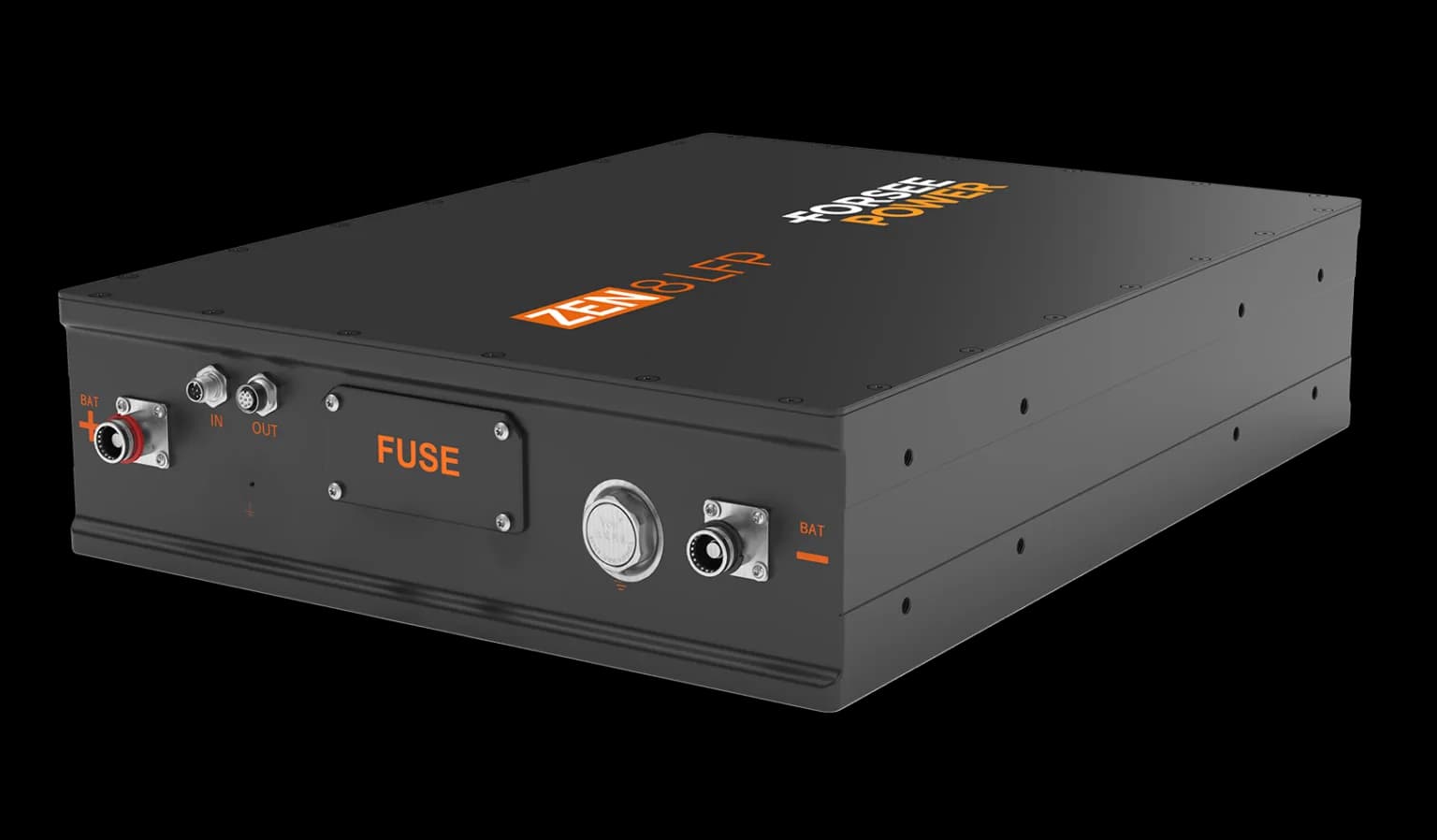
A French company has unveiled a lithium iron phosphate (LFP) battery for electric excavators, loaders, telehandlers, and agricultural tractors, with an energy density exceeding 245 watt-hours per liter (Wh/L).
Forsee Power’s new ZEN 8 battery uses 173 ampere-hour (Ah) LFP cells and does not require liquid cooling. According to the Ivry-sur-Seine-based company it can make electric machinery simpler and less expensive to build.
The new battery can also replace Forsee Power’s existing nickel manganese cobalt (NMC) battery without requiring manufacturers to make changes to their vehicles. Christophe Gurtner, Forsee Power CEO and chairman, emphasized the significance of the battery.
“With the new ZEN 8 LFP, we are combining exceptional LFP energy density, competitive pricing and European manufacturing in a solution designed for rapid industrial deployment,” Gurtner explained.
Inside the new battery
The ZEN 8 battery uses 173 Ah LFP cells and runs at a nominal module voltage of 45 volts (V). These prismatic cells are commonly used in energy storage systems (ESS), RVs, marine setups, and electric traction. It has an energy density exceeding 245 Wh/L, which means that it could store a considerable amount of energy in a relatively compact space.
The ZEN 8 LFP battery. Credit – Forsee Power
Although it uses LFP instead of NMC chemistry, it offers the same energy capacity and voltage range as the previous version. Forsee Power said the new design also comes with improved performance, and targets a longer cycle life.
What’s more, the battery also eliminates the need for liquid cooling. This process utilizes circulating fluid to remove heat from the batteries, and keeps them within safe operating temperatures, usually between 77 and 104 degrees Fahrenheit (25 and 40 degrees Celsius).
However, liquid cooling systems need extra parts, including pumps and pipes, to prevent batteries from overheating. Since the new ZEN 8 battery does not require liquid cooling, manufacturers could build simpler vehicles and reduce production and maintenance costs. The battery also targets a charging rate of 0.7C, which could reduce downtime between daily operations.
Built for heavy machines
Mostly intended for smaller electric machines for construction, agriculture, waste management, and urban cleaning, the cell could power a range of vehicles. One of its main applications is compact electric street sweepers, with capacities from 50 to 130 kilowatt-hours (kWh) and a target operating time of eight hours.
However, the battery also targets smaller excavators, loaders, telehandlers, as well as agricultural tractors. It’s also compatible with existing vehicles, considering that it has the same external dimensions and mounting points as the previous ZEN 8 NMC model.
The ZEN 8 LFP battery is manufactured in France. It has been designed to comply with applicable provisions of the EU Battery Regulation, such as CE marketing and battery passport obligations.
According to Gurtner, manufacturing the battery in France could also help vehicle makers meet future European requirements for locally made parts, such as those proposed under the Industrial Accelerator Act (IAA). “We are giving OEMs a simpler, more competitive way to electrify compact machinery while preparing for Europe’s evolving regulatory requirements,” he concluded in a press release.
Source: https://interestingengineering.com/energy/lfp-battery-without-liquid-cooling
Get the latest news delivered to your inbox.
Related articles