New electrolyte helps sodium batteries retain 80% capacity after 1,400 cycles
Chinese researchers have devised an electrolyte which may enable anode-free sodium batteries (AFSBs) to better...
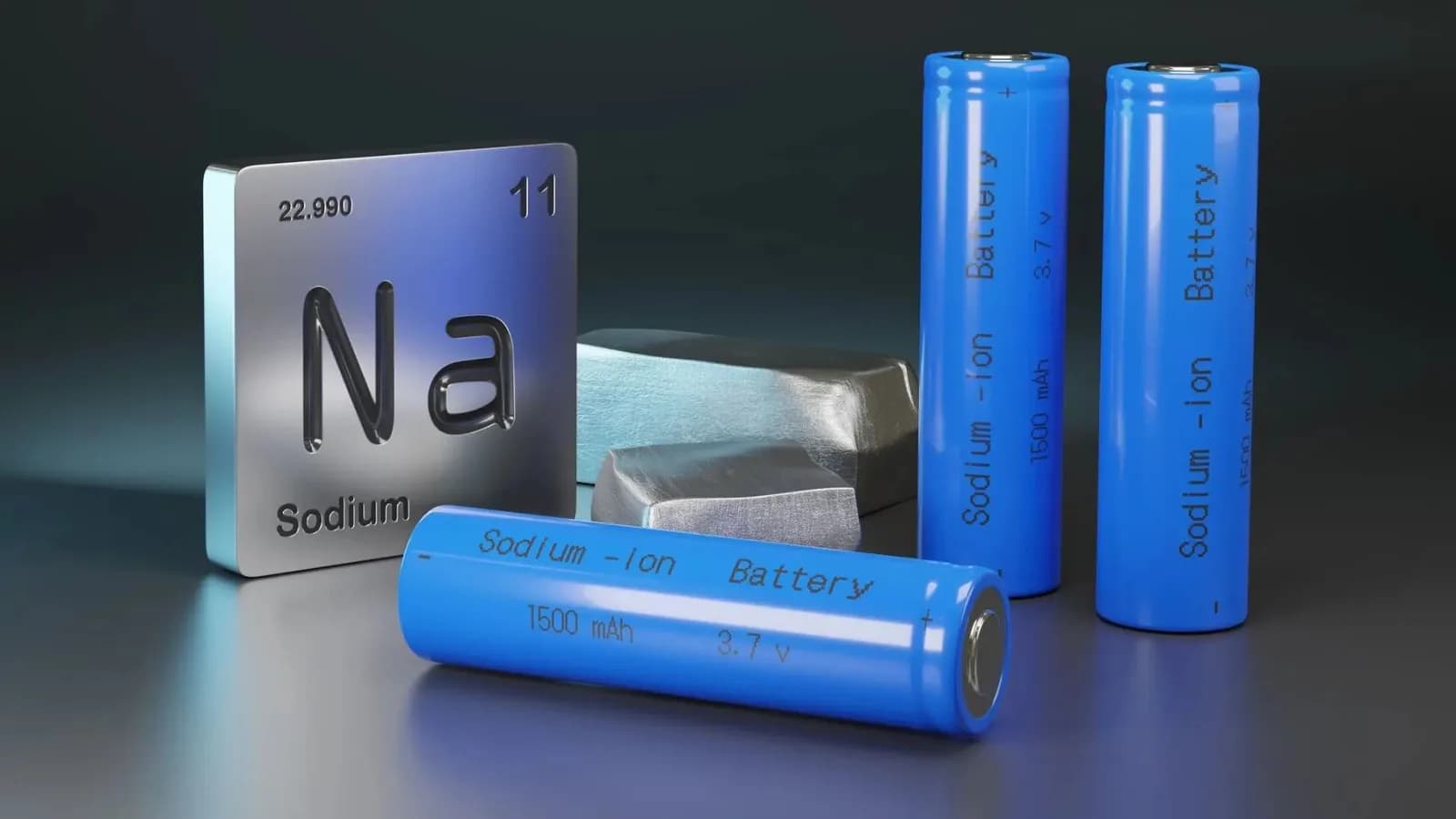
Chinese researchers have devised an electrolyte which may enable anode-free sodium batteries (AFSBs) to better maintain their performance. Using 1, 3-dioxane (DOX), the team led by Professor Weijiang Xue at Xi’an Jiaotong University and including members of the Chinese Academy of Sciences was able to manipulate surface chemistry on sodium metal. Pouch-type cells containing the novel electrolyte maintained around 80% of their original capacity following 1400 charge and discharge cycles.
Compared to lithium batteries, sodium is abundant and so sodium batteries may offer a cheaper option. Anode-free batteries can also help to further improve the active material utilization of a battery.
Unlike conventional batteries, anode-free batteries do not include an external anode. A thin current collector is used as a substrate to generate an anode. Sodium ions are plated onto this substrate during charging, from a cathode.
However, some sodium is consumed via surface chemistry. As this occurs repeatedly, the amount of energy that can be stored in the battery reduces and so does its lifespan. To address this issue, Xue’s team worked to modify the electrolyte.
DOX improves sodium plating and stripping
The research analyzed cyclic ether solvents, which are organic molecules comprising an oxygen atom as part of a ring. Both pentane and hexane rings were studied to investigate how the structure of the solvents influenced surface chemistry.
The team favored 1, 3-dioxane as, due to its low sodium ion coordinating ability it allows sodium ions to easily release solvent molecules and can therefore reversibly plate sodium. In addition, DOX is able to controllably oligomerize at the sodium surface.
The solvent molecules self-assemble into small polymer-like structures which in turn aid creation of a compact solid electrolyte interphase (SEI). This in turn prevents further electrolyte breakdown and assists with sodium plating and de-plating.
“Much previous research has focused on replicating the highly inorganic SEI found in lithium metal batteries. Our approach was to design a solvent that reduces ongoing electrolyte breakdown,” explained Xue.
“We selected 1, 3-dioxane as it both allows sodium to reversibly plate and its controllable oligomerisation leads to the generation of a compact SEI, which in turn hinders further electrolyte breakdown.”
Battery maintains performance at low temperatures
The pouch type, anode free cells had a capacity of around 0.3 amp hours (Ah). The loading of the cathode’s active material was roughly 0.041 oz/in² (20 mg/cm²). When charged/discharged at 0.25C/1C, the cells maintained around 80% of their original capacity for 1400 cycles. Moreover, at −40°F (−40°C), the cells still held around 88% of their room temperature capacity.
“We combined theoretical calculations, electrochemical measurements and advanced characterization techniques to understand these processes, particularly the molecular composition of the interphase,” said Xue.
“Importantly, rather than relying solely on laboratory coin cells, we extensively tested the electrolytes in 0.3-Ah anode-free pouch cells, providing a more practical and scalable assessment of their cycling stability.”
At a molecular scale, the researchers were able to detect oligomers within the SEI. This goes against the commonly held view that, in order to successfully generate a SEI for sodium metal batteries, this must be highly inorganic in nature and generated via salt decomposition, explained Xue.
Looking ahead, the researchers intend to explore both solid-state electrolytes and electrolyte compositions suitable for high voltage layered oxide cathodes. Ultimately, the team aims to develop sodium batteries with energy densities similar to those of high energy nickel rich lithium-ion batteries but with greater than 1000 cycle stability, concluded Xue.
The research was published online in Nature Energy.
Source: https://interestingengineering.com/energy/electrolyte-sodium-battery-capacity-cycles
Get the latest news delivered to your inbox.
Related articles