
50-MWh battery line swaps drying ovens for electron beams, runs at one-fifth the cost
A new battery electrode coating line in Indiana can produce electrodes at speeds of up...
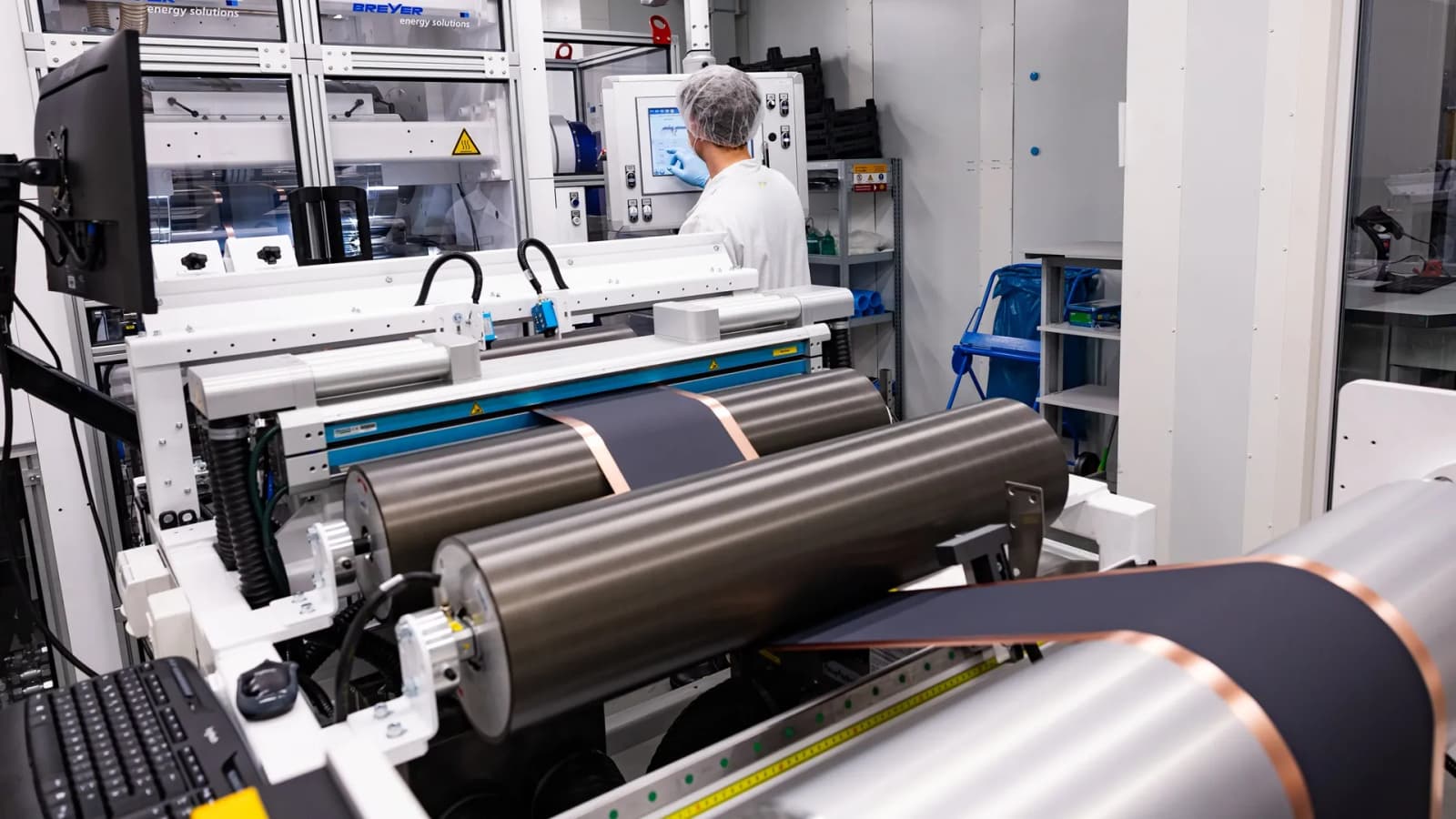
A new battery electrode coating line in Indiana can produce electrodes at speeds of up to 30 meters per minute while eliminating the solvent drying ovens typically used in lithium-ion battery manufacturing.
Ateios Systems has installed the 50-MWh-per-year line at its Newberry facility and says it is already producing and shipping electrodes for consumer electronics, defense, aerospace, and mobility applications.
The line uses the company’s RaiCure platform, which replaces conventional solvent-based coating and thermal drying with electron-curable polymers. Liquid monomers are applied as a coating before an electron beam rapidly cures them into a finished electrode.
During curing, low-molecular-weight polymers crosslink into a higher-molecular-weight polymer network. According to Ateios, this improves cohesion between electrode particles and adhesion to the current collector while requiring less than 1% binder.
Electron beams replace ovens
Ateios says the process enables coating speeds of 30 meters per minute across a 300-millimeter-wide web. The equipment can produce single-sided, double-sided, continuous, or custom-gap coatings.
Removing the thermal drying stage could also make electrode manufacturing less capital- and energy-intensive. Ateios says the system can compete with gigawatt-hour-scale coating equipment while operating at one-fifth of the capital and operating cost.
“It is great to see our technology dropped into an existing pilot tool and compete with a GWh-scale coater at one-fifth the capital and operating cost,” said Dr. Rajan Kumar, founder and CEO of Ateios Systems.
The company is also targeting faster battery development cycles. Coating trials can be completed in two to four weeks depending on their complexity, compared with three to six months for conventional programs, according to Ateios.
Materials from established suppliers are already stocked at the facility, which the company says can eliminate a 10-to-12-week material lead time before an initial production run.
More material, less binder
The manufacturing process is designed to support electrode areal loadings of 6 to 8 mAh/cm², potentially allowing manufacturers to pack more active material into electrodes while reducing the proportion of inactive material. Ateios said electrodes at these loadings have already been shipped to a customer.
The company also claims electrodes using 1% RaiCure binder can achieve twice the electronic conductivity of conventional electrodes made with polyvinylidene fluoride, or PVDF, binders.
Ateios says its binder’s stability at operating voltages above 4.2 volts can deliver 20% to 30% higher specific capacity from the same electrochemically active material.
The platform currently supports lithium cobalt oxide (LCO), lithium iron phosphate (LFP), nickel manganese cobalt (NMC), and graphite materials. Ateios is also working to extend the process to silicon, sodium-ion, and lithium titanate oxide chemistries.
The company says its electrodes have been independently tested by Intertek at less than 20 parts per million of PFAS, commonly called “forever chemicals.” Its supply chain also includes non-foreign-entity-of-concern suppliers as battery makers prepare for U.S. sourcing requirements taking effect in 2027.
Ateios is already shipping stock LCO, NMC811, LFP, and graphite electrodes from the new line.
Related articles

New center bids to supercharge nuclear isotope production for deep-space missions
Canada is moving to expand its role in supplying nuclear isotopes that could power spacecraft...
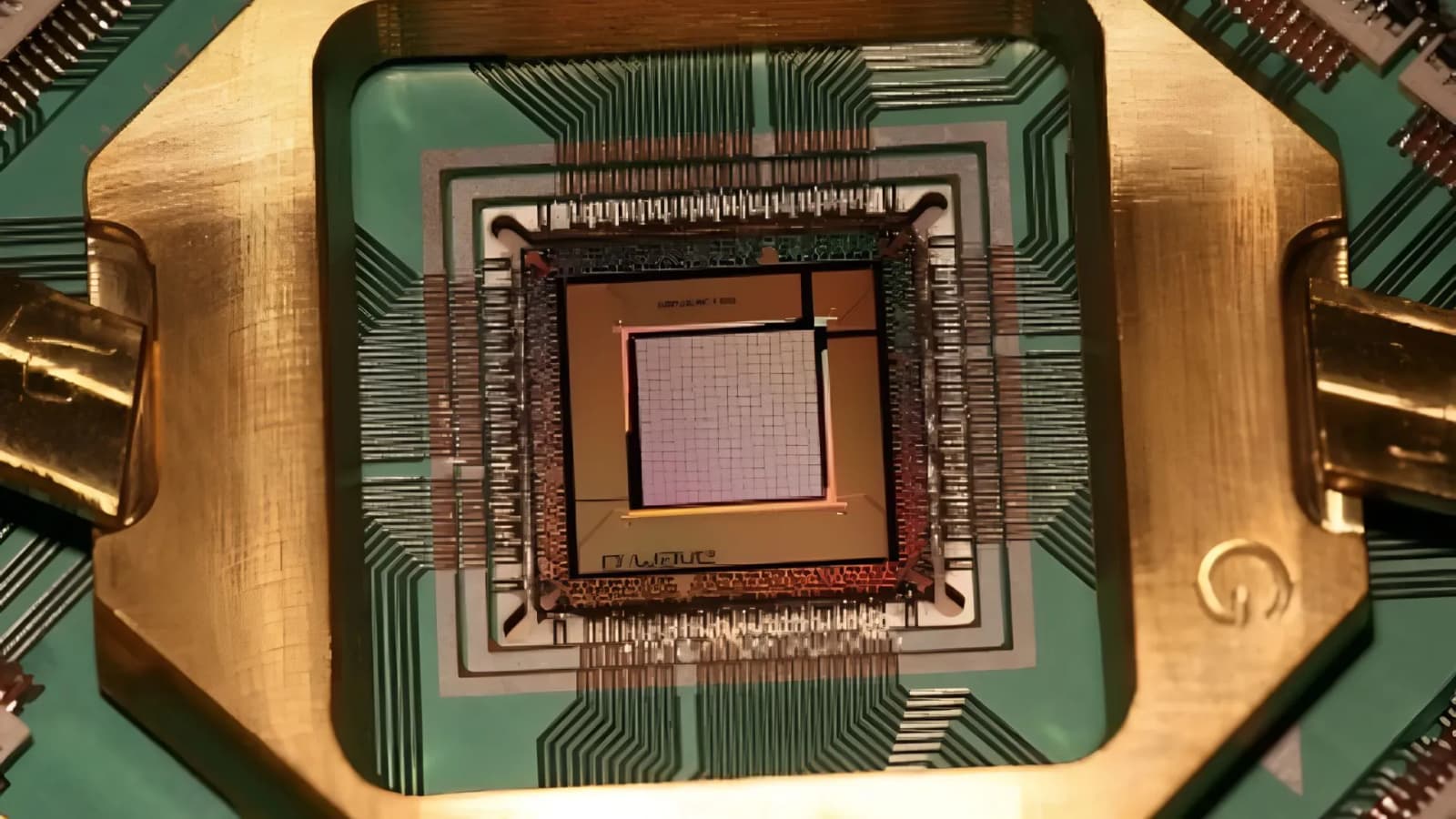
Schneider tests quantum chip that improves home energy forecasting by up to 41%
Australian government-backed Silicon Quantum Computing (SQC), whose investors include telecom giant Telstra and Commonwealth Bank,...
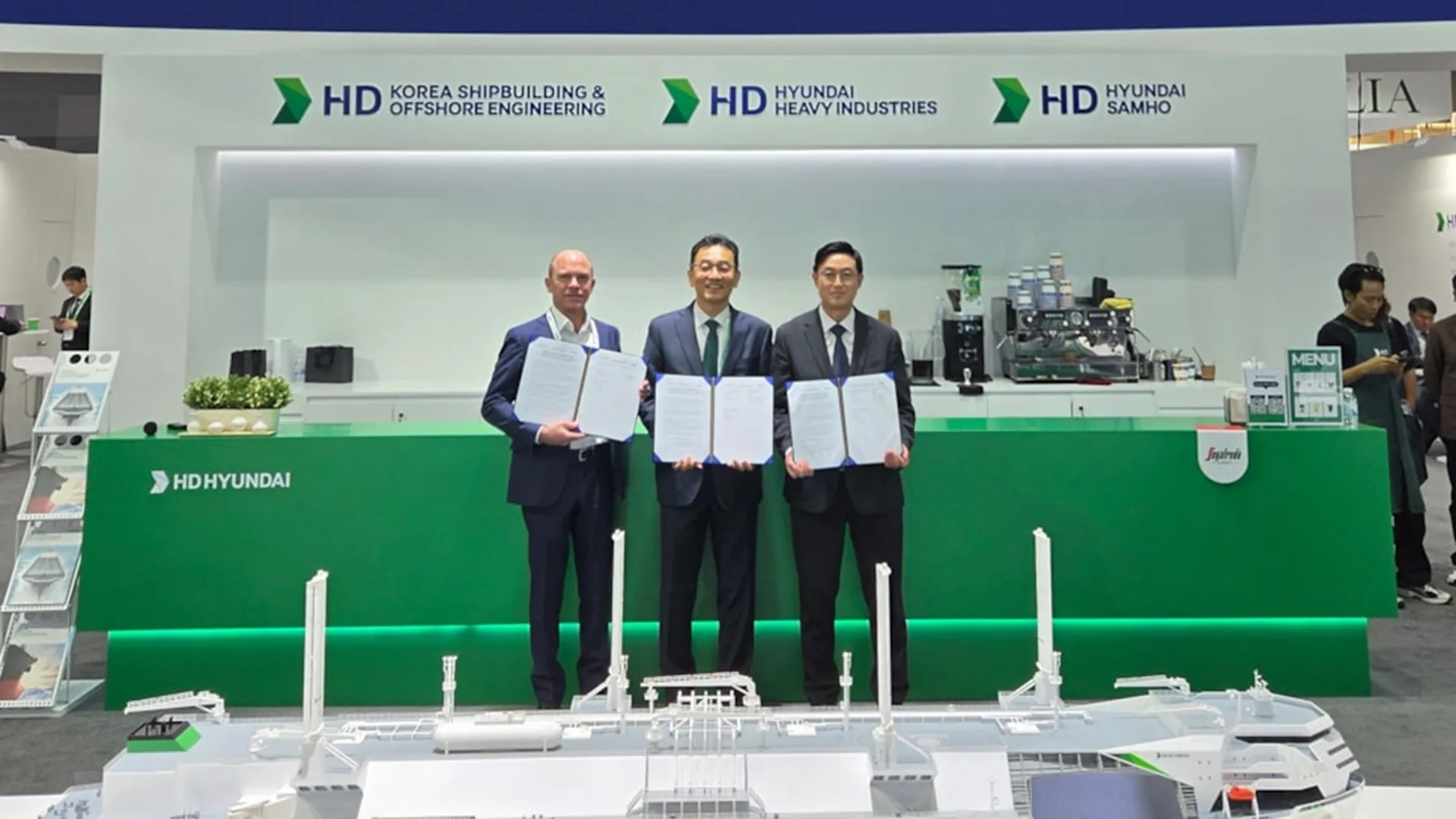
Digital twin tech from US, Korea could predict toxic ammonia leaks on new ships
The US, South Korea and Germany have recently joined forces in order to develop a...
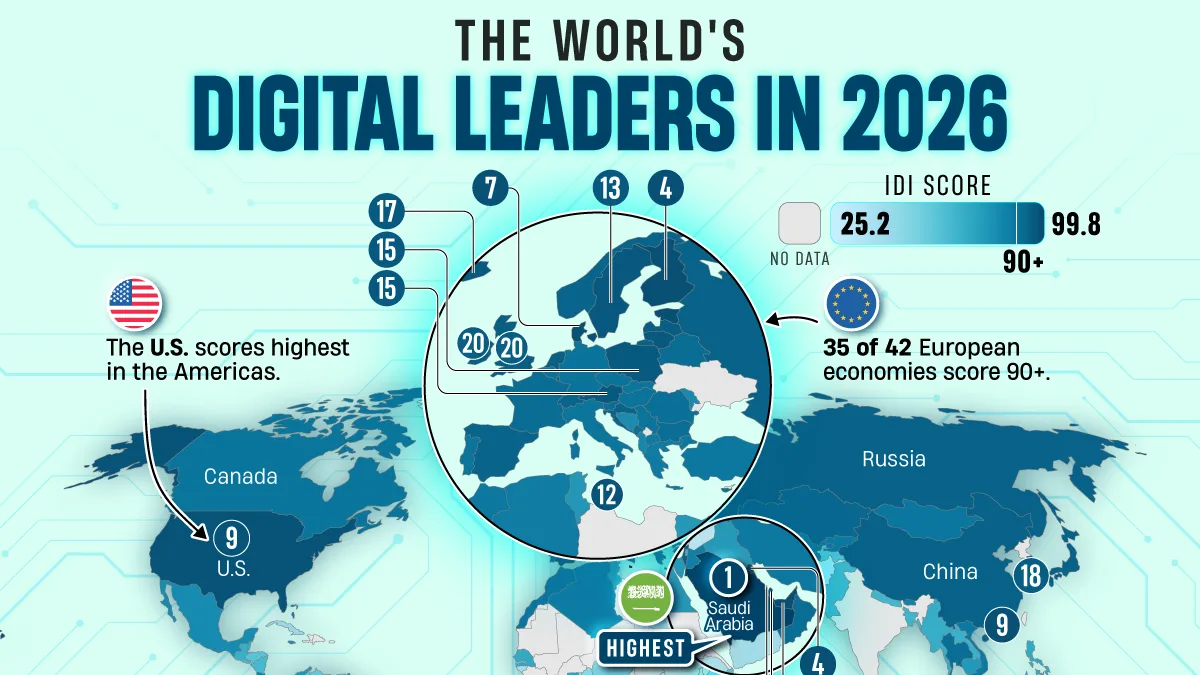
Mapped: The World’s Digital Leaders in 2026
Which economies are the most digitally connected? See how 159 economies rank in the ITU’s 2026 ICT Development Index.

Breaking up (with Elon Musk) is hard to do
In a throwback to MySpace-style internet drama, Shivon Zilis announced that she and the father of four of her children, Elon Musk, had broken up on X.

OpenAI’s Dot agent is enterprise software that can also order your dinner
It's a tale as old as last week: OpenAI's new agent platform, called Dots, is full of cute little guys who can do your bidding.