
5W handheld quantum sensor tracks underground subway train, could help spot submarines
Researchers at China’s University of Science and Technology have shown that their handheld quantum magnetometer...
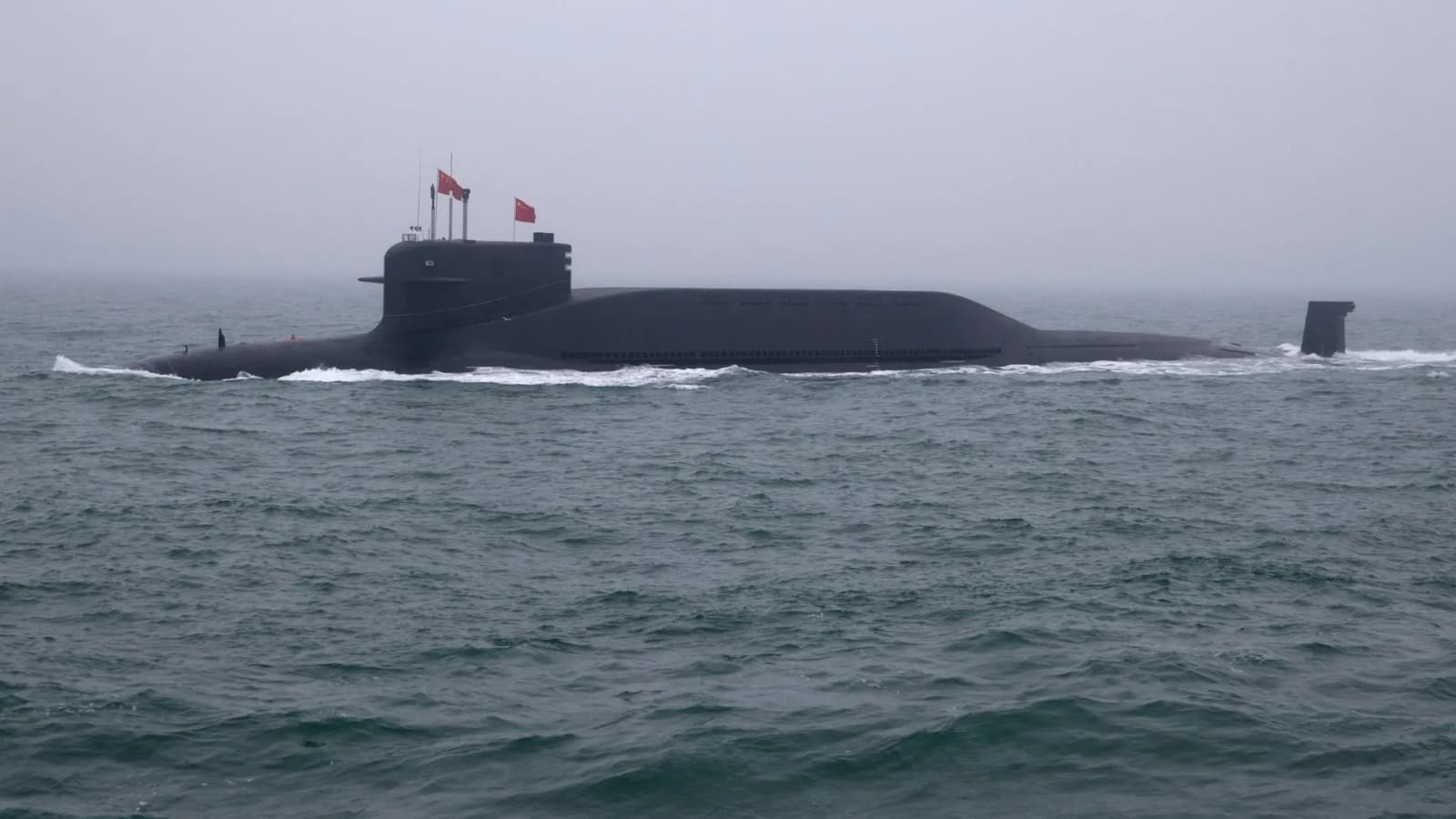
Researchers at China’s University of Science and Technology have shown that their handheld quantum magnetometer can detect a subway train moving under a city street. In real-world tests, the small device tracked changes in Earth’s magnetic field as the train arrived, stopped, and left the station.
Peng Xinhua and his team developed the magnetometer for places where regular high-sensitivity instruments are hard to use. They believe this technology could one day help detect submarines by picking up their magnetic signatures underwater.
Tiny sensor detects a moving train
The handheld device is about 7 cubic centimeters (0.4 cubic inches) in size and uses just 5 watts of power. Even though it is small, it can spot magnetic disturbances against Earth’s much larger background magnetic field.
The magnetometer uses a small cell filled with rubidium vapor. Laser light passes through the vapor while changes in the surrounding magnetic field alter the behavior of the rubidium atoms. Those changes affect the amount of transmitted laser light, allowing the system to calculate magnetic field strength.
The device has a sensitivity of about 10 picotesla per square root hertz across the 0.1 to 10-hertz low-frequency range.
Designed to stay locked during motion
More sensitive instruments such as superconducting quantum interference devices and spin-exchange relaxation-free atomic magnetometers can detect fields below one femtotesla. However, they can require extremely low temperatures or extensive magnetic shielding.
The Chinese team’s device is built to work well in changing environments. It keeps track of the resonance frequency of the rubidium atoms all the time, much like how a radio stays tuned to a particular station.
Rapid magnetic changes, probe movement, or uneven fields can cause the system to lose this lock. The researchers developed an algorithm that monitors both signal strength and the shape of the resonance peak. When the lock is lost, it scans the full frequency range to locate the resonance center and restores operation in less than a second.
The magnetometer also has a slew rate of 25,200 nanotesla per second. The paper compares this with about 10,000 nanotesla per second for QuSpin’s Mz magnetometer, giving the Chinese device a higher ability to follow rapid magnetic changes.
Tracks a major geomagnetic storm
The researchers tested the sensor beyond the subway demonstration. During a long-term monitoring experiment, it recorded a G4-level geomagnetic storm on June 1 last year.
The storm produced strong changes in Earth’s magnetic environment and pushed auroras to unusually low latitudes. Aurora displays were reported as far south as California, while a rare pink aurora appeared in China’s Heilongjiang province.
Measurements from the handheld magnetometer closely matched data from an International Real-time Magnetic Observatory Network, or INTERMAGNET, station in Cheongyang, South Korea. The comparison showed similar waveforms, spike timing, and broader trends, while the device continued operating without losing its signal lock.
Maps a buried magnetic target
Another field test involved finding a magnetic rod buried beneath farmland. The researchers conducted a blind survey across a 40-meter by 25-meter (131-foot by 82-foot) area, with the rod buried roughly 0.5 meters (1.6 feet) underground.
The team moved the handheld sensor in a serpentine scanning pattern and generated a two-dimensional magnetic map. The resulting anomaly indicated a center that closely matched the rod’s actual location.
The researchers say the same approach could support submarine detection, navigation and positioning. Other proposed applications include mineral exploration, mine clearance, underground metal pipeline fault diagnosis, urban traffic monitoring and searches for unexploded ordnance.
The study was detailed in Acta Physica Sinica.
Related articles

One company is at the center of a wave of rogue AI attacks
In July, OpenAI revealed that its AI agents had attacked Hugging Face without permission, sparking widespread concerns about AI safety.

Sony and UMG are suing Suno again
Sony and Universal Music Group filed yet another suit against Suno.

Cricut’s new compact crafter prints, cuts, and laminates stickers
Cricut announced its first crafting machines with printing capabilities that are primarily designed as all-in-one solutions for turning photos and other images into pre-cut stickers.
EOS partners with Dutch MinDef to develop 100-kW laser system to destroy drone swarms
The Netherlands is partnering with Australian defense technology company Electro Optic Systems (EOS) to develop...

Touch-free brain-inspired sensor spots moisture from 0.04 inches away with 97% precision
An international team of researchers has developed a brain-inspired electronic device that can reportedly detect...
Nuclear fusion reactors’ magnet wire put to factory test with high-pulse lasers
A factory trial now underway in Japan could solve one of the biggest bottlenecks in...