US scientists take real-time look at spacecraft heat shields that withstand 1,652 °F temperature
Researchers in the United States have got real-time look inside spacecraft heat shields during extreme...
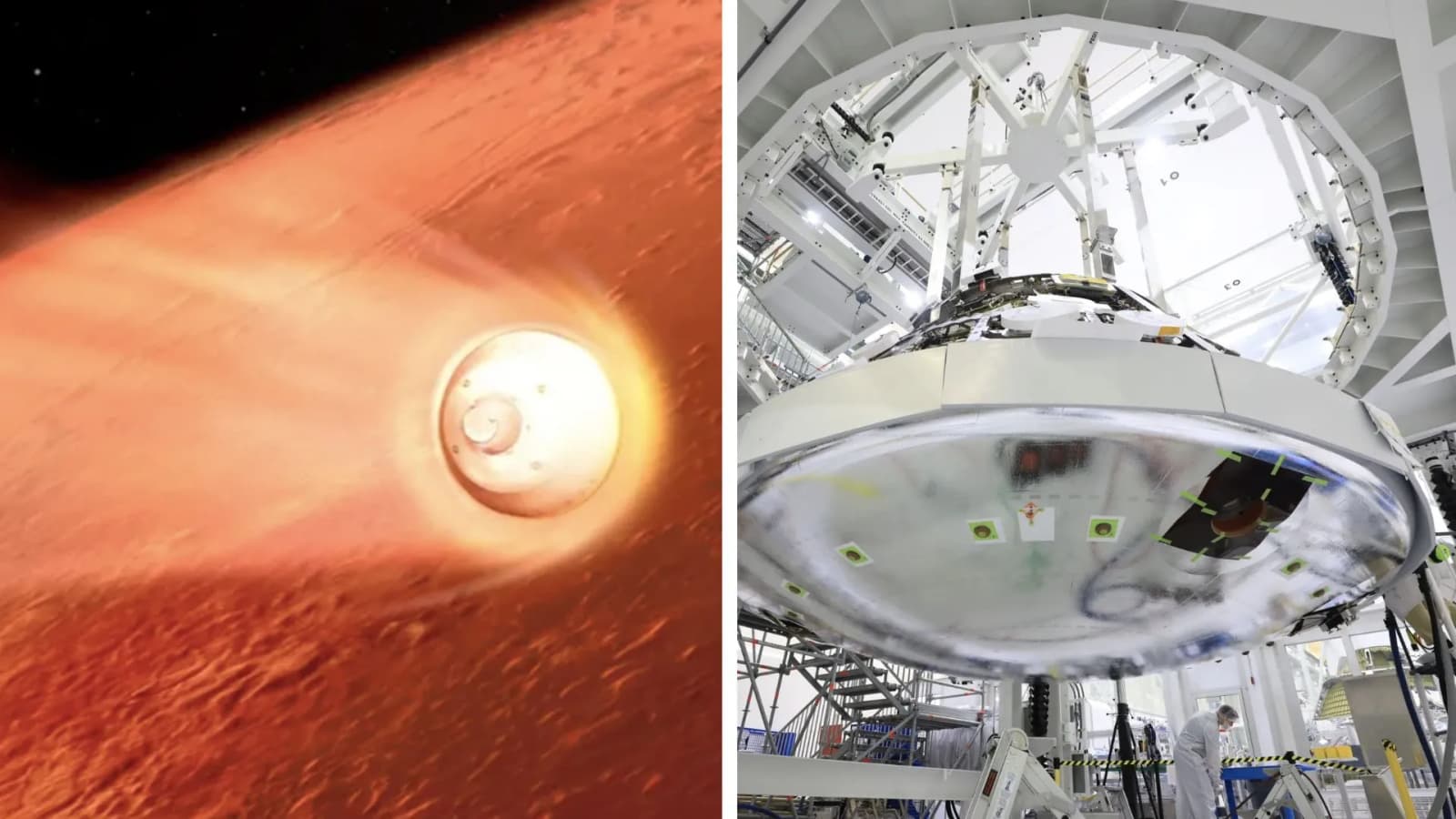
Researchers in the United States have got real-time look inside spacecraft heat shields during extreme heat conditions. Researchers at Advanced Light Source (ALS) used X-ray imaging and AI-powered analysis, which revealed how heat shield materials degrade microscopically during atmospheric reentry conditions.
Through a decade-long partnership between the ALS and NASA, researchers are studying how heat shield materials called superlight ablators degrade, informing NASA spacecraft design.
Now, the work at the ALS offered a new detailed picture of this hidden process, one that has meaningfully improved how engineers model and design heat shields for space missions such as the recent Artemis missions.
Directly observing how heat shield materials degrade
“Directly observing how heat shield materials degrade during heating with this technique has been transformative for atmospheric entry research since it gives us unique insights and helps us visualize the internal structural changes that drive ablation as it occurs,” said Vishnu Oruganti, who was a postdoctoral fellow at the University of Illinois Urbana-Champaign at the time of the study and is now a researcher at NASA’s Johnson Space Center in Houston.
“Nearly every major NASA ablative heat shield material has been studied with this technique at the Advanced Light Source, including those relevant to the Artemis and Mars entry missions.”
As part of a long-term collaboration with the ALS, a team of researchers from the University of Illinois Urbana-Champaign and NASA used in situ X-ray micro-computed tomography, known as micro-CT, to peer inside a class of heat shield materials called superlight ablators, the same kind used on the backshells of NASA spacecraft.
Researchers tracked how high-temperature heating affects real-time multiphase chemical decomposition
The team pushed the technique further than ever before by heating the samples to 1,652 degrees Fahrenheit, the top of temperature range in which the materials begin to decompose, and imaged them on the micrometer scale over multiple time points. The researchers studied two commercial ablators, SLA-220 and SLA-561V, which are used in different parts of spacecraft backshells and are made with different compositions. Through the micro-CT technique, researchers tracked how high-temperature heating similar to atmospheric reentry affects the real-time multiphase chemical decomposition and porosity, according to a press release.
These measurements provide data for developing and validating predictive models, reducing uncertainty in heat shield performance, improving mission planning and ultimately helping ensure the safety and reliability of future crewed exploration missions, as per the release.
“We can perform 3D imaging of samples under different extreme conditions such as heat, cold, pressure, and tension, and we can watch the internal structure of materials evolve and give a deep look into internal structure in high detail as their properties change under these conditions,” said Liz Clark, ALS scientist.
“This collaboration has been a perfect application of this technique. After the first Artemis mission, where heat shields didn’t perform as NASA expected from computational methods, they used the ALS to examine materials from these shields to better understand how the internal structure evolves over time.”
Researchers revealed that the AI-enhanced imaging revealed a striking difference between the two heat shield materials. SLA-561V contains cork — the same natural material used in wine bottle stoppers — as a structural filler. When heated, the cork chemically breaks down and disappears, leaving behind open, empty pockets distributed throughout the material. SLA-220 contains no such organic filler; instead, its rubber-like silicone matrix responds to heat by forming a dense, branching network of interconnected channels.
Source: https://interestingengineering.com/space/real-time-look-inside-spacecraft-heat-shields
Related articles

China’s Chang’e 7 delay may have dodged a bullet for US in moon race, says NASA chief
China’s decision to delay its Chang’e 7 lunar mission until early next year has drawn...
New vertical quantum sensor works in magnetic fields 20,000 times stronger than Earth
Researchers at the University of Twente in the Netherlands have built a vertical quantum sensor...

256-qubit quantum computer heads to Florida for research across health and energy
US quantum computing company IonQ will install a 256-qubit trapped-ion quantum computer at Florida International...