
Nuclear fusion reactors’ magnet wire put to factory test with high-pulse lasers
A factory trial now underway in Japan could solve one of the biggest bottlenecks in...
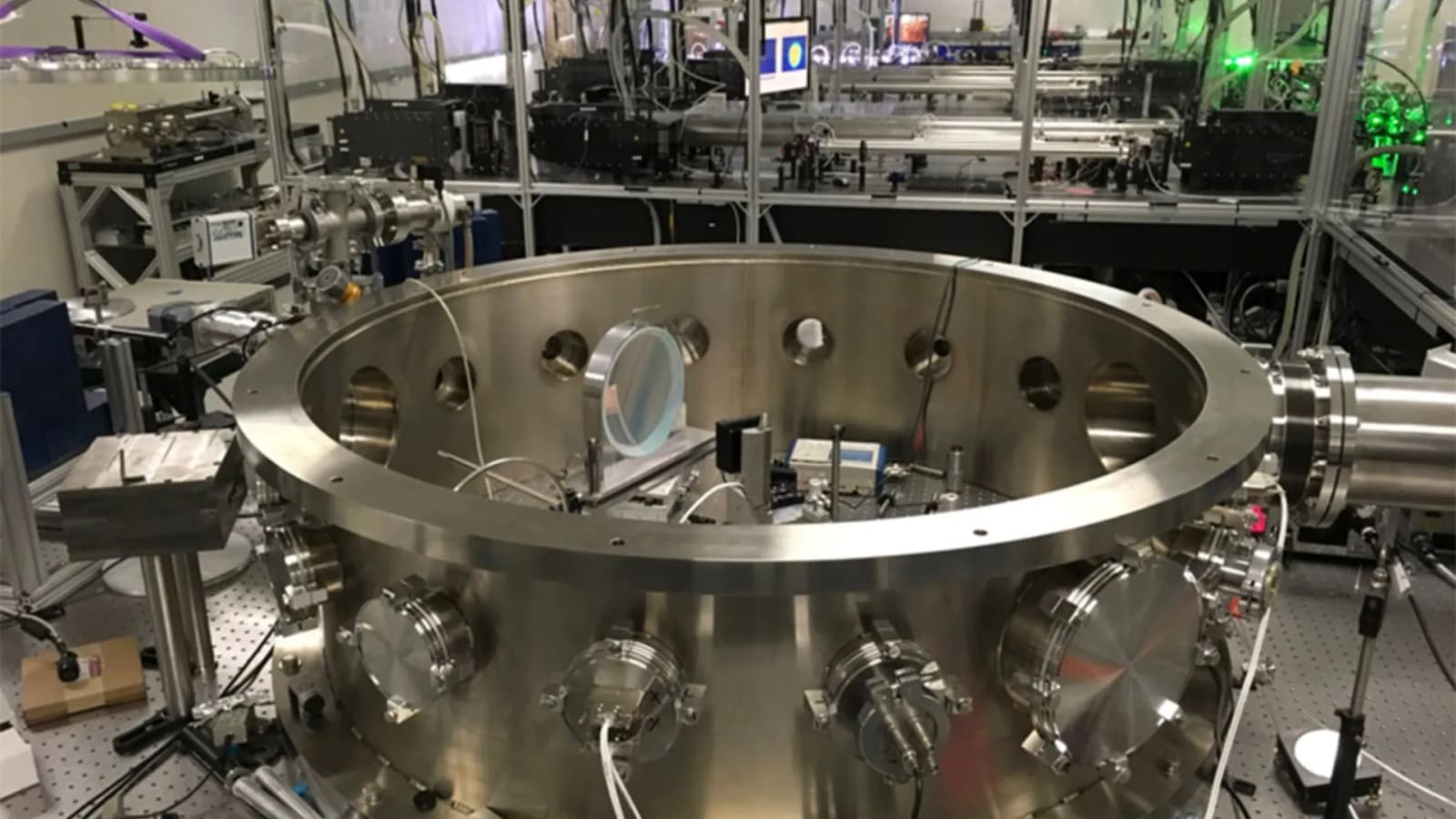
A factory trial now underway in Japan could solve one of the biggest bottlenecks in clean fusion energy. The challenge is simple: how to mass-produce next-generation superconducting wire.
Gigaphoton builds the high-precision lasers used to manufacture microchips. Now, the company has sent one of its industrial excimer lasers to a commercial wire-making plant in Japan. The trial takes the technology out of the research lab and puts it straight onto an active production line.
Engineers have begun testing the system, called the L300KZ, with an aim to find out if high-performance wire can be made rapidly, cheaply, and in high volumes.
Fusion with powerful magnets
Fusion reactors aim to generate clean power by mimicking the sun’s process. To do this, they must trap superheated plasma inside a tight magnetic cage so it never touches the vessel walls.
These powerful magnets depend on rare-earth barium copper oxide, known as REBCO. As a “high-temperature” superconductor, REBCO loses all electrical resistance at far more practical cryogenic temperatures than traditional materials.
This allows massive electrical currents to flow through small coils without wasting energy as heat. Yet producing REBCO wire remains painfully slow and costly.
Chipmaking precision to superconducting wire
Factories build the material layer by atomic layer using pulsed laser deposition. Inside a vacuum chamber, short pulses of high-energy ultraviolet laser light strike a target. The material vaporizes into a plume of particles, settling onto a metal tape as a micro-thin film.
If the laser beam wavers even slightly, defects ruin the crystalline structure. When that happens, the wire’s performance degrades, and its current-carrying capacity drops sharply.
This is where semiconductor manufacturing comes in. For decades, Gigaphoton has produced krypton-fluoride (KrF) excimer lasers that project microscopic circuit patterns onto silicon wafers. These chipmaking systems run day and night without stopping.
The L300KZ adapts that same platform for thin-film deposition. It delivers high pulse energy while keeping power output steady over long shifts. In a factory environment, that kind of stability prevents costly downtime.
During the trial, engineers will measure how tiny changes in laser settings alter the quality of the film. Their aim is to establish a dependable recipe for high-volume manufacturing.
Far-reaching ambitions
The project is backed by the Japanese Cabinet Office under Goal 10 of its Moonshot Research and Development Program. The initiative funds fundamental superconducting technologies that could serve several competing fusion reactor designs.
The technology could also reach well beyond nuclear energy. Tatsuo Enami, President and CEO of Gigaphoton, pointed out that reliable thin-film deposition has broad industrial value.
“In addition to high-temperature superconducting wire, we are looking ahead to applications in a broad range of advanced materials fields where PLD technology is used, including functional thin films, advanced electronic materials, and optical materials,” concluded Enami.
For the moment, however, the team has one urgent task: proving that fusion’s most critical material can survive the leap from the laboratory to the assembly line.
Source: https://interestingengineering.com/energy/fusion-reactors-superconducting-wire
Related articles
New lithium-sulfur battery pushes sulfur to 1,700 Wh/kg with third electron
Researchers in the U.S. have developed a new lithium-sulfur battery chemistry that allows sulfur to...

Can Apple Home’s AI camera features outsmart Amazon’s and Google’s? I put them to the test
A few years back, I was at a beachside Easter egg hunt, watching my kids dash through sand dunes searching for sweet treats. My phone buzzed in my pocket; I ignored it.

Google’s Project Suncatcher moonshot to send AI chips into space for first time
Google plans to send a prototype satellite carrying four of its AI chips into low...

Microsoft thinks its new Copilot ‘super app’ will be as influential as Office
After teasing its new Copilot "super app" last month, Microsoft is officially unveiling it today.

Insta360 conquered 360 cameras — now it’s eyeing glasses
It's right there in the name: "Insta360" makes 360-degree cameras, ones that film every angle simultaneously so you can shoot first and frame later.
US firm begins making lithium-ion batteries for defense that work in extreme cold
South 8 Technologies has started operating a semi-automated battery cell manufacturing line at its facility...