
New lithium-sulfur battery pushes sulfur to 1,700 Wh/kg with third electron
Researchers in the U.S. have developed a new lithium-sulfur battery chemistry that allows sulfur to...
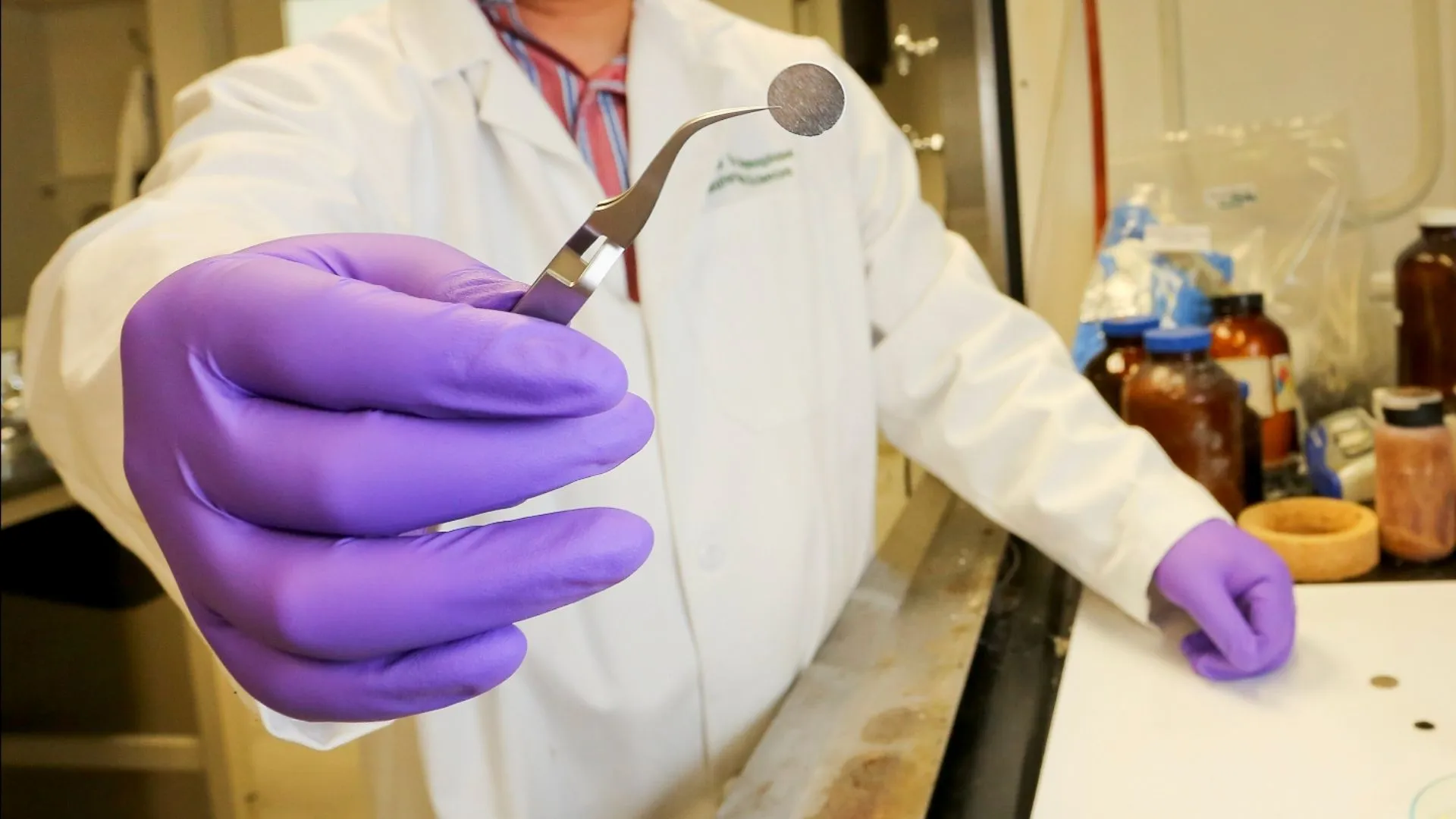
Researchers in the U.S. have developed a new lithium-sulfur battery chemistry that allows sulfur to participate in an additional energy-storing reaction, potentially increasing how much energy these experimental batteries can hold.
The team from Vanderbilt University and the University of Maryland used chlorine to enable sulfur atoms to exchange a third electron during charging and discharging.
Laboratory tests showed the approach increased sulfur’s charge-storage capacity by about 58 percent while raising the average operating voltage from roughly 2.05 volts to 2.54 volts.
The findings could help researchers extract more energy from sulfur, an abundant and relatively inexpensive material already being explored as an alternative to cathode materials used in lithium-ion batteries.
Unlocking sulfur’s third electron
Lithium-sulfur batteries have attracted attention because sulfur can store considerably more charge by weight than materials commonly used in lithium-ion cathodes. However, conventional lithium-sulfur chemistry operates at a relatively low voltage.
“The traditional way of thinking about lithium-sulfur batteries leaves some of sulfur’s redox power untapped. We wanted to see whether we could expand sulfur’s redox capability and use it to store more energy,” said De-en Jiang, the H. Eugene McBrayer Professor of Chemical Engineering and Professor of Chemistry at Vanderbilt University.
In conventional lithium-sulfur batteries, each sulfur atom exchanges two electrons as the battery charges and discharges. The researchers introduced chlorine to extend this process, enabling sulfur to exchange a third electron.
The additional reaction occurs at a higher voltage. Together, the increased charge capacity and voltage enabled one kilogram of sulfur to store more than 1,700 watt-hours of energy in the experimental cell.
Electrolyte keeps reaction under control
Making the additional reaction reversible required the researchers to address another problem. Chlorine needed to interact with sulfur during charging without allowing the resulting sulfur-chlorine compound to migrate through the battery and react with the lithium-metal electrode.
The team used molecular simulations to examine how lithium and chloride ions behaved in different electrolytes. The calculations helped researchers design an electrolyte that keeps chloride available for reactions with sulfur.
They also selected an electrolyte in which the sulfur-chlorine reaction product does not readily dissolve. This keeps the material inside the positive electrode, allowing the reaction to reverse during discharge.
Several spectroscopy techniques subsequently confirmed that sulfur repeatedly moved through the newly accessible chemical state during charging and discharging.
Pouch cell retains 78% capacity
Researchers also built a small, single-layer pouch cell to demonstrate the chemistry beyond the coin cells typically used in early-stage battery research.
The pouch cell retained 78 percent of its initial capacity after 100 charging cycles.
The technology, however, remains an early demonstration. The prototype uses a lithium-metal electrode, relatively modest quantities of sulfur, and more electrolyte than would be desirable in a commercial battery.
After accounting for major battery components rather than considering the electrode alone, researchers estimate the approach could achieve a stack-level specific energy of 477 watt-hours per kilogram.
That would be about 37 percent higher than the conventional lithium-sulfur system used for comparison in the study.
The findings were published in the Nature Energyjournal.
Source: https://interestingengineering.com/energy/new-lithium-sulfur-battery-chemistry
Related articles
Nuclear fusion reactors’ magnet wire put to factory test with high-pulse lasers
A factory trial now underway in Japan could solve one of the biggest bottlenecks in...

Can Apple Home’s AI camera features outsmart Amazon’s and Google’s? I put them to the test
A few years back, I was at a beachside Easter egg hunt, watching my kids dash through sand dunes searching for sweet treats. My phone buzzed in my pocket; I ignored it.

Google’s Project Suncatcher moonshot to send AI chips into space for first time
Google plans to send a prototype satellite carrying four of its AI chips into low...

Microsoft thinks its new Copilot ‘super app’ will be as influential as Office
After teasing its new Copilot "super app" last month, Microsoft is officially unveiling it today.

Insta360 conquered 360 cameras — now it’s eyeing glasses
It's right there in the name: "Insta360" makes 360-degree cameras, ones that film every angle simultaneously so you can shoot first and frame later.
US firm begins making lithium-ion batteries for defense that work in extreme cold
South 8 Technologies has started operating a semi-automated battery cell manufacturing line at its facility...