
Beijing to Shanghai in 30 minutes: China ready to test its Supersonic TMS-10 plane
China is moving its next-gen supersonic passenger aircraft research into a more demanding phase, with...
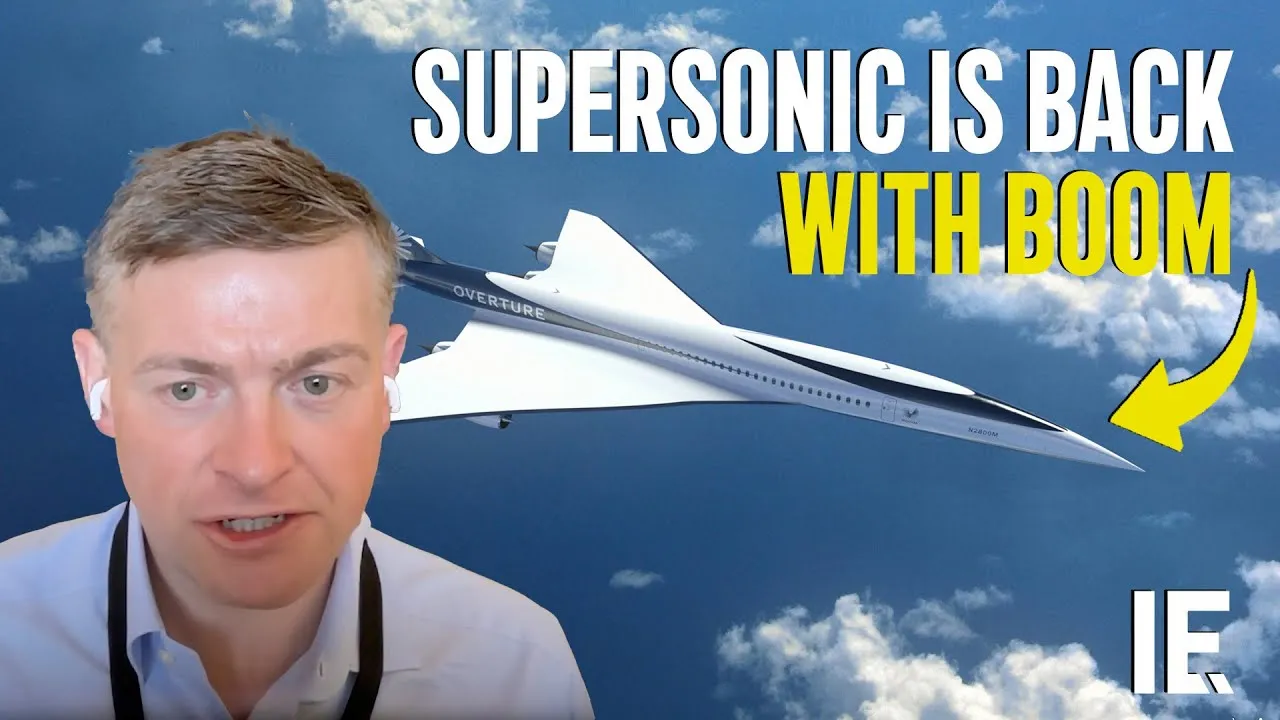
China is moving its next-gen supersonic passenger aircraft research into a more demanding phase, with the TMS-10 low-boom demonstrator now entering final assembly ahead of a planned supersonic test flight by the end of 2026.
Developed by Tianmushan Laboratory, a research institution established with support from Beihang University, the aircraft is designed to test technologies that could eventually enable quieter and more practical supersonic passenger aircraft. The laboratory has already completed aerodynamic wind-tunnel testing, flight-control design and airframe manufacturing.
If the technology eventually makes its way into a larger passenger aircraft, the potential speed advantage would be substantial. Chinese state media reports that a future supersonic aircraft could reduce the Beijing-Shanghai journey to around 30 minutes, compared with approximately two hours on today’s commercial flights.
Designed to fly at Mach 2
The TMS-10 project centers on a 10- to 15-seat supersonic business aircraft intended for business travel and high-end tourism. Its aerodynamic configuration has been optimized for cruise speeds up to Mach 2 while also supporting subsonic flight around Mach 0.95.
Furthermore, the TMS-10 is being developed around the idea of combining high-speed performance with lower aerodynamic drag and a substantially reduced sonic boom. A 1:18-scale demonstrator first flew in June 2025 from Dingzhou Airport in Hebei. That flight remained below Mach 0.2 and was primarily used to validate low-speed takeoff and landing, stability, and control, Global Times reports.
Next, the Chinese team plans to push the demonstrator through the sound barrier and conduct sustained supersonic flight while measuring its sonic boom and evaluating its aerodynamic configuration, flight-control system, and integration between the aircraft’s aerodynamics and propulsion system.
The demonstrator uses a three-surface configuration incorporating a forward canard and a T-tail. According to Tianmushan Laboratory, the arrangement is intended to prevent shock waves generated around the nose and wings from merging into a stronger wave, while the rear configuration helps redistribute and weaken the shock waves.
Breaking the sound barrier is only the beginning
Making a passenger aircraft fly at Mach 2 is considerably more complicated than demonstrating supersonic flight with a fighter or small experimental aircraft. A commercial aircraft has to combine high-speed aerodynamics with structural durability, thermal management, passenger comfort, reliability and manageable operating costs. The aircraft must also withstand the heat generated by sustained high-speed flight while maintaining an acceptable service life.
Propulsion presents another major hurdle, with researchers involved in the project highlighting the engine core, air intake, and exhaust system as key areas requiring further development. According to Tianmushan Laboratory, future versions will require a variable-cycle propulsion system capable of supporting both supersonic and subsonic flight efficiently.
The transition from the current demonstrator to a passenger-carrying aircraft will therefore require several additional stages. These include a roughly 10-ton larger-scale low-boom demonstrator, additional flight testing, and validation of critical structural components.
China’s current work remains at the pre-research and technology-validation stage rather than commercial aircraft development. NASA’s X-59 is taking a different approach, focusing on reducing the perceived loudness of sonic booms rather than simply eliminating them. The aircraft reached supersonic speed in 2026 and has subsequently conducted flights at Mach 1.4 and 55,000 feet as part of NASA’s quiet-supersonic research program.
Related articles
World’s first zero-degradation elastocaloric cooling device maintains 1 million operational cycles
Researchers from the Hong Kong University of Science and Technology (HKUST) have unveiled the world’s...

MARTAC expands US drone boat production with 100 more Devil Rays per year
MARTAC partners with SŌLACE Boats to increase production of its Devil Ray autonomous vessels by...

Why promising battery materials break down when researchers build real cells
A battery material can look impressive in a laboratory and still fail when turned into...

China showcases Type 99B tank in live-fire drills after 2025 parade debut
China has released footage of live-fire drills of its Type 99B main battle tank roughly...
Sentinel ICBM explained: Inside America’s next-generation nuclear missile
For more than five decades, the U.S. land-based nuclear deterrent has relied on the LGM-30...
Raytron brings AI understanding to thermal imaging with new infrared vision-language model
Thermal imaging is moving beyond simply capturing heat signatures. At CIOE 2026, Raytron unveiled an...