Elon Musk teases SpaceX’s orbital supercomputers, says it will ‘blow people’s minds’
Elon Musk is preparing to take high-performance computing beyond Earth’s atmosphere. SpaceX plans to begin...
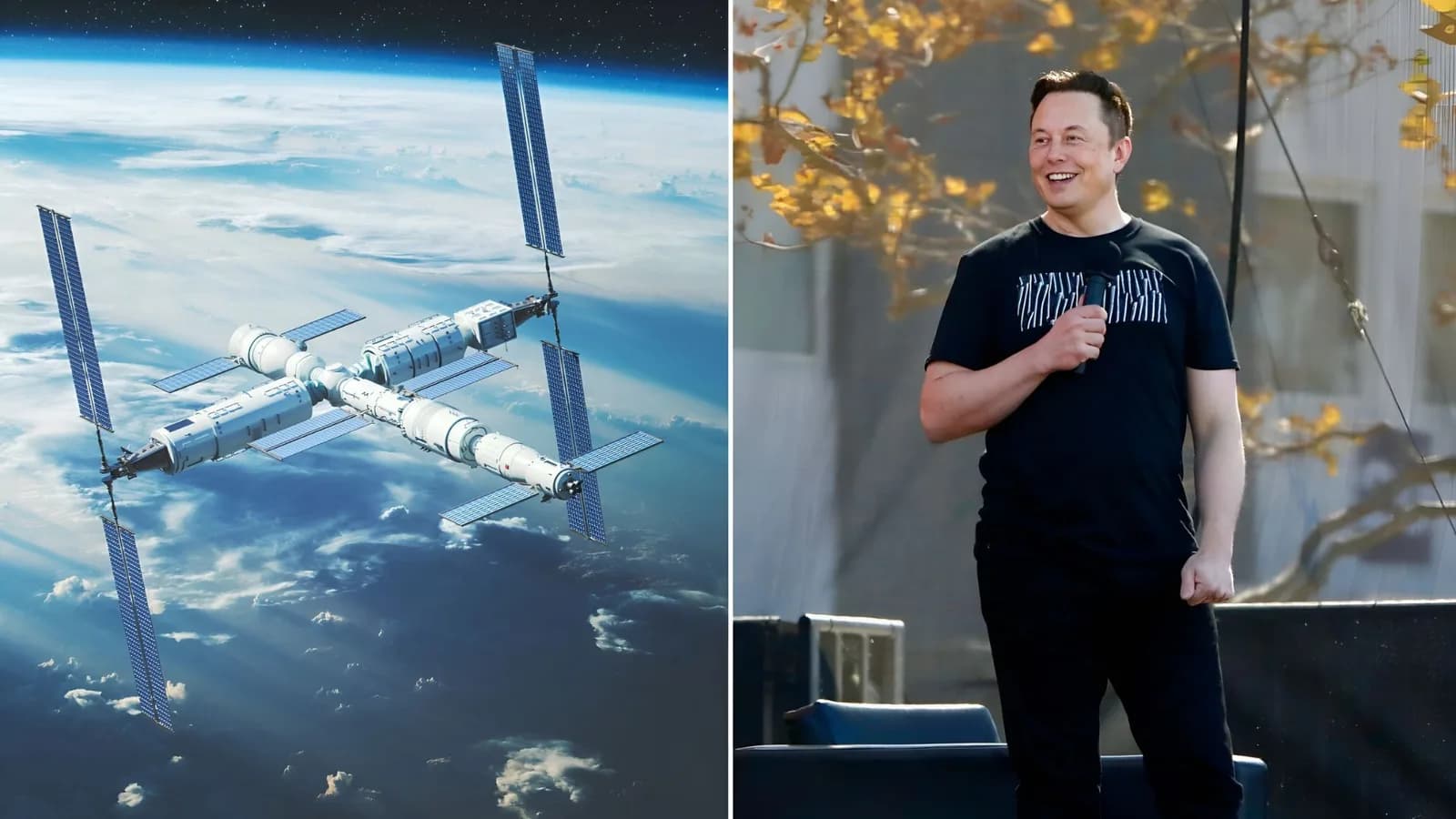
Elon Musk is preparing to take high-performance computing beyond Earth’s atmosphere. SpaceX plans to begin launching its StarMind SI computing systems into orbit in the third quarter of 2027. The company expects deployment to accelerate through 2028 and 2029. He says the project could reshape how engineers approach large-scale computing infrastructure.
Speaking with investor Ron Baron at the 33rd Annual Baron Investment Conference in New York, Musk teased more details about the project. “When we unveil the details of the StarMind computer next year, it will blow people’s minds,” he said.
SpaceX is developing its first orbital computing systems alongside NVIDIA. The initial hardware will center on NVIDIA’s Vera Rubin NVL72 platform. The partnership brings advanced computing hardware into a project designed for operation beyond traditional terrestrial data centers.
Supercomputing moves into orbit
Space-based computing could offer advantages beyond freeing data centers from land constraints. Musk also sees orbital infrastructure as an opportunity to rethink global data transmission.
He discussed SpaceX’s upcoming Starlink Version 4 satellites during the interview. The next generation could deliver 10 times the capacity of Version 3. Musk said Version 3 already offers 10 times the capability of Version 2.
When we unveil the details of the Starmind computer next year, it will blow people’s minds
— Elon Musk (@elonmusk) November 6, 2026
Laser communication will play a major role in that upgrade. SpaceX plans to equip each satellite with 10 next-generation laser links. Each link could deliver data transmission speeds exceeding 10 terabits per second.
Musk also outlined a more ambitious possibility involving more than 100,000 satellites. He suggested that roughly 100 laser links per satellite could eventually challenge traditional undersea communications cables.
His argument centers on transmission physics and network geometry. Light travels approximately 40% faster through space than through fiber-optic cables. Orbital connections can also follow more direct paths between distant destinations.
Memphis becomes computing hub
Musk also discussed SpaceX’s massive computing infrastructure project in Memphis, Tennessee. He described an unusually hands-on approach to developing the facility.
The billionaire said he lives in an Airstream trailer beside its power plant. SpaceX built the facility’s power infrastructure in approximately one year. Elon Musk claimed the process typically takes around five years.
The power plant now produces more than one gigawatt, according to the SpaceX chief. He also described personally handling electrical and networking work across the site.
~100 lasers per satellite, each operating above 10 Tb/s, with over 100k satellites should be able to outcompete undersea cables.
Speed of light in space is ~40% faster than cable and the path is direct, instead of following the outline of land masses. https://t.co/l7aqDUoTAK
— Elon Musk (@elonmusk) November 6, 2026
“I’ve pulled power cables the size of an anaconda,” Musk said. He added that he has worked on fiber-optic connections and network switches.
Musk said he walks the facility up to five times daily. He wants direct exposure to the engineering challenges facing employees. His approach, he explained, helps him understand the difficulties workers encounter.
He also defended the economic impact of large data centers. Musk argued that Memphis businesses have benefited from SpaceX’s presence. He cited stronger restaurant and hotel activity, higher wages, and additional local tax revenue.
Tesla targets faster chip development
The interview also touched on Tesla’s expanding semiconductor ambitions. Musk revealed that Tesla is developing a research chip fabrication facility at Gigafactory Texas.
The facility aims to shorten semiconductor development cycles dramatically. His target involves reducing processes that traditionally take approximately one year. He wants engineers to complete comparable development cycles in roughly one month.
Tesla also plans to establish Terafab in Grimes County, Texas. The two facilities will serve different purposes. The Austin research operation will experiment with chip designs and manufacturing techniques. Terafab will focus on scaling successful developments into high-volume production.
Tesla wants to bring multiple stages of semiconductor development under one roof. These include logic fabrication, memory production, lithography, and advanced packaging. The setup will also support chip testing.
The broader ambition is to accelerate hardware development for Tesla’s growing computing requirements. However, Elon Musk’s orbital computing plans remain the central focus. SpaceX now has a 2027 launch target for its StarMind systems, with larger deployments expected afterward.
Source: https://interestingengineering.com/ai-robotics/spacex-starmind-orbital-supercomputers
Get the latest news delivered to your inbox.
Related articles