Bendable lithium-sulfur battery retains 99.8% voltage across 1,000 flex cycles
In the near future, drone landing gear may serve a dual purpose: providing structural support...
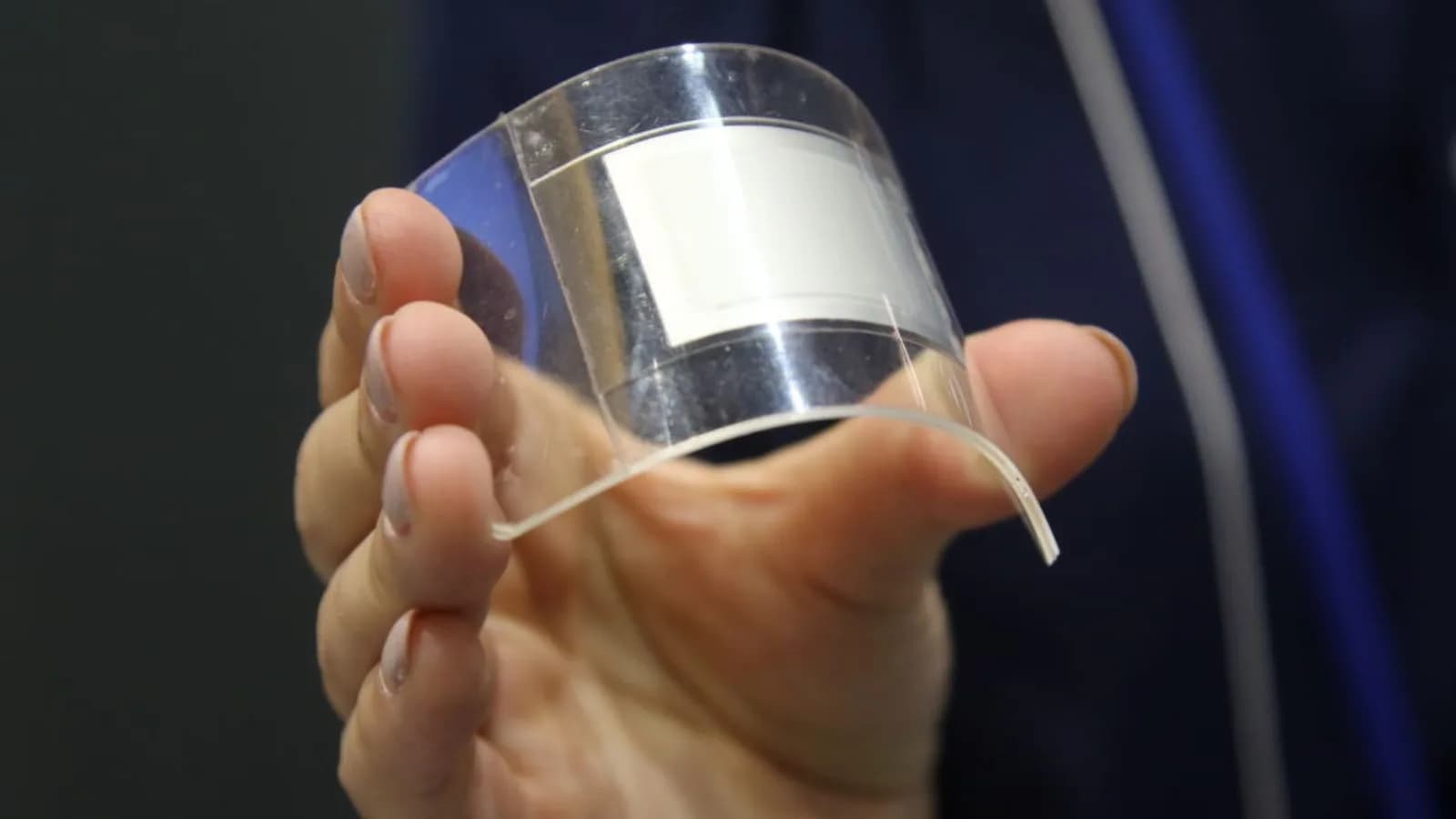
In the near future, drone landing gear may serve a dual purpose: providing structural support and supplying electrical power.
Researchers at the Korea Advanced Institute of Science and Technology (KAIST) have taken a step toward making that possible by developing a nanowire-based lithium-sulfur battery electrode that remains stable even after 1,000 bending cycles.
The new design could let curved components, such as drone legs and robotic frames, double as batteries, reducing overall weight and freeing space for larger payloads or longer operating times.
Conventional batteries are packaged separately from a machine’s structure. But the KAIST team’s battery is designed to become part of the frame itself. The development revolves around nickel cobalt selenide (NiCo₂Se₄) nanowires grown directly onto woven carbon cloth, creating a flexible electrode that maintains electrical performance even when bent into complex shapes.
Nanowires strengthen battery for curved structures
Structural batteries have long been viewed as a way to make drones, robots, and other lightweight systems more efficient by combining mechanical support and energy storage into a single component. However, most previous designs have focused on flat battery structures that are difficult to fit into curved or hollow parts.
To overcome that limitation, the KAIST researchers grew ultrafine nickel cobalt selenide nanowires directly on interwoven carbon fibers instead of coating active materials onto a flat electrode. The carbon cloth provides a strong, electrically conductive foundation, while the nanowires remain firmly anchored to its surface.
The approach helps solve a common problem with conventional battery electrodes, where coatings can crack or peel away after repeated bending, interrupting electrical pathways and reducing performance.
The team paired the nanowire structure with a lithium-sulfur battery, a chemistry known for offering high energy storage at relatively low weight. The nickel cobalt selenide nanowires also help improve sulfur’s poor electrical conductivity while trapping lithium polysulfides, chemical compounds that normally escape during charging and discharging and gradually reduce battery performance.
Battery kept working after frame broke
Tests showed the electrode retained its structural integrity after 1,000 bending cycles at a radius of just 2.5 millimeters, with the nanowires remaining firmly attached to the carbon fibers and showing no visible structural damage.
The researchers then built the electrode into a lithium-sulfur pouch cell and installed it inside oval, square, and drone-leg-shaped structures. In each case, the battery successfully powered a light-emitting diode (LED), demonstrating that it could deliver electricity while integrated into non-flat components.
In another structural test, the battery retained 99.8 percent of its initial voltage even after the surrounding cylindrical frame fractured under an external load. An LED connected to the battery continued glowing without flickering throughout the experiment.
”Drones and robots contain many curved and hollow components, so it is essential for batteries to operate reliably when integrated into these structures,” said Professor Il-Kwon Oh, who led the research. “Our study demonstrates the potential for drone legs and robotic frames to serve not only as structural components but also as energy storage systems,” he added.
The researchers said the technology could eventually be combined with lightweight composite materials to produce drone frames and robotic structures that both support mechanical loads and store electrical energy.
However, they noted that further work is needed to determine how much weight can ultimately be saved and how much operating time could be extended.
The findings were published in the journal Advanced Composites and Hybrid Materials.
Source: https://interestingengineering.com/energy/flexible-nanowire-battery-for-drone
Get the latest news delivered to your inbox.
Related articles