
Blackbird awakens? NASA quietly eyes resurrecting historic SR-71A aircraft after 27 years
NASA may be quietly working to return one of its historic SR-71 Blackbird aircraft to...
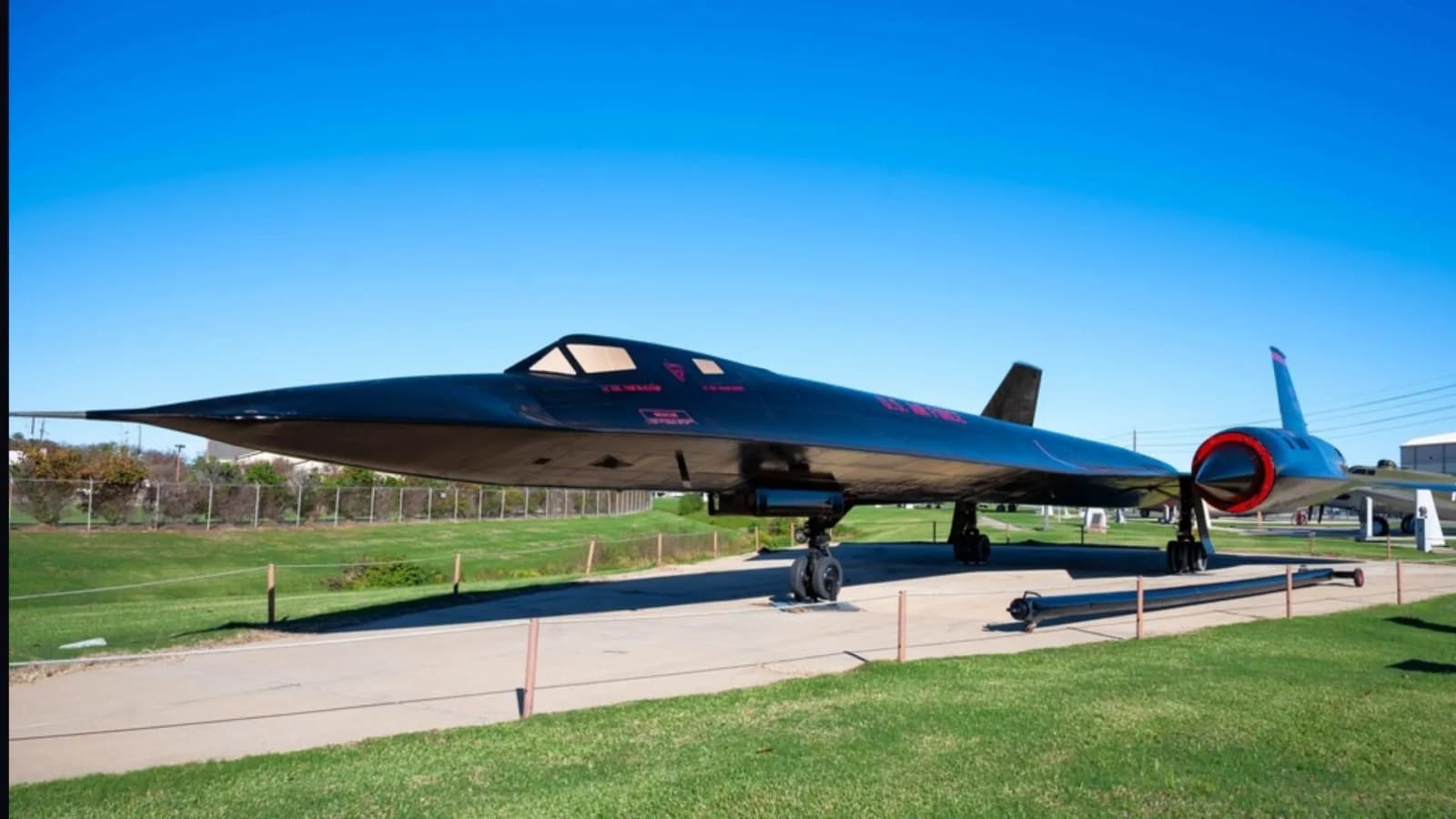
NASA may be quietly working to return one of its historic SR-71 Blackbird aircraft to flight nearly 27 years after it last took to the skies. The aircraft in question is NASA’s SR-71A, tail number 844, which was quietly removed from its outdoor display at Armstrong Flight Research Center at Edwards Air Force Base, California, earlier this year and moved into a hangar.
Aviation Week reports that NASA has since approached several former SR-71 engineers about helping with a potential return-to-flight effort. NASA has not confirmed that a formal SR-71 return-to-flight program exists.
However, the aircraft’s removal from display, subsequent inspection, and reported recruitment of former Blackbird personnel suggest that the agency is at least examining whether the nearly six-decade-old aircraft can fly again.
The last Blackbird to fly
SR-71A 844 holds a unique place in the aircraft’s history. It made the final flight of the entire Blackbird family on October 9, 1999, at Edwards Air Force Base. NASA later placed its SR-71s in flyable storage before eventually retiring them from flight operations.
NASA operated 844 as a high-speed research aircraft during the 1990s, using it to investigate aerodynamics, propulsion, structures, thermal protection, instrumentation, and other technologies relevant to high-speed flight. One notable experiment involved the Linear Aerospike SR-71 Experiment, or LASRE, which used the aircraft as a platform for testing a rocket-engine-related research system.
The Blackbird was designed to cruise at approximately Mach 3.2 and operate at altitudes around 85,000 feet. Its airframe is built largely from titanium and titanium alloys to withstand the extreme temperatures generated during sustained high-speed flight.
Bringing a 59-year-old aircraft back
Returning 844 to the air would be substantially more complicated than restoring a museum aircraft. According to Aviation Week, NASA approached former SR-71 test engineer Mike Relja about helping with the effort, and it also contacted other former personnel. Relja reportedly warned that the agency faces major challenges after decades without regular operation. Army Recognition has also reported on the potential return-to-flight effort.
The aircraft’s Pratt & Whitney J58 engines present one of the biggest hurdles. The SR-71’s propulsion system was built around two J58 turbojets, with variable-geometry engine inlets and afterburning systems that enabled sustained Mach 3-class flight. Any attempt to fly 844 would require extensive inspection and testing of engines and other systems that have been inactive for decades.
The same applies to the aircraft’s titanium structure, fuel system, hydraulics, avionics, and specialized ground-support equipment. The original supply chain and much of the personnel expertise that supported the Blackbird have long since disappeared.
Why NASA might want it back
The potential return comes as NASA Administrator Jared Isaacman pushes for a renewed high-speed research program and has spoken about rebuilding NASA’s X-plane fleet.
A revived SR-71 could provide a research platform that can operate considerably faster and higher than most modern experimental aircraft. NASA previously used 844 precisely because its Mach 3 capability allowed researchers to investigate conditions that could not easily be reproduced with conventional aircraft.
For now, however, there is no announced first-flight date or confirmed NASA program to return 844 to operational flight.
If the reported effort progresses, the next steps would likely involve detailed structural inspections, engine assessments, restoration of specialized systems, and extensive ground testing before the Blackbird could even be considered for a flight-clearance program.
After nearly three decades on the ground, getting SR-71A 844 airborne again would be an enormous engineering challenge, but the aircraft’s removal from display suggests NASA is at least taking a serious look at whether the legendary Blackbird has another flight left in it.
Source: https://interestingengineering.com/military/nasa-sr71-blackbird-return-to-flight
Related articles

Mapped: Where U.S. Jobs Are Most Exposed to AI
See which U.S. states have the highest share of AI-exposed jobs, led by Washington, Virginia, and Washington, D.C.

Can VR glasses save VR?
I'm pretty sure I won't be buying the $1,299 Meta VR Glasses. That's too rich for my blood in today's economy, and my feelings about Meta are… conflicted.

Sony brings AI graphics upscaling to the regular PS5
Sony is launching a new AI upscaling technology specifically for the regular PS5.
Chicago Metra’s new battery-electric train charges through regenerative braking
Chicago’s commuter rail system is preparing for a major shift away from diesel power. Metra...


Inside Microsoft’s big Copilot rethink
Last week, Microsoft CEO Satya Nadella hosted an intimate, invite-only event for leaders from some of its key enterprise customers.