
Blue Origin eyes weekly launches for its 400-foot New Glenn rocket by decade’s end
Blue Origin is expanding its Florida operations to support a much faster launch schedule, targeting...
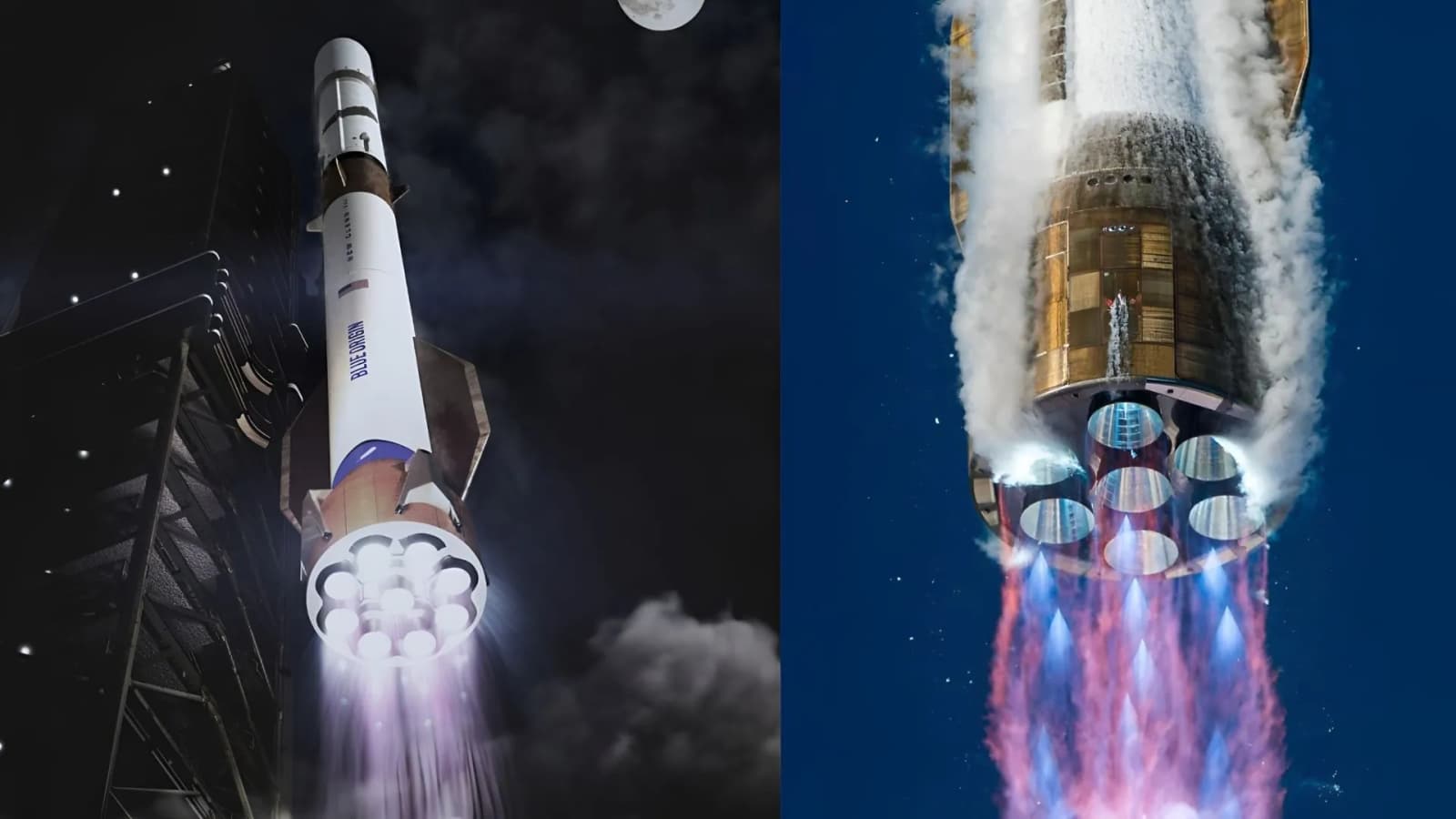
Blue Origin is expanding its Florida operations to support a much faster launch schedule, targeting multiple New Glenn flights per week by the end of the decade. The plan includes a $330 million manufacturing expansion, additional launch pads, and new facilities for payload processing and booster refurbishment.
The company says it has invested more than $3 billion in Florida infrastructure. Its operations now span more than 20 sites across Brevard and Orange counties, supported by over 5,000 employees and 500 suppliers.
The expansion aims to address a central challenge in commercial spaceflight: increasing launch frequency requires more than additional rockets. Manufacturers must produce hardware faster, ground crews must prepare missions in parallel, and reusable boosters must return to service efficiently.
Scaling new Glenn production
Blue Origin is expanding Rocket Park, its 1.37-million-square-foot manufacturing campus near NASA’s Kennedy Space Center. A $330 million project will add capacity for producing New Glenn’s 9×4 second stage.
Scheduled for completion in summer 2027, the expansion will support annual production of up to 150 upper stages. That output would provide substantial manufacturing capacity as the company pursues a higher flight rate.
The factory is also gaining automated machining, welding, material handling, and inspection systems. These technologies can improve production consistency and help workers identify defects earlier.
Additional investments in chemical processing, fairing preparation, tooling, and storage will support the movement of hardware through the manufacturing process. Blue Origin also aims to produce nearly all its components and systems in-house, while maintaining support from external suppliers.
Preparing multiple missions
Manufacturing more rocket hardware will not increase launch frequency unless teams can prepare several missions simultaneously.
Blue Origin is developing a customer integration facility with the U.S. Space Force at Cape Canaveral Space Force Station. The complex will feature four payload bays, two encapsulation bays, and a dedicated area for processing multiple payloads together.
Launch infrastructure is also expanding. Blue Origin is restoring LC-36A following an anomaly earlier this year, while LC-36B will become the operational base for New Glenn 9×4.
It will accommodate New Glenn’s 7×2 and 9×4 configurations, including national security missions. A separate vertical integration facility under construction will support the 9×4 vehicle and enable parallel vehicle and payload preparations.
The company has also requested permission to increase LC-36’s annual launch limit from 12 to 50 flights. Additional launch pads are planned for the Space Coast, using construction methods demonstrated at LC-36B.
Reusing boosters more efficiently
New Glenn’s reusable first stage requires a recovery network capable of supporting repeated flights. Port Canaveral currently hosts Jacklyn, the rocket’s sea-based landing platform, while Blue Origin develops two additional platforms.
The new vertical integration facility will also process recovered boosters. Teams will inspect returning stages and prepare them for refurbishment before subsequent missions.
Beyond rocket production, Blue Origin operates facilities across Cocoa, Melbourne, Orlando, and Titusville. These locations support fabrication, thermal protection systems, tooling, logistics, and materials handling.
Its Lunar Permanence program also relies on facilities across Florida to manufacture, integrate, and test hardware. The company’s Club for the Future nonprofit has reached nearly 700,000 Florida students and 65,000 educators since 2019.
Blue Origin’s expansion reflects the infrastructure demands of a higher launch cadence. Manufacturing capacity, parallel mission preparation, and faster booster turnaround will determine how effectively the company can translate its ambitions into more frequent flights.
Related articles

Apple’s updated App Store rules go after ‘nudify’ AI apps
Apple's App Store rules now more explicitly ban so-called "nudify" apps that generate intimate images of people without their consent using AI tools.

All the news about the iPhone Duo
Apple has finally announced its long-rumored foldable: the iPhone Duo. The new phone has a 5.4-inch outer display and a 7.
Meet the spacetech CEO who’s betting everything on nuclear micropower
In our latest episode of Lexicon, we sat down with Peter Cabauy, CEO and founder...


Google speeds protein structure prediction 8.6-fold to advance targeted cancer research
Google researchers have developed a method that speeds up protein structure prediction by 8.6 times,...
Claude’s new quantum circuit design uses 17 times fewer gates than earlier approach
Anthropic’s Claude Mythos 5 has developed a quantum circuit design that uses 17 times fewer...