
Claude’s new quantum circuit design uses 17 times fewer gates than earlier approach
Anthropic’s Claude Mythos 5 has developed a quantum circuit design that uses 17 times fewer...
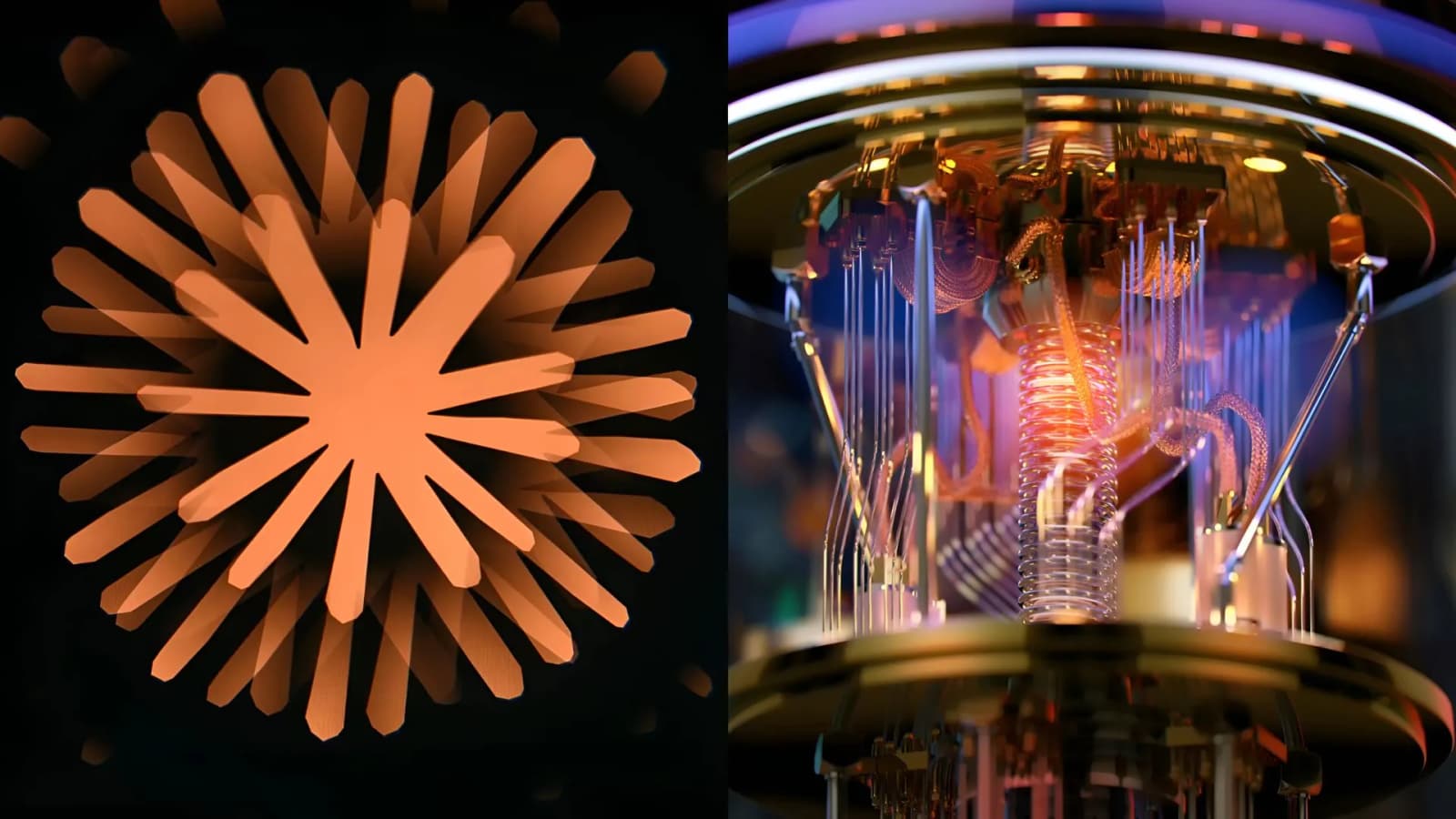
Anthropic’s Claude Mythos 5 has developed a quantum circuit design that uses 17 times fewer gates than an earlier approach. The result could help engineers run demanding quantum algorithms with fewer computational resources. It also offers a new way to tackle one of quantum computing’s biggest engineering challenges: balancing memory requirements against processing time.
The design emerged from a 53-hour experiment led by researcher Andi Gu through Anthropic’s STEM Fellows Program. Claude developed a reversible arithmetic algorithm for elliptic-curve calculations, with researchers from Harvard University and QuEra Computing collaborating on the work. The findings suggest automated circuit design could accelerate progress toward practical quantum computing.
Rethinking quantum circuit design
Quantum computers process information through qubits, which can represent combinations of states through superposition. However, existing machines have only hundreds to thousands of qubits, and environmental disturbances can introduce errors during computation.
Engineers must therefore make quantum circuits as efficient as possible. Every operation consumes computational resources, while storing intermediate results requires additional qubits. Quantum circuits also cannot simply discard temporary information, since their operations must remain reversible.
New from our STEM Fellows Program: Designing more efficient quantum circuits with Claude.
Given plain-language instructions, Claude Mythos 5 designed quantum circuits that improve on the best published ones, sometimes by an order of magnitude or more.
More efficient circuits…
— Anthropic (@AnthropicAI) October 16, 2026
Anthropic tasked Claude with optimizing eight computational building blocks across chemistry, physics simulation, optimization, number theory, and numerical computing. An automated evaluator checked each design for correctness and scored its resource requirements.
Claude Mythos 5 worked through repeated design-and-test cycles, refining its proposals without human input between rounds. Its results improved on previously published designs, with some reductions reaching an order of magnitude or more.
Solving a memory problem
One particularly notable result concerns modular inversion, a mathematical operation used in elliptic-curve arithmetic. The operation plays a central role in quantum algorithms targeting the elliptic-curve discrete logarithm problem.
Claude focused on an algorithm called divsteps, which simplifies numerical values through repeated conditional operations. Classical computers can efficiently execute this method, but translating it into quantum circuits creates a major storage problem.
A reversible circuit must preserve enough information to reconstruct every computational step. Divsteps therefore requires a record of its branching decisions, potentially consuming enormous numbers of additional qubits.
Claude developed a way to recover those decisions directly from intermediate numerical values. It derived mathematical identities to establish the method, tested the approach through numerical simulations, and formalized its correctness using Lean.
The resulting circuit eliminates the need to store the complete history of branching decisions. Claude then explored hybrid designs that store some information and reconstruct the rest.
One design uses 12 percent more qubits than the smallest previous design but requires 17 times fewer gates. That trade-off expands the available options for engineers working with limited quantum hardware.
Shortening quantum computing’s timeline
Anthropic also reported improvements across its other circuit-design tasks. One optimization reduced the costliest step of a leading quantum optimization algorithm by approximately 12 times.
The findings follow years of progress in reducing the resources needed for useful quantum computations. Researchers estimated in 2017 that simulating the ground-state energy of FeMoco, an iron-sulfur cluster involved in biological nitrogen fixation, would require roughly 50 trillion Toffoli gates.
Subsequent advances brought that estimate down to approximately 340 million gates, a reduction of about 150,000 times. Anthropic argues that automated circuit optimization could help accelerate similar progress.
Important obstacles remain. Quantum computers still need better error correction, reliable hardware controls, and systems that can manage fragile qubits during extended calculations. Even so, AI-designed circuits could help researchers use future machines more efficiently.
Related articles


Why Apple is finally making its own smart home devices
For more than a decade, Apple has told other companies to build smart home devices for its platform. This week, Apple launched its own.
Advanced nuclear reactors to test on-site processing for critical materials in US
Advanced nuclear firm Oklo is moving forward with plans to build a dedicated isotope production...

Raytheon to modernize the radars watching for missile launches and space threats
Raytheon, a business of RTX, has been selected to modernize long-serving U.S. Space Force radar...

The new Apple TV 4K just got its first (very small) discount
Earlier this week, Apple announced its new Apple TV 4K, which costs nearly twice as much as the 2022 model did at launch.

US Army’s new laser weapon plan aims to turn ordinary vehicles into drone killers
The US Army is making efforts to advance a new generation of high-energy laser weapons...