
US Army’s new laser weapon plan aims to turn ordinary vehicles into drone killers
The US Army is making efforts to advance a new generation of high-energy laser weapons...
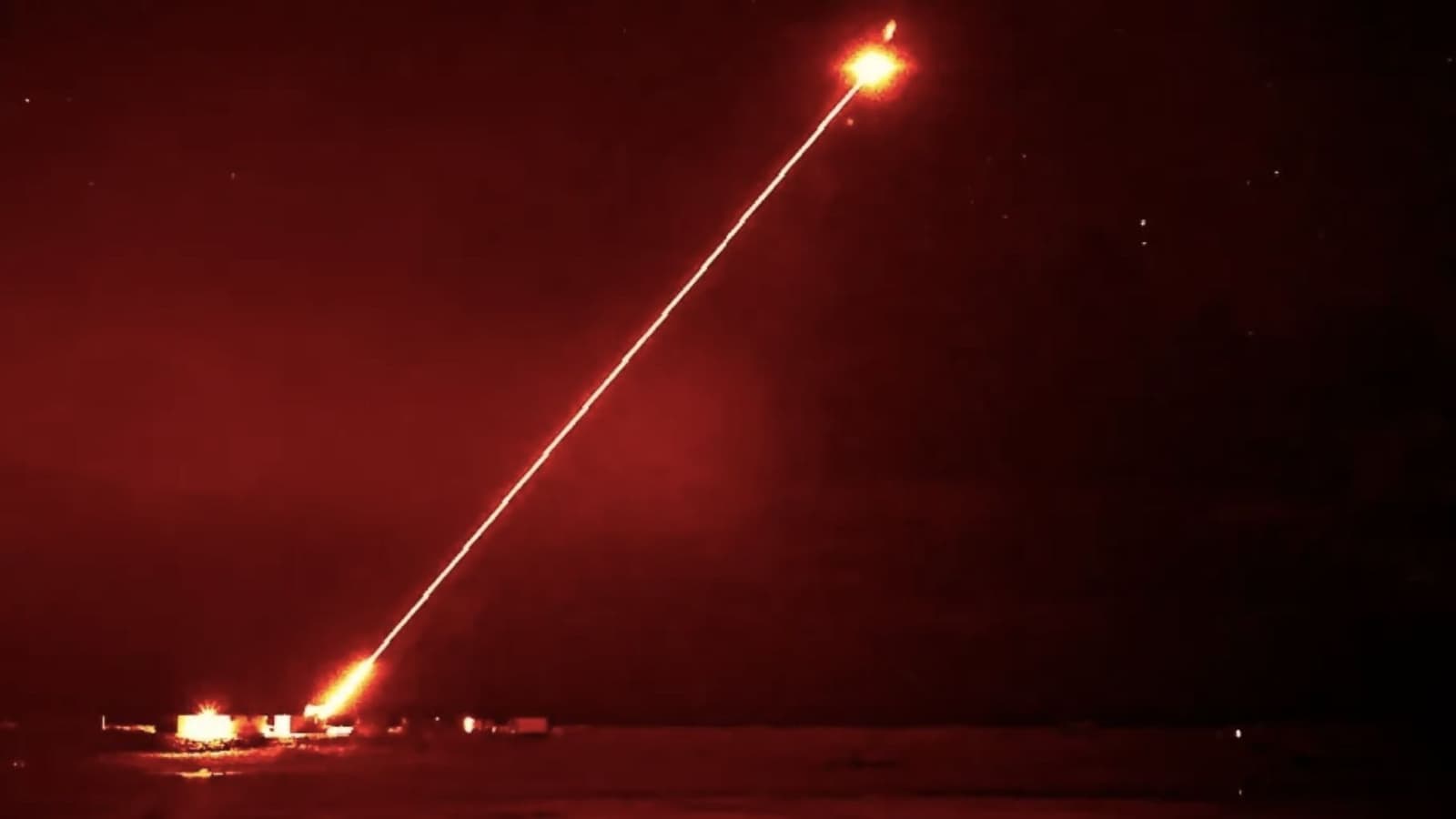
The US Army is making efforts to advance a new generation of high-energy laser weapons designed to counter drone threats across the battlefield. Through its Enduring-High Energy Laser (E-HEL) programme, the service aims to develop modular systems that can be transferred between different military vehicles to expand air defense capabilities beyond specialized units.
Directed-energy weapons, such as E-HEL, can be used to take out drones at a much lower cost than using more expensive kinetic weapons like missiles. Powered by electric energy, E-HEL generates a lethal high-energy laser beam, offering a low cost-per-shot against critical unmanned aircraft system threats, and a magazine that regenerates with the system’s power supply.
Scalable, affordable directed energy capabilities
The E-HEL program represents a significant step forward in the Army’s effort to deliver scalable, affordable, and adaptable directed energy capabilities to soldiers.
The Army’s emerging concept focuses on separating laser weapon systems from the specific vehicles on which they are installed. Rather than developing a dedicated laser-equipped vehicle for every mission, the service wants modular systems that can be integrated onto different platforms according to operational requirements.
During a panel discussion held recently at the Association of the U.S. Army’s (AUSA) main annual convention it was revealed that the Army could soon integrate laser weapons on multiple vehicles.
Brigadier General Guy Yelverton, the Army’s Capability Program Executive for Defensive Fires, explained that the programme is exploring ways to integrate future laser capabilities across the service’s vehicle fleet.
The concept could allow laser systems to be mounted on tactical vehicles, light utility platforms and other suitable military transport assets. It could also make it easier to relocate a weapon system when a vehicle requires maintenance or when operational priorities change.
The program also aims to make the systems easier for soldiers to operate, potentially allowing units outside traditional air defence formations to employ laser weapons against incoming drones.
The LOCUST family has already been explored in vehicle-mounted and palletised configurations. Some earlier variants have also been deployed in support of US operations along the southern border.
The LOCUST X3 combines a laser projector with electro-optical and infrared cameras used to identify, track and engage targets. Additional sensors, including radar and passive radio-frequency detection equipment, can provide information to help cue the weapon toward potential threats.
The system is primarily intended to counter small unmanned aircraft. Its relatively compact configuration makes it a candidate for deployment on light tactical vehicles, although integrating it onto smaller platforms presents challenges involving payload capacity, electrical power, cooling and overall system weight.
Laser systems to be mounted on tactical vehicles
The Army’s broader objective is not simply to acquire a new laser weapon, but to establish a flexible architecture that can accommodate improvements in performance and reliability over time.
In September, the US Army announced the award to AeroVironment Inc. of an other-transaction-agreement for production under the Enduring-High Energy Laser program. This was the Army’s first production contract for a high energy laser weapon system.
Developed using a modular open systems approach design consisting of 11 major interfaces, E-HEL is not locked into a single platform or vehicle. The system is designed for operational flexibility, capable of deployment from fixed bases, semi-fixed tactical sites, and mobile combat vehicles, ensuring broad applicability across the operational spectrum. This approach will enable onboarding of cutting-edge capabilities and continuous technology upgrades as they mature to address emerging Army requirements.
Related articles
Advanced nuclear reactors to test on-site processing for critical materials in US
Advanced nuclear firm Oklo is moving forward with plans to build a dedicated isotope production...
Raytheon to modernize the radars watching for missile launches and space threats
Raytheon, a business of RTX, has been selected to modernize long-serving U.S. Space Force radar...

The new Apple TV 4K just got its first (very small) discount
Earlier this week, Apple announced its new Apple TV 4K, which costs nearly twice as much as the 2022 model did at launch.

Advanced robotics propels nuclear reactor core rebuild ahead of 125 MW grid boost
Engineers at an Ontario nuclear power station have reached a major milestone in rebuilding a...

A week with RTX Spark: everything we’ve learned using Nvidia’s new laptops
Nvidia's RTX Spark N1X processor is finally here, and we've been collectively testing a small fortune's worth of powerful laptops sporting this new "superchip.

A fake WhatsApp clone is showing up before the real version on the Play Store
After a Chrome clone was spotted on the Play Store earlier this week, a user on Reddit says they're seeing a fake version of WhatsApp in a "sponsored" slot above the real version.