China drops robots 17,500 feet into the Pacific as the race for EV minerals heats up
China has reportedly conducted its first large-scale deep-sea mining trial in international waters in the...
China has reportedly conducted its first large-scale deep-sea mining trial in international waters in the Pacific between Hawaii and Mexico.
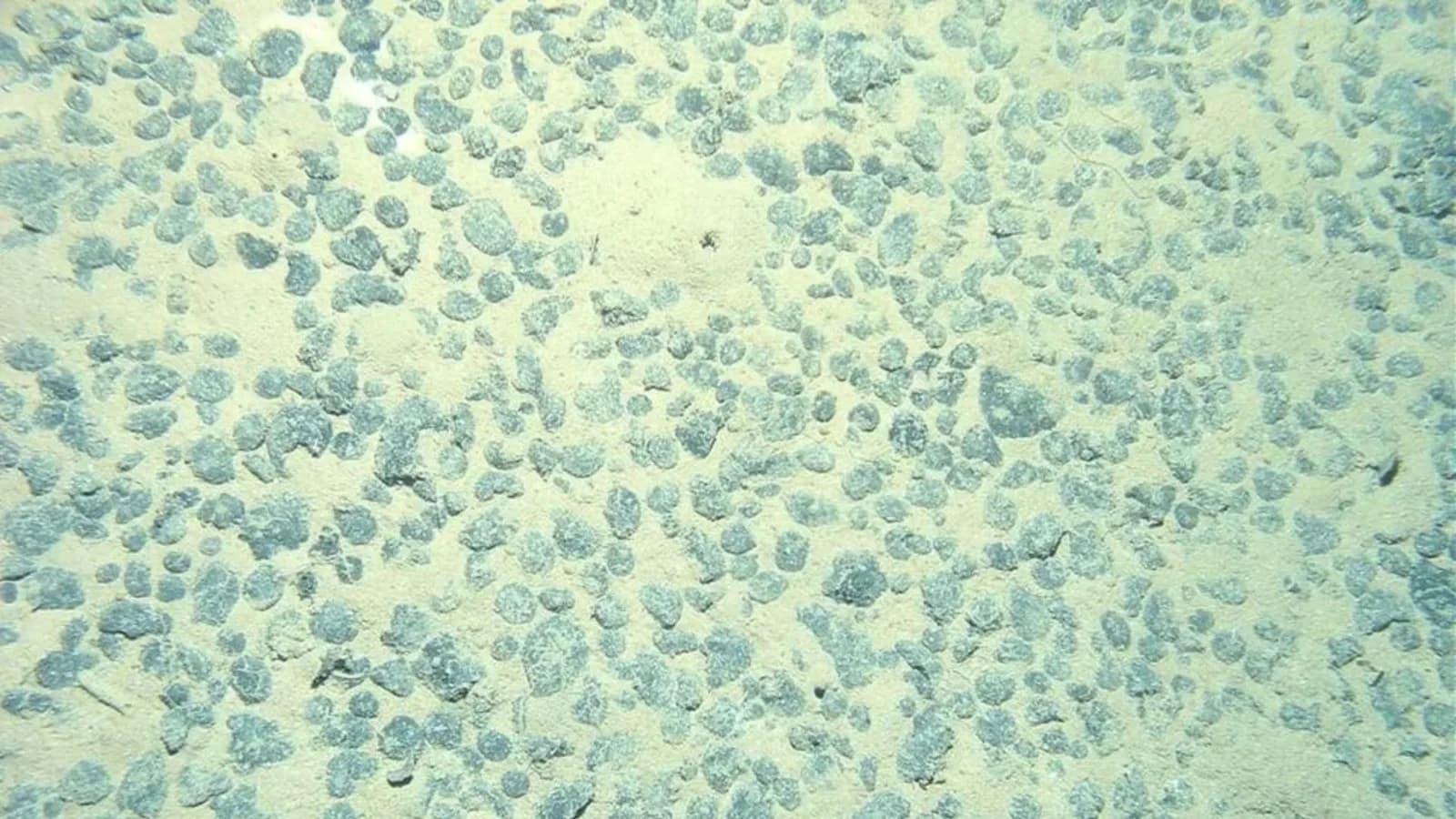
It deployed advanced robotics to collect potato-sized, metal-rich rocks that power various things from smartphones to electric vehicles.
The star of the expedition was Kunpeng.The South China Morning Post reported that Kunpeng is a robotic mining vehicle built by state-owned China Minmetals and named after a legendary giant fish that transforms into a bird.
The trial took place within an exploration block granted under a 15-year UN-backed International Seabed Authority (ISA) contract. However, not many details have been disclosed.
China’s robotic miner
Kunpeng worked in pitch-black, freezing saltwater under immense pressure. Over long stretches, the robot crawled across the seabed to collect polymetallic nodules.
Polymetallic nodules are potato-sized mineral lumps scattered across the deep ocean floor that take millions of years to form. Rich in manganese, iron, nickel, copper, and cobalt, these rocks sit loose on the seabed. Several nations have set their sights on this massive untapped source of materials needed for electric vehicle batteries and electronics. But harvesting this valuable resource poses a major threat to deep-sea ecosystems that depend on the nodules for survival.
Researchers at Harbin Engineering University equipped the vehicle with a sound-based navigation system that can pinpoint its location to within a single meter.
To get its survey submersibles down to 5,330 meters (17,500 feet), China used a one-of-a-kind tech: the Haiwei GD11000.
Standard research ships tether their robots to steel-wrapped cables, which eventually grow too heavy to reach the deepest trenches. Haiwei solves this problem with a 13-kilometer (8 miles) line armored in lightweight fiber. During the voyage, the winch lowered submersibles six times, including one 48-hour marathon, logging nearly 200 hours underwater.
Geopolitics on the ocean floor
The trial took place inside a massive 72,745-square-kilometer (28,000-square-mile) exploration block that China Minmetals has studied since 2017 under a 15-year contract with the United Nations-backed International Seabed Authority (ISA).
China dominates global refining for cobalt, nickel, and manganese. Mining the Clarion-Clipperton Zone lets Beijing secure raw materials in international waters and protect its electric vehicle and battery industries from Western trade restrictions.
But Beijing is not alone in eyeing this stretch of the Pacific. Washington is actively moving to license commercial mining in the very same waters. Washington is expected to rule by mid-December on a permit application from the U.S. subsidiary of Canadian ocean-mining giant The Metals Company.
China conducts its deep-sea work under UN-backed International Seabed Authority (ISA) contracts. Outside the ISA, the United States is relying on its own domestic laws to greenlight mining operations.
Despite the growing interest, no country has yet launched full-scale commercial mining in the deep sea. Marine life in this region remains largely unexplored. Scientists are now sounding the alarm over the risks to these mysterious ecosystems. Heavy machinery scraping the abyssal plain could permanently destroy fragile ecosystems that humanity has barely begun to study.
For Beijing, however, the momentum is unmistakable. The Haiwei winch is already slated to join routine survey voyages, accelerating China’s ambition to tap vast undersea reserves and cement its status as a dominant maritime power.
Get the latest news delivered to your inbox.
Related articles