China’s laser mosquito killer locks on in 3 milliseconds, zaps 30 bugs a second
A Changzhou-based startup has developed a laser-zapping device to keep spaces free of mosquitoes. Called...
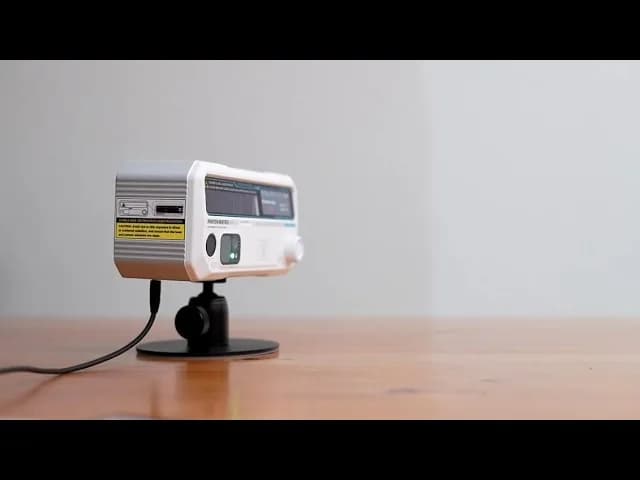
A Changzhou-based startup has developed a laser-zapping device to keep spaces free of mosquitoes. Called “Photon Matrix”, it is, effectively, an anti-mosquito laser defense system that works like a miniature anti-aircraft system.
That’s interesting in and of itself, but arguably the most important part is its claimed ability to detect, identify, track, and hit tiny targets, like insects, as they buzz through the air.
According to its creators, the system incorporates existing technologies but in a novel way. The first is its built-in light detection and ranging (LiDAR).
It sends out pulses of light to detect objects within a defined area and measure reflections from objects in three-dimensional space. This function is performed continuously, enabling the mosquito laser turret to provide an overwatch of your home.
The second is a suite of sensors that the device reportedly uses to identify potential threats. It uses a combination of a camera, millimeter-wave radar, and recognition software to help determine whether the object is a mosquito.
Zapping mosquitoes using lasers
Parameters like the target’s size, speed, and movement pattern are used to reject non-mosquito targets. The third main component is its tracking system.
Once a target is confirmed as a mosquito, the system’s artificial intelligence (AI)-powered software can predict the target’s trajectory and adjust the laser’s aim accordingly. As you can imagine, this is critical because the mosquito doesn’t remain stationary while the system decides whether to fire.
The fourth and final component is arguably the most important: its powerful laser, which incorporates a Class 4 laser source. Once a target is detected, tracked, and locked in, a concentrated laser pulse is then released.
To steer the laser on target, the system uses a set of galvanometer-controlled mirrors rather than requiring the entire system to move. The laser pulse is intended to damage the mosquito’s wings, causing it to lose the ability to stay airborne rather than necessarily killing it outright.
According to reports, the system has a detection range of up to 19.7 feet (6 meters) and a scanning field of about 90 degrees in a horizontal plane. It is able to track and knock out targets between 2 and 20 mm in size, with a maximum flight speed of about 2.2 mph (1 meter per second).
Its creators claim the system has a response time of about 3 milliseconds and can engage around 30 mosquitoes a second. These are all manufacturer claims, and are yet to be independently verified.
Mini-laser turret for your home
At the time of writing this article, the Photon Matrix has attracted thousands of paid preorders following a popular crowdfunding campaign to launch it. The company also claims to have secured CE conformity clearance and expects shipments to begin in November following final calibration.
Beyond the headlines, certain key questions remain regarding the utility of such a device. The first is safety, especially given it reportedly uses a fairly powerful laser that could cause permanent eye damage.
The manufacturer claims multiple protective mechanisms, including human and animal detection, background-distance restrictions, and reflective-surface detection. Another is potential unintended ecological damage.
A system that mistakenly disables any mosquito-like flying insects could have unwanted effects on non-target species, even if the manufacturer claims it can distinguish them.
Whatever the case, if the manufacturer’s claims hold up under independent scrutiny, the miniaturization of an automated laser targeting system into a practical consumer device would be an impressive engineering achievement.
Get the latest news delivered to your inbox.
Related articles