
DARPA selects four firms to build industrial-scale quantum computers by 2033
The Defense Advanced Research Projects Agency (DARPA) has added Atom Computing, Diraq, IonQ, and IBM...
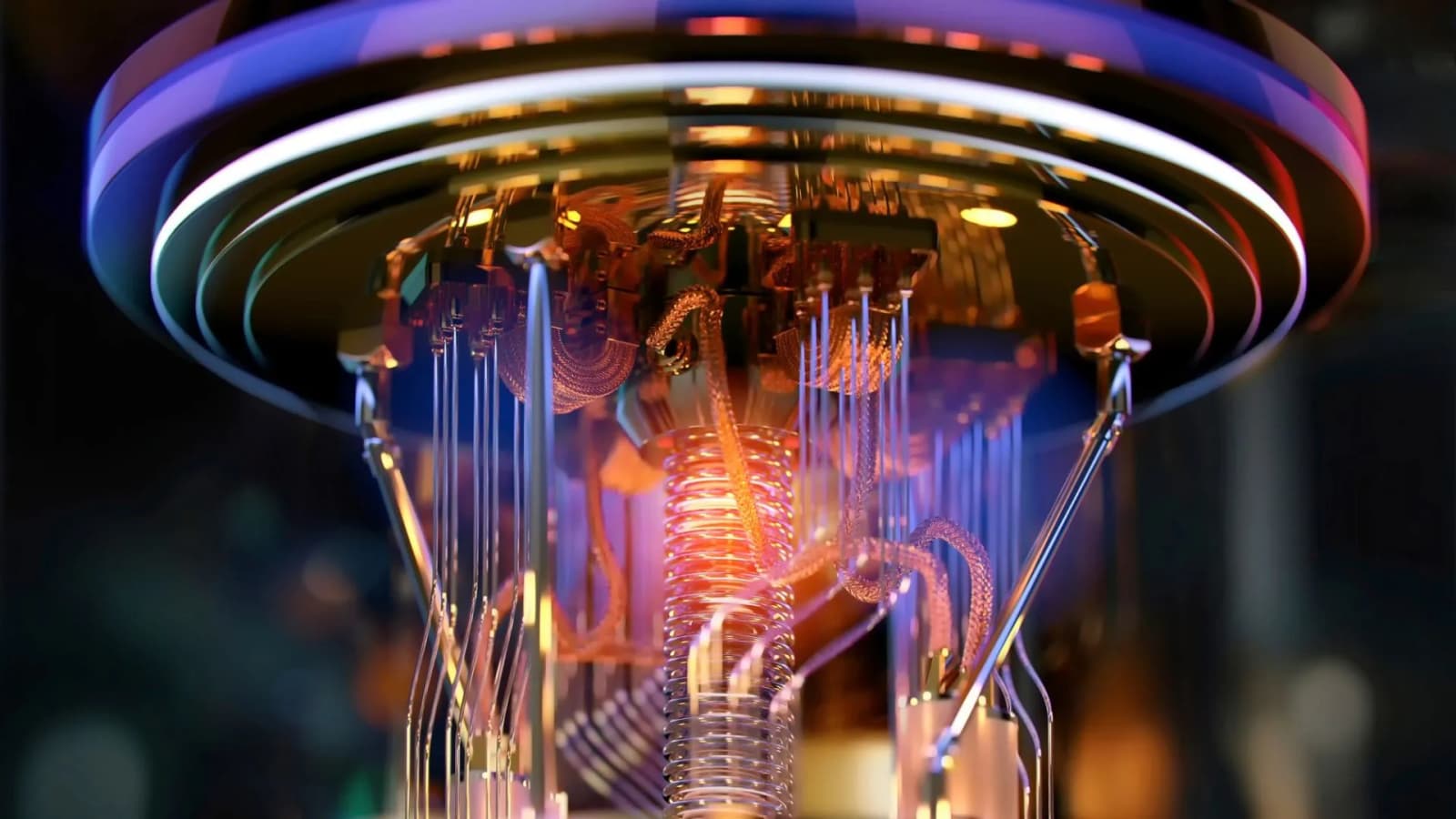
The Defense Advanced Research Projects Agency (DARPA) has added Atom Computing, Diraq, IonQ, and IBM to Stage C Verification for its Quantum Benchmarking Initiative (QBI). Advancing to Stage C means companies will move to physical testing of their fault-tolerant quantum computing (FTQC) architectures, and the initiative looks to roll out industrial-scale quantum computers by 2033.
Quantum computing is considered the next frontier in computing and is touted to help solve problems in drug discovery, materials research, and climate change. While conventional computers use binary bits that can only store values of 0 and 1, quantum computers use quantum bits or qubits that can simultaneously store multiple values between 0 and 1 and even compute with them in parallel.
This is highly advantageous, but it also creates a new computational challenge: the accumulation of a large number of errors. Scientists can create quantum bits in many ways, but high error rates remain the main challenge holding back large-scale quantum computers. The QBI is testing whether it is even possible to roll out these computers by 2033.
Stages of QBI
QBI consists of three stages, each being a major milestone towards the development of a fault-tolerant quantum computer. Its first stage, A, evaluates utility-scale quantum computing concepts to determine if they can be realized in the near term.
Participants who advanced to Stage B submitted research and development plans to DARPA elaborating on the risks of the approach and the actions they had planned to take to mitigate them.
In Stage C, participants will verify and validate their FTQC architectures through physical testing, system measurements, and empirical validation, while working with the government.
This is neither a competition to evaluate the best quantum computing technology out there nor a collaborative effort where companies across the board will work together.
The main aim of the program is to determine which approaches can reach utility scale by 2033. By this, DARPA means an operational threshold where the quantum system’s computational output value exceeds its capital and operational expenditures.
Now DARPA has added four more participants to the Stage C, where Microsoft and PsiQuantum were already included as part of the Underexplored Systems for Utility-Scale Quantum Computing (US2QC), a pilot program with similar goals.
Companies joining the fray
Each of the companies that is now at Stage C of the initiative uses a different quantum computing approach. Atom Computing uses neutral atoms as qubits, and its proposed system consists of over 1,200 neutral-atom arrays held in optical tweezers.
Diraq, on the other hand, uses silicon spin qubits, which are single electrons trapped inside tiny electrostatic gates. The company is looking to validate its 300 mm chip, which has been fabricated in a foundry and aims to put over two million physical qubits on a single die by 2031.
IonQ uses trapped ions as qubits and recently launched its Superion 256-qubit quantum processing unit (QPU), which is designed to fit inside a server rack, and will look to evaluate whether its ease of manufacturing will meet its utility goals.
IBM’s approach to quantum computing is full-stack and uses transmon qubits for its quantum computing hardware while also developing open-source software to operate it and make it accessible over the cloud.
“The quantum computing field is moving quickly, and we increasingly expect that someone will build a utility-scale quantum computer by 2033,” said Micah Stoutimore, Managing Director at QBI, in a press release.
“What we don’t yet know is which team or teams, or which technical approach or approaches, will get there. That is exactly why QBI is evaluating each path on its own merits and continuing to bring promising new approaches into the initiative.”
Related articles

Atari is bringing back one of its earliest 8-bit home computers
After resurrecting iconic consoles like the 2600 and Mattel's Intellivision, Atari is relaunching one of the brand's personal computers that originally debuted 43 years ago.

Google is launching a one-stop Gemini agent for your work tasks
Google is launching a "universal" Gemini AI agent that can work across apps and devices in the background.

75 great October Prime Day deals are still happening
It’s always a little awkward when this many deals survive what was supposed to be the “end” of a big Amazon sale.

The Retro Song Bird plays just the music from your favorite Game Boy cartridges
The Retro Song Bird may look similar to devices like Epilogue's GB Operator with a slot on top for Game Boy cartridges, but it's not designed for playing retro games.

Sodium-ion home battery delivers 9.7 kWh capacity and promises 20,000 cycles
Home energy storage is being revamped. The 48 V residential energy storage system (RESS) developed...
Dassault-backed startup unveils strike weapon designed to hit targets up to 1,240 miles away
French defense startup Harmattan AI has unveiled IRIFI, an autonomous long-range strike system designed to...