
F-35 factory robot in US slashes bolt-installation work from hours to just minutes
In a recent manufacturing upgrade, Northrop Grumman has cut an F-35 avionics assembly task from...
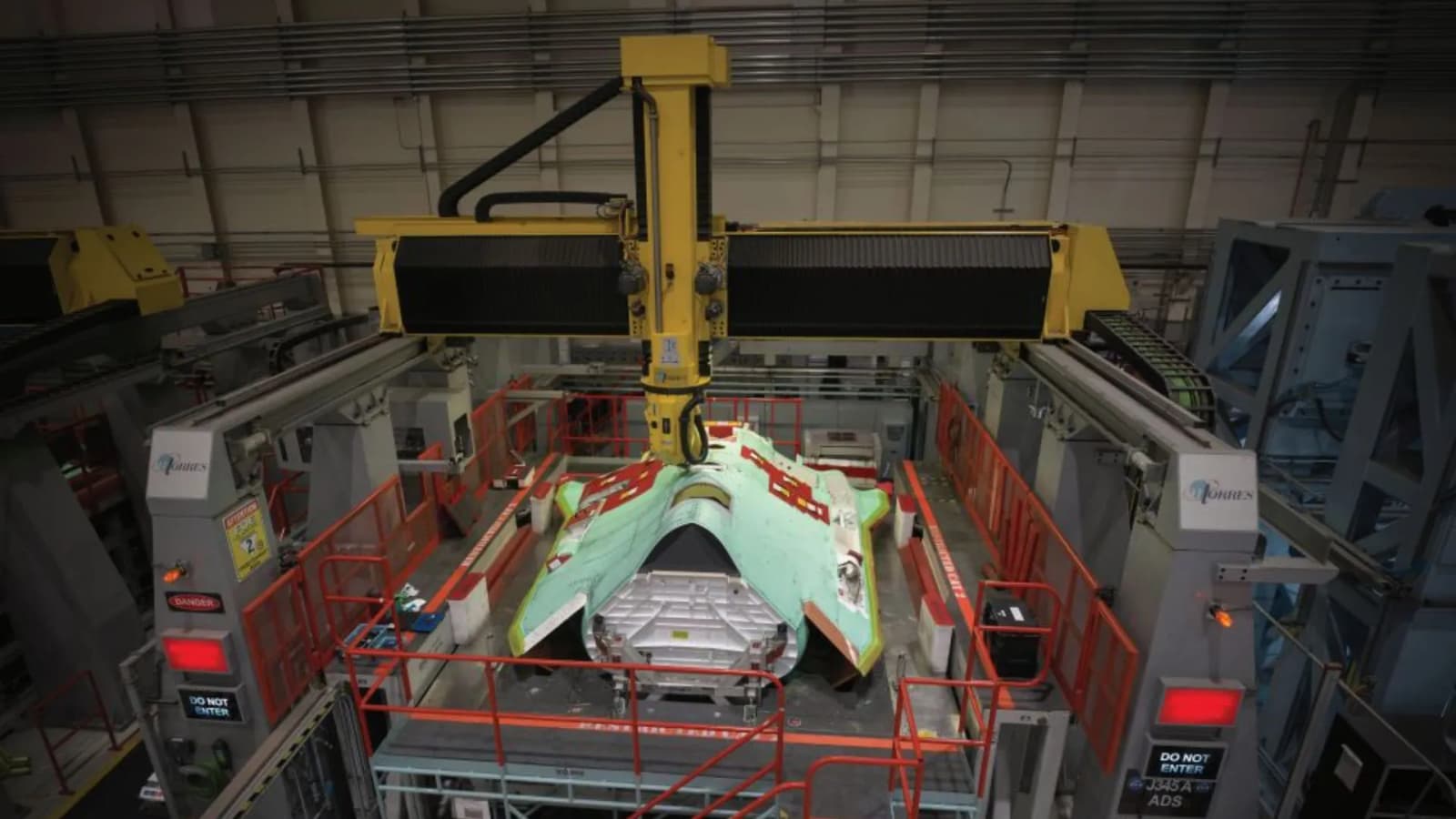
In a recent manufacturing upgrade, Northrop Grumman has cut an F-35 avionics assembly task from hours to minutes by introducing a collaborative robot on its production line. The company is also expanding AI-based inspection tools that can detect potential defects in completed avionics modules before they leave the factory.
The work focuses on the fighter’s Communications, Navigation and Identification (CNI) modules, which are part of its integrated avionics system. Northrop Grumman said the changes are intended to improve production speed, precision and consistency.
Robot cuts hours-long assembly task
A new collaborative robot, or “co-bot,” now works alongside technicians building the CNI module. The system helps workers precisely install bolts securing the front housing area of the module.
“We recently installed a co-bot that assists technicians to precisely install bolts to attach the front housing area of the Communications, Navigation and Identification (CNI) module,” said Lavell Catlin, manufacturing manager for the CNI production line. “This system cuts what used to take hours to complete down to only a few minutes.”
The robot is designed to assist workers rather than complete the assembly independently. The change also allows Northrop Grumman to move some employees to other manufacturing tasks.
“Additionally, we’ve been able to shift a couple of our employees onto different key efforts, which improve the speed and performance of our overall production process,” Catlin said.
AI checks completed avionics
Northrop Grumman is also adding AI-based quality control to the CNI manufacturing process. The systems examine completed modules and flag potential issues before the units are shipped.
The company said the inspection technology can identify very small issues that could otherwise be missed during production checks. Northrop Grumman is extending these AI-enabled systems to other areas of the CNI production line.
“Our AI-based integration of quality control systems has greatly helped identify even the smallest issue in completed modules to ensure we’re delivering top-quality products every time,” Catlin added.
The CNI system provides F-35 pilots with integrated information from key aircraft systems. Northrop Grumman said its automated checks add another layer of inspection before these systems reach U.S. and allied aircraft.
Automation expands across F-35 production
The avionics improvements are part of wider automation efforts at Northrop Grumman. At its Integrated Assembly Line in Palmdale, California, the company uses robotics, automation and mixed reality tools to manufacture the F-35 center fuselage.
The center fuselage is the aircraft’s largest stealth-critical structural assembly. Northrop Grumman said its production line can deliver one center fuselage every 30 hours.
The company also uses automated composite manufacturing equipment to produce components such as wing skins and nacelles for all three F-35 variants. These systems support high-rate manufacturing of the aircraft’s major structures.
Supporting the F-35 fleet
Northrop Grumman is part of the Lockheed Martin-led F-35 program and supports development, production and sustainment of the Lightning II. Its work covers the center fuselage, radar and communications systems, low-observable technology and operational support.
The company noted that the latest manufacturing changes are intended to increase factory capacity while maintaining quality as F-35 production continues for the U.S. military and allied nations.
The use of collaborative robots and AI inspection systems also reflects a broader push to automate labor-intensive manufacturing tasks. On the CNI line, the technology is being applied directly to assembly and quality checks where small improvements can affect production time and consistency.
Related articles
New 900,000-sq-ft US plant to churn out thousands of solid rocket motors for missiles
Avio USA has broken ground on a roughly 900,000-square-foot solid rocket motor factory in Hurt,...
US-backed 10,000-ton plant makes iron, steel in one step, cuts emissions by up to 98%
Hertha Metals plans to build a new U.S. facility capable of producing 10,000 tonnes of...

MARTAC expands US drone boat production with 100 more Devil Rays per year
MARTAC partners with SŌLACE Boats to increase production of its Devil Ray autonomous vessels by 100 units per year to meet growing demand from U.S. and allied governments.