
Flourish 1: Wheeled semi-humanoid robot runs 12 hours and lifts up over three pounds
A San Francisco startup has emerged from stealth with a home robot that costs $3,555,...
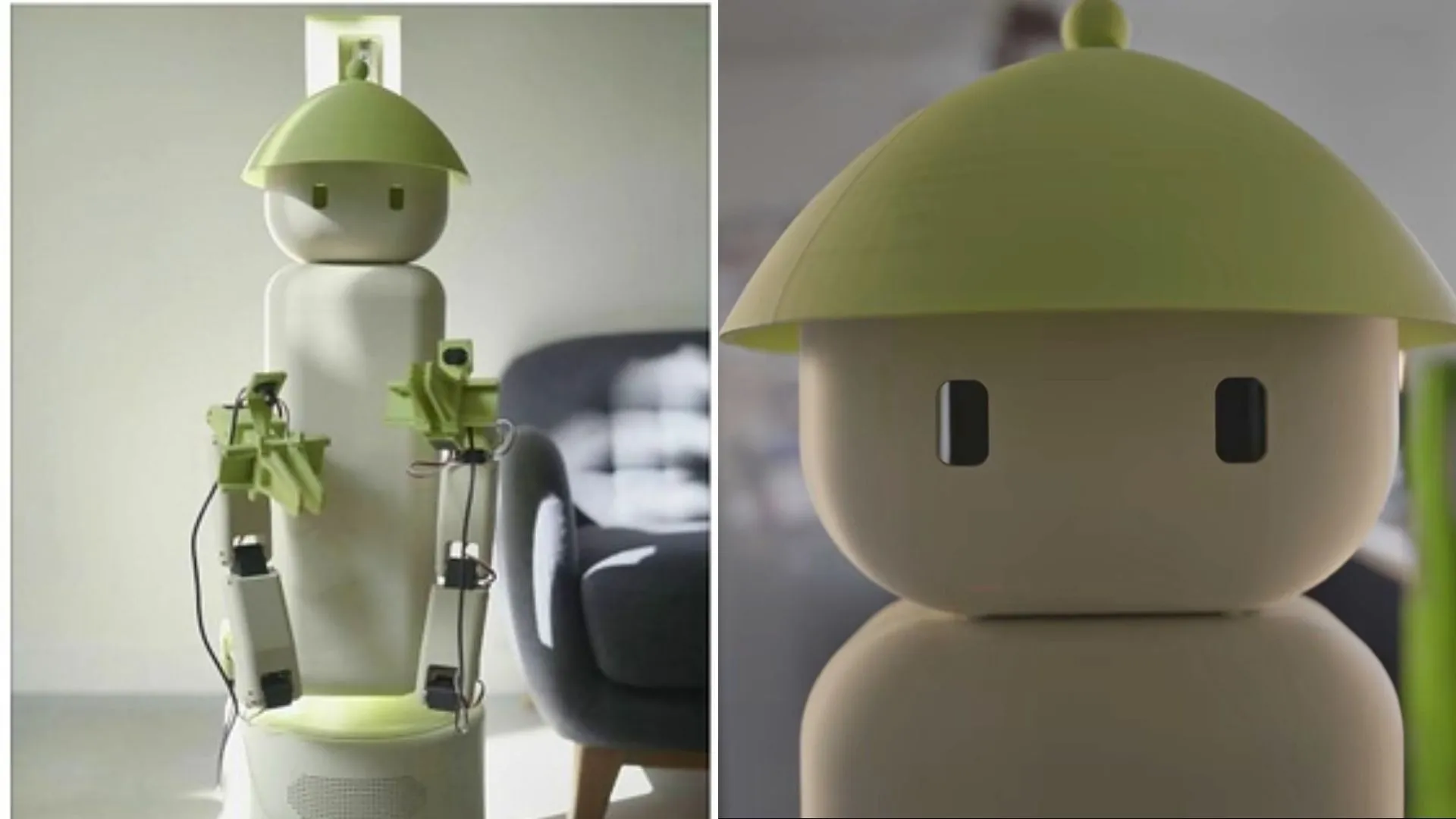
A San Francisco startup has emerged from stealth with a home robot that costs $3,555, can learn household chores in about 30 minutes, and is designed around a surprisingly simple idea. A useful home robot does not need to be powerful enough to do everything.
Flourish Robots introduced Flourish 1 on September 29 and opened pre-orders for the first 50 units at $3,555. Deliveries are scheduled to begin in December 2026. Owners can teach the robot tasks through a mobile app by physically demonstrating what they want it to do, without writing code.
The robot stands 3 feet 7 inches (110 centimeters) tall and weighs 44 pounds (20 kilograms). It can operate for up to 12 hours on a charge but has a total lifting capacity of only 3.3 pounds. That modest payload is intentional.
A robot built for ordinary household chores
Flourish founder and CEO Antoine Marcel toldForbes that the company designed the robot specifically for homes rather than trying to build a machine capable of handling industrial tasks.
That lets Flourish simplify the hardware and reduce costs. Flourish 1 uses a wheeled base, two arms, and a vertically moving body that can raise the robot to reach higher surfaces. Its relatively basic grippers and limited lifting capacity are enough for tasks such as picking up shoes, clothes, and toys, wiping tables, fetching objects, and watering plants.
The company also said owners can teach the robot to load a dishwasher and clear a cat litter box. Once it learns a task, it can repeat and schedule it.
The robot is not particularly fast. Marcel acknowledged that current versions perform household tasks relatively slowly, but the company’s objective is to make the system useful rather than maximize its physical capabilities.
Teaching the robot instead of programming it
Flourish is taking a different approach to robot learning. Rather than trying to create one universal model that can operate in every household, the company fine-tunes pretrained models around individual homes, objects, and tasks, according to Marcel.
A task can also be broken into separate functions. For example, picking up a sock can involve navigation to locate it, physical AI to grasp it, and navigation again to carry it to a laundry basket.
This approach limits the amount of sophisticated physical AI required for each task. It also means Flourish 1 does not have to solve every household problem simultaneously.
The tradeoff is generalization. A robot trained around a particular home may struggle when its environment changes significantly, although Flourish noted that its models are designed to handle changes in object positions, lighting, and clutter.
A cheaper path to home robotics
The $3,555 price puts Flourish 1 far below several other humanoid and home-robot efforts. Forbes noted that 1X’s NEO is priced at $20,000 or $499 per month, while other newer robots are also appearing at substantially lower prices than earlier generations.
Flourish said its robot is designed to operate autonomously after a task has been taught rather than depending on remote human operators. It uses cameras and LiDAR to monitor its surroundings, while the arms are designed to stop when a person enters their reachable area.
The company has raised a pre-seed round led by Families Fund, although it has not disclosed the round’s size. For now, Flourish 1 remains an early product with limited strength and speed.
But its deliberately constrained design points to a different route into household robotics: instead of making a robot capable of doing everything, make one inexpensive enough to put into ordinary homes and teach it what each household actually needs.
Source: https://interestingengineering.com/ai-robotics/flourish-1-3555-home-robot-for-chores
Related articles

Samsung raised prices on the Galaxy S26 by $100
The base Galaxy S26 with 256GB of storage costs nearly $1,000 after Samsung raised prices in the US by $100 or more, Phone Arena reports.
NASA prepares humanoid robots to take on dangerous jobs on the moon and Mars
When humans finally set up camp on the moon, they will not be alone. But...

Megawatt-level nuclear battery chosen for second-ever reactor test at 100-foot-tall DOME
A Houston startup will test an experimental “nuclear battery” in the Idaho desert next year,...

HP’s answer to the MacBook Neo is thinner, lighter, and comes with OLED
HP is announcing a new laptop that's squarely aimed at Apple's MacBook Neo. The 2026 HP OmniBook 5 14 starts at $699.99 with an Intel Core 5 315 "Wildcat Lake" processor, 8GB of RAM, and a 256GB SSD.

Amazon is launching colorful new Kindles — and a case with physical page-turn buttons
Kindles don't usually change much with each new version, but Amazon is launching next-generation models today that look and feel a whole lot nicer.

Gears of War: E-Day is a great game launching at a terrible time
There are few blockbuster games that are as confident as Gears of War: E-Day.