
General Motors brings 33% denser lithium manganese-rich EV battery tech to Tennessee
The race to build cheaper, longer-range electric cars has taken a leap forward in central...
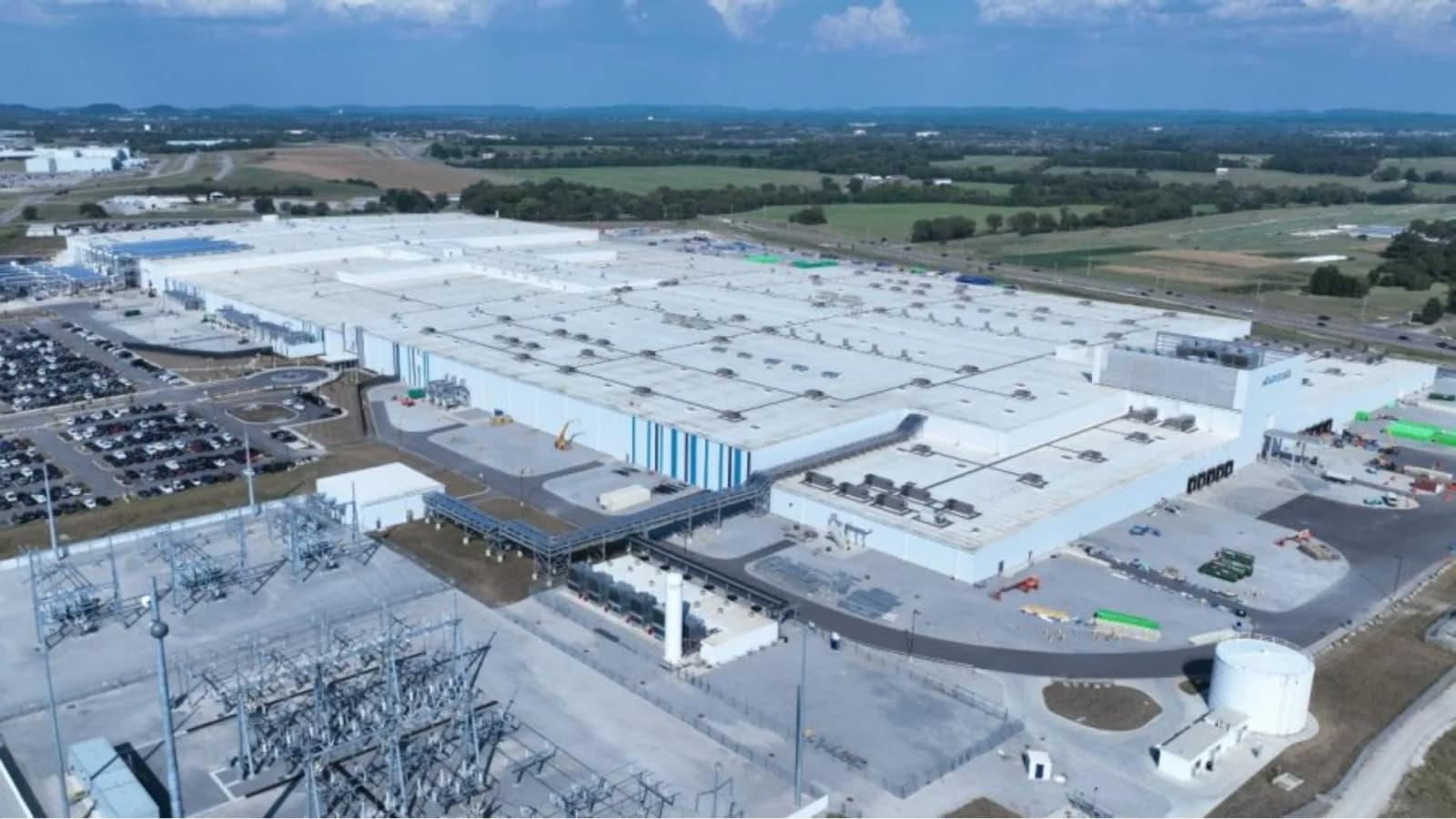
The race to build cheaper, longer-range electric cars has taken a leap forward in central Tennessee. Ultium Cells has announced that it will produce lithium manganese-rich (LMR) prismatic battery cells at its plant near Nashville.
The company is a joint venture between General Motors and South Korea’s LG Energy Solution. Once operational, the facility is expected to become the world’s first commercial manufacturing site for this next-generation battery design.
Upgrades to the Spring Hill plant will start later this year. Engineers expect to finish construction by 2028.
Automakers have long struggled to balance battery price against driving range. Today, the global market relies heavily on two main chemistries: premium high-nickel packs that offer maximum range at a steep cost, and low-cost lithium iron phosphate (LFP) cells that sacrifice range to keep prices down.
Offers greater energy density
LMR prismatic cells are engineered to disrupt that equation. The new chemistry provides 33% greater energy density than standard LFP cells, yet it can be produced at roughly the same price point.
For General Motors, integrating this technology provides an intermediate tier. High-nickel batteries will remain the benchmark for premium vehicles requiring maximum endurance. However, LMR cells will allow entry-level and mid-tier models to gain substantial driving range without inflated sticker prices.
“High-nickel batteries will continue to give customers the highest range in our portfolio, while adding LMR positions us to leapfrog today’s more affordable chemistries and deliver lower costs with better performance,” said GM in a press release.
Company executives note that this flexibility will help GM scale vehicle production more efficiently, broaden customer reach, and improve profit margins.
Addressing the main bottleneck
The decision to scale up manufacturing follows a major scientific hurdle cleared just weeks ago.
While LMR chemistry has held promise for years, it has suffered from a critical design flaw: gas buildup. In large electric vehicle packs, trapped gases create severe internal pressure. This swelling warps the battery’s internal structure and accelerates degradation, making large-format cells unsafe and short-lived.
In September, researchers from LG Energy Solution and Seoul National University published a practical solution. The team discovered that gas formation is driven by volatile oxygen reactions during charge cycles.
By fine-tuning the operational voltage window, the researchers stabilized how oxygen moves inside the cell. The results were striking. In laboratory evaluations, optimized 40 Ah-class cells maintained 92.2% of their original energy capacity after 883 charge and discharge cycles—a durability threshold suitable for automotive use.
Tailoring specific packs
Beyond the chemistry itself, the Spring Hill project signals a broader change in how modern battery plants operate.
The expansion gives Ultium Cells the ability to manufacture multiple cell chemistries and geometric form factors on the same campus. This enables the joint venture to tailor specific packs to distinct vehicle types, from heavy pickup trucks to compact city cars.
“Beyond flexing manufacturing might, bringing this new battery cell to market first is a milestone moment for keeping America competitive globally in EV and battery technology leadership,” concluded GM.
Related articles

Rivian’s sales pop as the company’s big R2 bet starts to pay off
Rivian had high hopes for its more affordable R2 vehicle - and so far, those hopes appear to be paying off.

Tesla will now let you drive off mid-charge if there’s an emergency
Tesla introduced a new feature to enable drivers to escape quickly while charging their vehicles in response to a mass shooting at a Supercharger location in Idaho in August that left seven people…

Tesla’s recovery hits a speed bump
Tesla sold fewer vehicles in the third quarter than it did a year ago, when consumers rushed to cash in on expiring federal tax credits for electric vehicle purchases.
New student-built electric car concept captures pollution even while driving
A group of students has built an electric car that tackles a rising source of...

BMW’s revamped i3 boasts up to 468 miles of range
When BMW first announced it was reimagining the i3 as an all-electric four-door sedan built on its Neue Klasse platform, it left out a lot of important details, like battery capacity, range, and…

Your car’s data privacy problems are worse than you think
You hear it all the time: Modern cars are basically smartphones on wheels.