Human cells carry hidden digital data through 10 rounds of growth in DNA experiment
Scientists at The University of Texas at Dallas have devised a way to encode information...
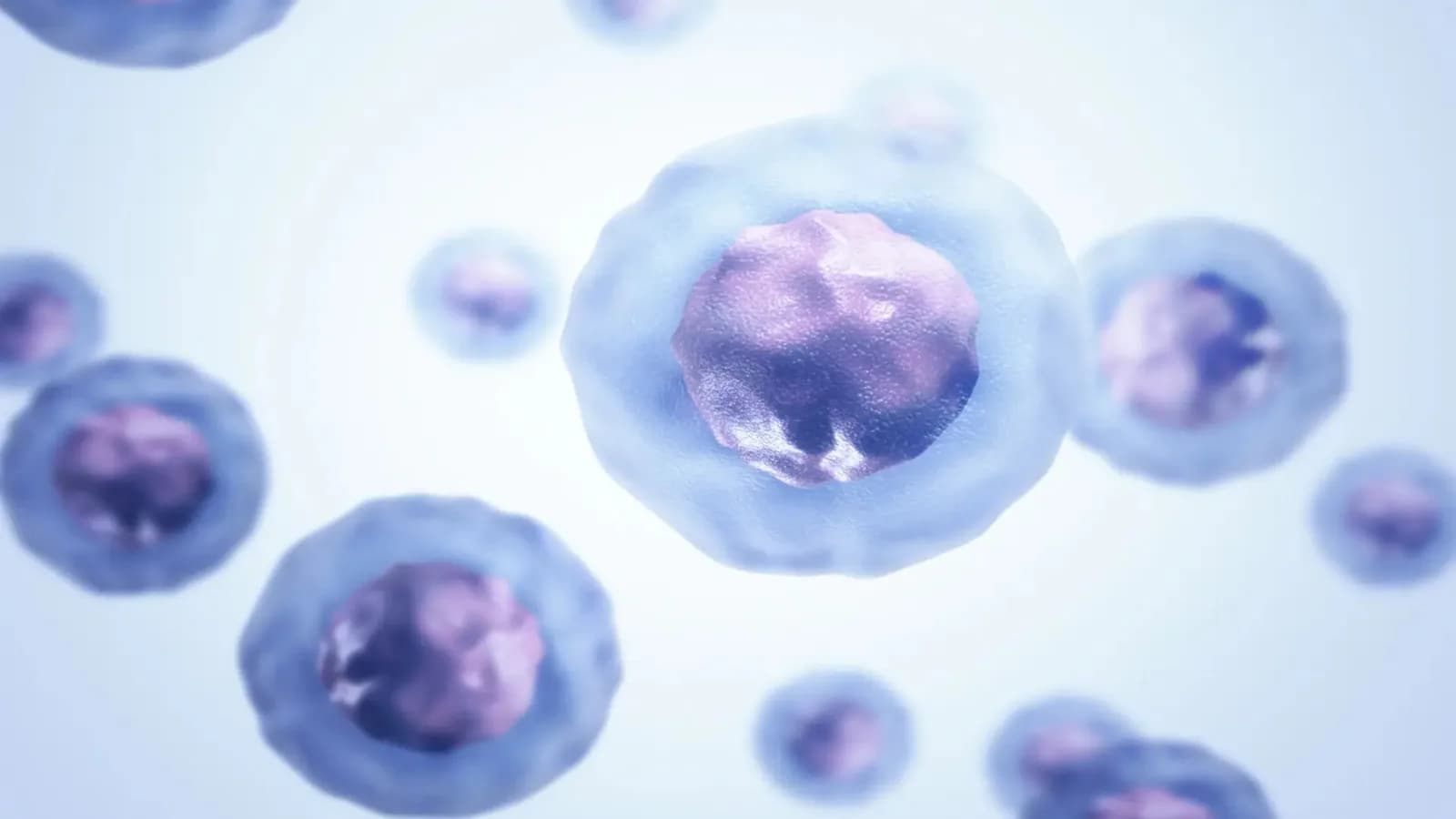
Scientists at The University of Texas at Dallas have devised a way to encode information within the DNA of human cells and then obscure it further. The scientists refer to their encoding process as DNA CODEC (Compressed Obfuscated DNA Encoding in Cells). Different engineered cell lines are used and false information is also encoded to further obscure genuine data.
The research was led by Taek Kang, Zikun Zhou, Shayan Mohammed, Yiorgos Makris and Leonidas Bleris. Although DNA has an excellent data storage density, much existing data storage using DNA does not involve storing it within human cells. Issues arise concerning both ongoing information storage and control of access to information where data is stored in human cells.
DNA CODEC encodes information using a hybrid of 10-ary Huffman coding and degenerate nucleotides. It was developed so that data can effectively be compressed and re-obtained despite biological or technological imprecision. In contrast to previous approaches, more than one set of engineered cells was used. Some contained false information.
“Cells have mechanisms to copy their genetic information faithfully,” Kang said. “Embedding the data in the cells’ genomes allows it to be copied along with their own genetic information as they divide.”
CRISPR technology inserts hidden data
CRISPR mediated targeted integration was used to insert encoded information at specific points in the human genome. Digital data was translated into DNA and then added to cells. False information was then encoded within cells too.
Although superficially similar to the encoded information, it lacks any genuine data. Engineered information-containing cells were then combined with false information-carrying cells. Without further information, it is not possible to ascertain from a sequenced sample which cells contain genuine encoded information.
Access to data is only available if the obscuring information can be used to distinguish between false and genuine information and then successfully decode the information. Therefore, this data storage approach can obscure information.
To assess whether encoded information could still be accessed following cell proliferation, the scientists encoded 272 characters of text from the lyrics for The Beatles’ ‘Let It Be’. The encoded information was added to human kidney cells.
The cells were then allowed to proliferate for approximately one month and through 10 cycles. Throughout this time, the scientists analyzed the cells using DNA sequencing to assess whether encoded information could still be accessed.
Human cells preserve stored information
Encoded information was successfully accessed at every point assessed. This demonstrates that encoded information continues to be accessible even after multiple cycles of cell proliferation and despite potential proliferation imprecision and/or fluctuating cells. Throughout the cell culture period, the investigation shows that encoded information was successfully preserved.
Such an approach may be used for both identification and monitoring of engineered cell lines. Rather than just maintaining information regarding the source and genetic engineering of cell lines externally, this could be encoded within cells.
However, this investigation has not shown how such an approach could be developed into a storage product. Nor does it specify the potential volume of data that may be encoded using this method in practice. Additional investigation is necessary to assess the data storage potential of the approach. Long term operation should also be analyzed and the criteria for practical implementation investigated.
“It’s a storage medium that is alive. It copies and repairs itself, and we expect the next step is making it editable so you can correct or replace part of the archive without rewriting all of it,” said corresponding author Dr. Leonidas Bleris, professor of bioengineering and the Texas Instruments Bioengineering Chair in the Erik Jonsson School of Engineering and Computer Science.
The findings were published on Nature Communications.
Source: https://interestingengineering.com/science/scientists-dna-information-human-cell
Get the latest news delivered to your inbox.
Related articles