24V military battery packs 2.6 kWh and delivers up to 45A of output current
Lincad has recently been contracted to supply its new LIPS 18 lithium-ion battery to the...
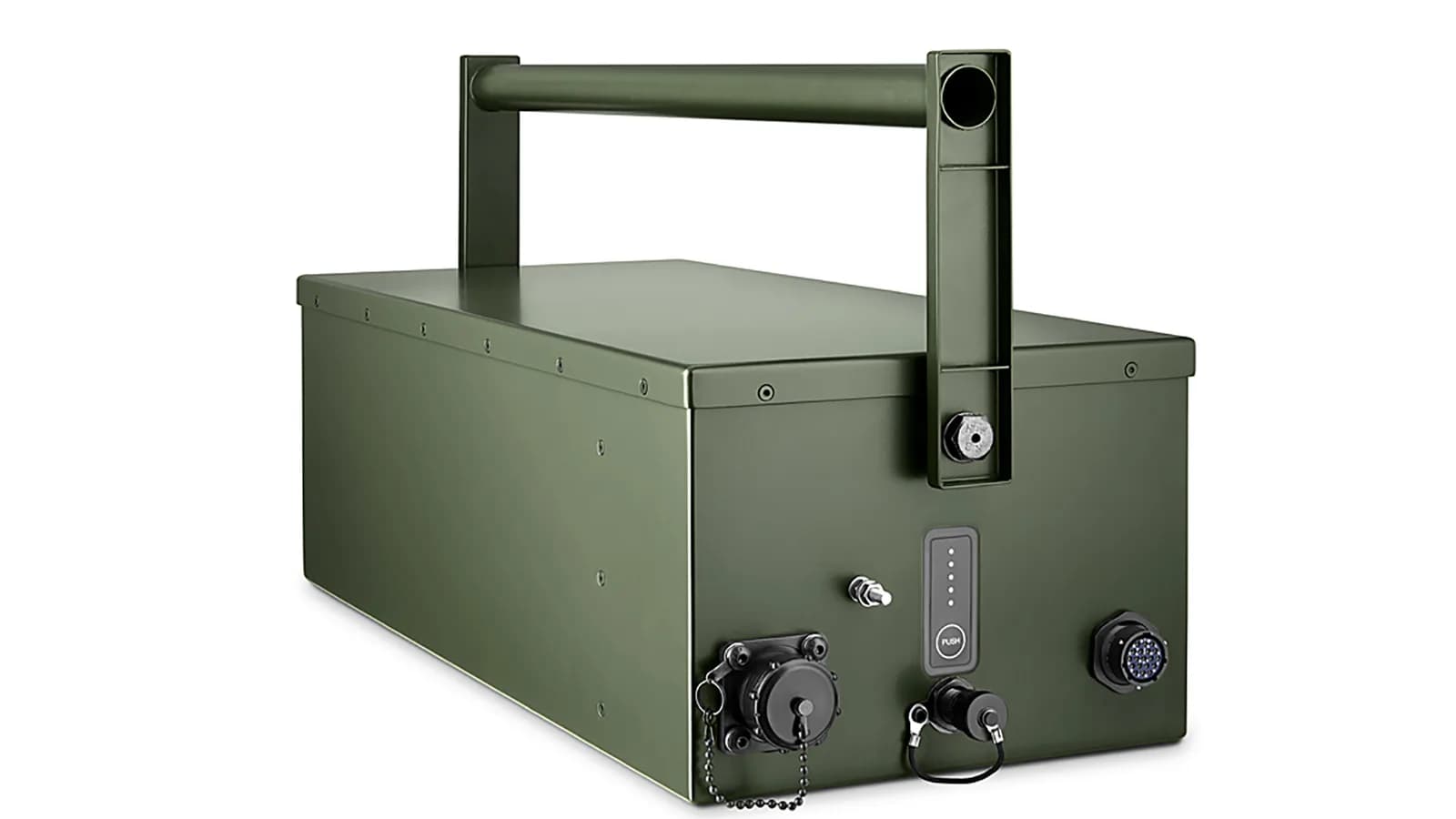
Lincad has recently been contracted to supply its new LIPS 18 lithium-ion battery to the UK Ministry of Defence (MoD) as a replacement for the LIPS 8, the company said. The battery stores 2.6 kilowatt-hours (kWh) of energy in a 35-pound (16-kilogram) package. A kilowatt-hour is the energy a one-kilowatt device uses in one hour.
Lincad said the LIPS 18 delivers more capacity at a lower weight than the LIPS 8, which it tied to the need for higher energy density in military equipment. Energy density means how much energy a battery stores for each unit of its weight.
The battery powers a system that defends a stationary area and provides backup power during an outage, according to Lincad. Peter Slade, joint managing director at Lincad, said balancing energy and power with weight is “a persistent challenge for defence equipment manufacturers and military end users.”
Rugged build, diagnostics and storage
The LIPS 18 has a fully metallic enclosure for physical protection and electromagnetic screening, according to Lincad’s release. Standard military circular connectors handle input and output. A press-to-test switch and a five-LED display show the state of charge.
The nominal voltage, or rated output level, is 24 volts, and the maximum output current is 45 amps, a measure of electric current. The battery operates from minus 40 to 140 degrees Fahrenheit (minus 40 to 60 degrees Celsius).
The battery management system, the electronics that monitor the cells, records periodic operational data to analyze usage and support maintenance. Its software can be updated securely from a mobile device if battery parameters need to change.
Lincad said enhanced electronics support a storage life of more than one year even when the battery is completely discharged, and greatly reduce the risk of over-discharge when it is left connected to equipment. An internal discharge function lets users prepare it for long-term storage or lower its state of charge for air shipment under International Air Transport Association rules.
What follows next
Multiple details are not yet public. The release gives no weight or capacity figures for the LIPS 8, so the size of the improvement cannot be checked. It also does not give the contract’s value, the award date, the number of batteries or the name of the system they will power. By the release’s figures, 2.6 kWh over 16 kilograms works out to about 163 watt-hours per kilogram, a calculation and not a Lincad figure.
Lincad said the battery is designed to work with its Caravel Mk2 and Four Channel Caravel Mk2 chargers, which are already in service with the MoD. Energy density is a broader military goal. The Defense Advanced Research Projects Agency launched a program targeting five to 10 times the density of current rechargeable batteries, and Epsilor said in September it had begun full production of a 4,400-watt-hour battery for military vehicles.
Lincad has not said when LIPS 18 deliveries will begin. The details come from a Lincad release dated Nov. 25.
Source: https://interestingengineering.com/military/uk-lithium-ion-battery-lincad
Get the latest news delivered to your inbox.
Related articles