
Lockheed Martin builds dedicated center to weaponize quantum tech for US troops
Lockheed Martin has opened a new center dedicated to turning quantum research into technologies that...
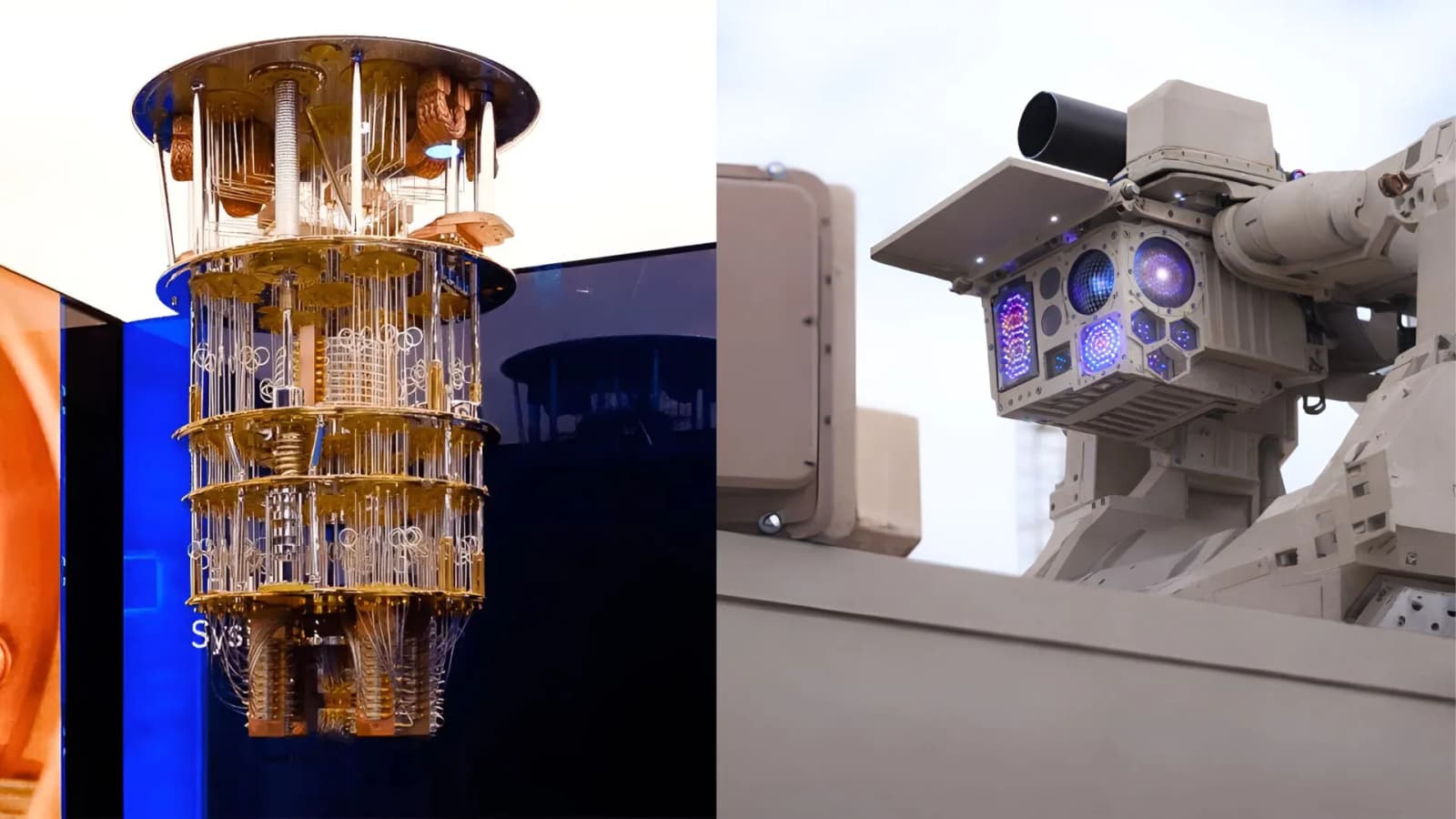
Lockheed Martin has opened a new center dedicated to turning quantum research into technologies that could serve future U.S. defense missions.
The Lockheed Martin Quantum Innovation Center, known as QuIC, will bring the company’s quantum work under one organization. Engineers and researchers will develop prototypes while also evaluating technology created by outside companies and research partners.
Quantum technology could eventually give military systems new capabilities in navigation, sensing and communications. Lockheed Martin has already spent more than 15 years working in those areas.
The new center gives those efforts a dedicated structure as quantum research moves closer to practical applications. It will also draw on the company’s experience developing complex technologies for national security programs.
New quantum hub
QuIC will operate as a center of excellence for quantum research and development. Its work will cover multiple applications rather than focus on a single quantum technology.
That includes integrating systems developed outside Lockheed Martin. The company can also access emerging technologies through Lockheed Martin Ventures, its corporate investment arm.
Lockheed Martin recently expanded that fund to $1 billion. Its investments could give QuIC access to startups developing technologies that could complement internal research.
Sarah Hiza, senior vice president of Technology and Innovation at Lockheed Martin, said the initiative reflects a broader push around quantum technology. “The QuIC represents our ongoing commitment to develop and integrate the best of American technology in quantum,” Hiza said.
She said the center follows a model used by the company’s Lockheed Martin AI Center. That organization has spent two decades developing artificial intelligence capabilities for national security.
Quantum work goes global
Lockheed Martin is also expanding its quantum relationships outside the United States. The company recently partnered with IBM and ETH Zurich on a quantum innovation hub in Switzerland. The facility is anchored by Switzerland’s first IBM quantum computer.
The partnership gives Lockheed Martin access to researchers and quantum computing infrastructure in Europe. It also adds another location for developing and evaluating emerging quantum capabilities.
Lockheed Martin has separately earmarked $100 million in venture funding for investments across the United Kingdom and Europe. Quantum research is among the technology areas targeted by those investments.
The company’s international work complements its U.S. efforts. QuIC can potentially connect research, investment, and engineering activities across that broader network.
Turning research into systems
Quantum research presents a difficult engineering problem for defense companies. A laboratory demonstration still needs significant development before it can support an operational military system.
That means engineers must consider reliability, integration and performance alongside the underlying science. QuIC will focus on that development work while continuing research into new applications.
The center could also help Lockheed Martin test technologies developed by universities, startups and other companies. That gives its engineers another route to evaluate advances emerging across the rapidly developing quantum sector.
Hiza said QuIC is modeled on Lockheed Martin’s experience scaling artificial intelligence for national security. The company wants to apply that same organizational approach to quantum technology.
Quantum systems remain an emerging field, but defense applications could eventually span navigation, sensing, communications, and computing. QuIC gives Lockheed Martin a dedicated organization to pursue those possibilities as the technology matures.
Source: https://interestingengineering.com/military/lockheed-martin-quantum-defense-center
Related articles

Russia builds second reactor to power 106 MW floating nuclear plant for Arctic mining
A new floating nuclear power unit will soon bring electricity to a massive copper mining...

Roku’s first OLED TVs are up to $400 off, starting at $699
Roku recently launched its first-ever OLED TVs. The $999 starting price was already impressive for the 55-inch Pro Series model that has a 120Hz refresh rate OLED panel (with four HDMI 2.

500-kW modular wind turbine with 82-foot blades can swap parts to test new tech
A new 500-kilowatt (kW) flexible and modular wind turbine that can be fitted with different...

These camera apps give you more control over the iPhone 18 Pro’s aperture
One of the questionable limitations of the iPhone 18 Pro's new main camera with a variable aperture is that you're limited to just four settings in the native iOS' camera app in manual mode: f/1.

Phones don’t have lights
Mark Zuckerberg has a new defense of the Ray-Ban Meta glasses: they're actually doing more to signal they're taking a photo than phones do.

Leaks reveal a new Apple HomePod mini, iPad mini, and Apple TV 4K
Apple is expected to announce more hardware before the end of the year following the debut of the iPhone 18 Pro and folding iPhone Duo earlier this month.