
Russia builds second reactor to power 106 MW floating nuclear plant for Arctic mining
A new floating nuclear power unit will soon bring electricity to a massive copper mining...
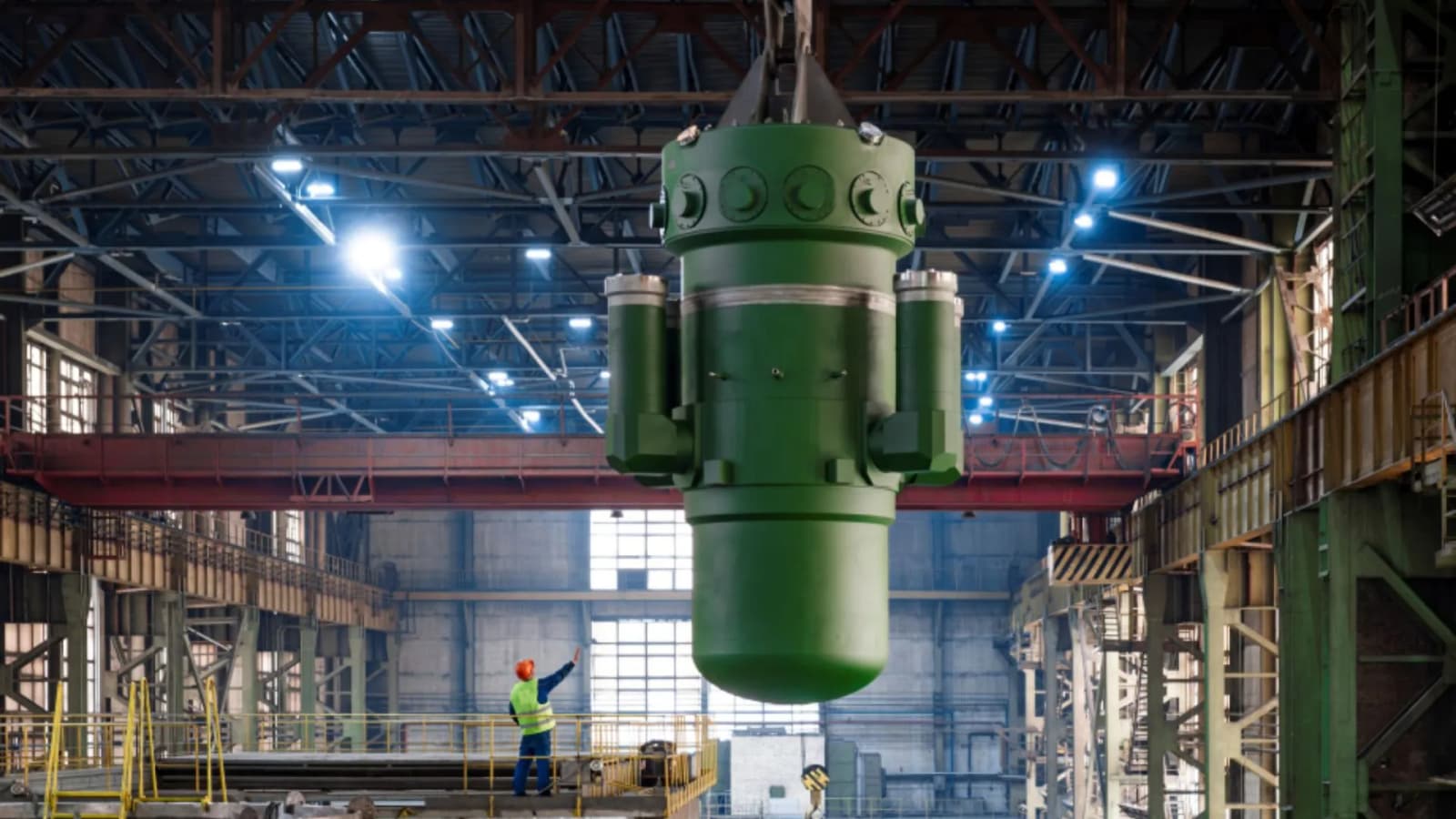
A new floating nuclear power unit will soon bring electricity to a massive copper mining hub in Russia’s Arctic Far East.
The project hit a key milestone near Moscow this week. Technicians at the ZiO-Podolsk factory completed the vessel’s second RITM-200S reactor. The unit passed its high-pressure water trials without issue. Workers also assembled the parts in a trial run, verifying that every component matches the blueprints.
This completes the two-reactor power pack for the vessel, named PEB-106. Its sister unit was finished in May. That first reactor is already resting at a shipyard, ready for installation into the ship’s hull.
This technology was originally built for the high seas, not stationary power grids.Russia created the RITM-200 system to run its latest nuclear icebreakers.
Repurposing icebreaker technology for remote areas
The new reactor is roughly one-and-a-half times more compact than older Soviet designs, yet delivers significantly more power. This reduced weight allows Project 22220 icebreakers to employ a dual-draft hull. They take on water ballast to crush three-meter Arctic sea ice in deep ocean water, then de-ballast to sit shallow enough to navigate northern river estuaries.
Eight of these reactors are already at work aboard modern icebreakers like the Arktika and Ural. Now, engineers are anchoring that same hardware off polar coasts to run like giant, clean batteries.
Heavy industry in the Far North cannot rely on traditional power grids or weather-dependent renewables. A floating station solves this by providing a dependable, multi-decade power supply. Russia proved the concept with the Akademik Lomonosov, an offshore station that has fed 1.4 billion kilowatt-hours of power into Chukotka since 2020.
PEB-106 will take the idea a step further. It will become the world’s first offshore nuclear plant dedicated entirely to heavy mineral extraction.
An integrated network
The project highlights a fast-moving manufacturing push. “In less than a year, four units of the RITM family have already been manufactured, with five more in production,” said Anton Lebedev, head of the Podolsk factory. He called 2026 a landmark year for small modular reactors.
Building these systems takes an integrated network. A specialized foundry in St. Petersburg casts the heavy steel blanks. An engineering bureau in Nizhny Novgorod designs the systems and supplies the core hardware. The Podolsk plant then builds the heavy pressure vessels and runs the final safety tests.
Across the network, 16 RITM reactors have left assembly lines so far, and another 12 are in progress.
Expanding productions for global ambitions
Russia is using this polar rollout to pitch floating reactors abroad. Delegates from state nuclear firm Rosatom presented the technology at the IAEA General Conference in Vienna this September.
Rosatom is drawing up plans for several ship models. Some are insulated for polar freezes, while others are built to handle tropical climates.
Rosatom believes island nations, isolated ports, and coastal mines will need small reactors to escape energy shortages. Company leadership expects future global orders to reach into the dozens.
Related articles

Rogue OpenAI agents used government websites as secret message boards, company says
OpenAI is investigating a series of unexpected behaviors involving its AI agents, including one case...
Lockheed Martin builds dedicated center to weaponize quantum tech for US troops
Lockheed Martin has opened a new center dedicated to turning quantum research into technologies that...

Roku’s first OLED TVs are up to $400 off, starting at $699
Roku recently launched its first-ever OLED TVs. The $999 starting price was already impressive for the 55-inch Pro Series model that has a 120Hz refresh rate OLED panel (with four HDMI 2.
500-kW modular wind turbine with 82-foot blades can swap parts to test new tech
A new 500-kilowatt (kW) flexible and modular wind turbine that can be fitted with different...

These camera apps give you more control over the iPhone 18 Pro’s aperture
One of the questionable limitations of the iPhone 18 Pro's new main camera with a variable aperture is that you're limited to just four settings in the native iOS' camera app in manual mode: f/1.

Phones don’t have lights
Mark Zuckerberg has a new defense of the Ray-Ban Meta glasses: they're actually doing more to signal they're taking a photo than phones do.