
MIT-led team tests wind turbines in air 220 times denser for higher power output
Researchers have used a highly pressurized wind tunnel to study how wind turbine alignment and...
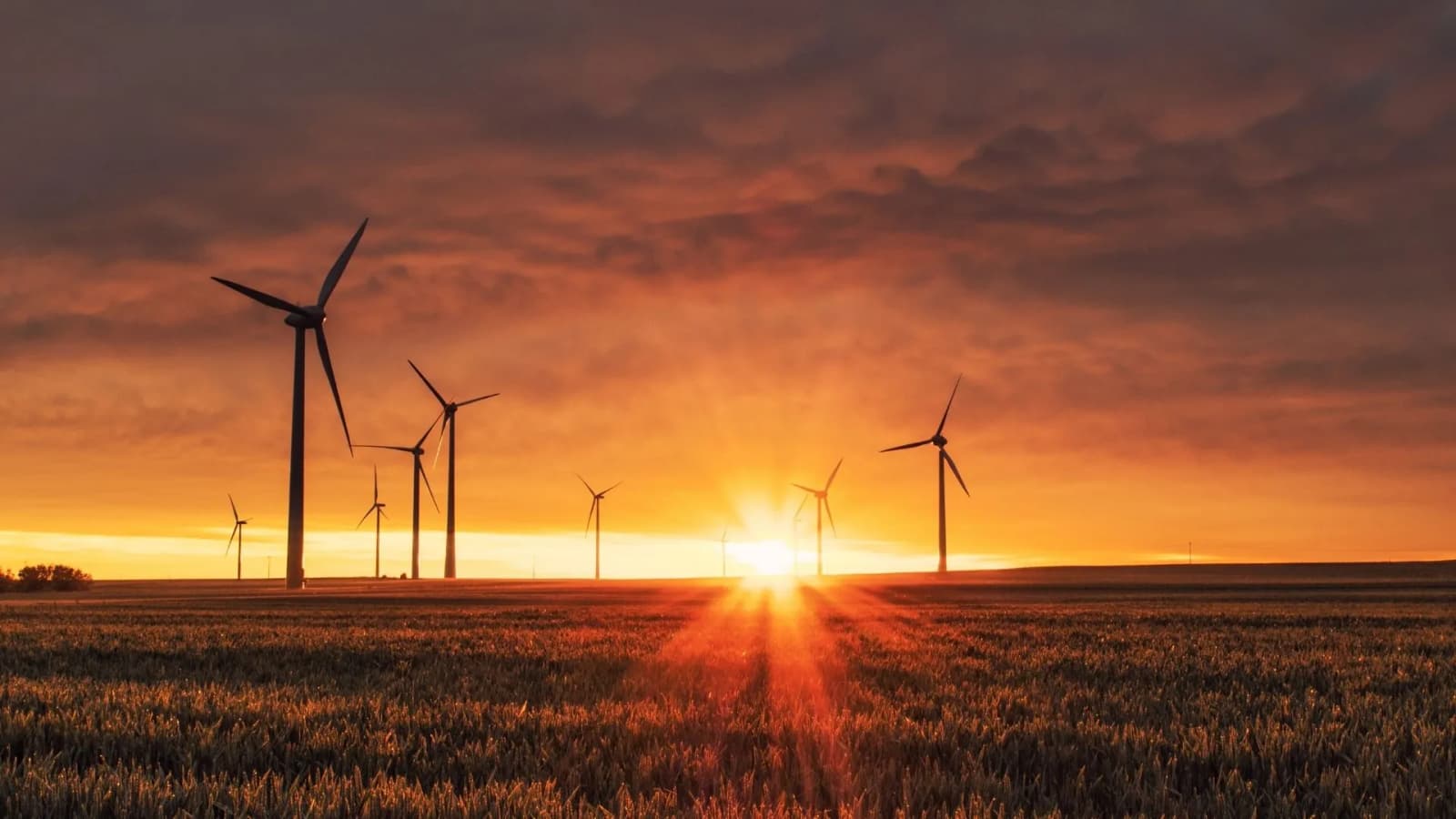
Researchers have used a highly pressurized wind tunnel to study how wind turbine alignment and blade speed affect power output, potentially helping existing wind farms generate more electricity without installing additional turbines.
The study uses a small-scale turbine inside a pressurized chamber to more accurately reproduce atmospheric flow conditions than traditional wind tunnel experiments.
The approach also allowed the researchers to validate a computational model that engineers can use to test turbine designs and wind farm control strategies on a standard laptop.
Pressurized air simulates full-scale turbines
Testing scaled-down wind turbines in conventional wind tunnels can produce results that differ significantly from real-world conditions. This makes it difficult to isolate how changes in wind direction, turbine alignment, and operating parameters affect electricity generation.
To address the problem, researchers from MIT, Queen’s University, Princeton University, and Penn State University used a pressurized wind tunnel developed by Princeton researchers.
The team tested a turbine measuring just 15 centimeters (6 inches) in diameter at pressures of up to 240 atmospheres. Increasing the air density by a factor of 100 to 220 allowed the researchers to reproduce flow conditions comparable to those experienced by much larger turbines.
According to lead author John Kurelek, the setup effectively represents turbines measuring approximately 15 to 20 meters (49 to 66 feet) in diameter, with the ability to simulate turbines up to 35 meters (115 feet) across.
The team conducted experiments over several weeks, varying wind alignment and turbine control strategies to isolate their effects on performance.
Changing blade speed could boost power output
The researchers found that adjusting a turbine’s tip speed, how fast its blade tips move relative to the incoming wind, based on its misalignment angle could increase power generation.
Wind turbines are designed to turn toward the wind, but changing wind directions mean they are rarely perfectly aligned at every moment. Many predictive models also assume turbines face directly into the wind, limiting their ability to represent actual operating conditions. The experiments showed that turbines could reach new power maximums when misaligned with the wind by changing only their tip speed.
This control strategy is rarely used in wind farms today, the researchers said, but could improve output with minimal additional costs. The team estimates that optimizing turbine alignment, blade pitch angles, and tip speed could generate tens of thousands of dollars in additional annual revenue per turbine.
A faster way to test wind farm designs
The experiments also validated a unified wind turbine model developed by MIT professor Michael Howland and colleagues. The model predicts turbine performance across operating conditions without relying on empirical corrections traditionally used in wind power models.
Because it can run on ordinary laptops, engineers could use it to evaluate turbine designs and control strategies without conducting lengthy field experiments. The researchers say the approach could help bridge the gap between theoretical simulations and tests at operating wind farms, where constantly changing weather and turbulence make controlled experiments difficult.
The team now hopes to use pressurized wind tunnels to investigate additional questions about wind turbine design and control, potentially helping wind farms extract more power from existing infrastructure.
The study was published in PNAS Nexus.
Related articles

Ranked: The Fastest-Growing Major Economies in 2026
While Europe's major economies struggle with stagnation, Asian emerging markets are forecasted to see 5% growth in 2026.

Where the Richest 0.1% Hold More Wealth Than the Bottom 80%
In just 27 countries around the world, the richest of the rich own more wealth than the bottom 80% of the population combined.

SteelSeries’ new mice are super light, with ultra-wideband and swappable batteries
The new ergonomic Rival Pro and ambidextrous Sensei Pro wireless gaming mice are some of the company's most interesting models in years.

The best early October Prime Day deals happening now
It’s not even October yet and Amazon is already offering some Prime Big Deal Day discounts on its own hardware, along with plenty of other popular products.

Meta’s Muse AI sent a YouTuber’s address to a stranger
Tech YouTuber Matt Robb says that Muse gave out his home address to a total stranger this weekend, after authorizing the bot to handle his Facebook Marketplace account.

Leaked images reveal new colors for Amazon’s next entry-level Kindle
Amazon typically introduces new Kindle models a few months ahead of the holiday shopping season, and this year it looks like that will include a bigger update to the entry-level Kindle than what…