
High-speed water droplets could damage supersonic vehicles, study reveals
A team of Boston University (BU) researchers led by Associate Professor Sheryl Grace is studying...
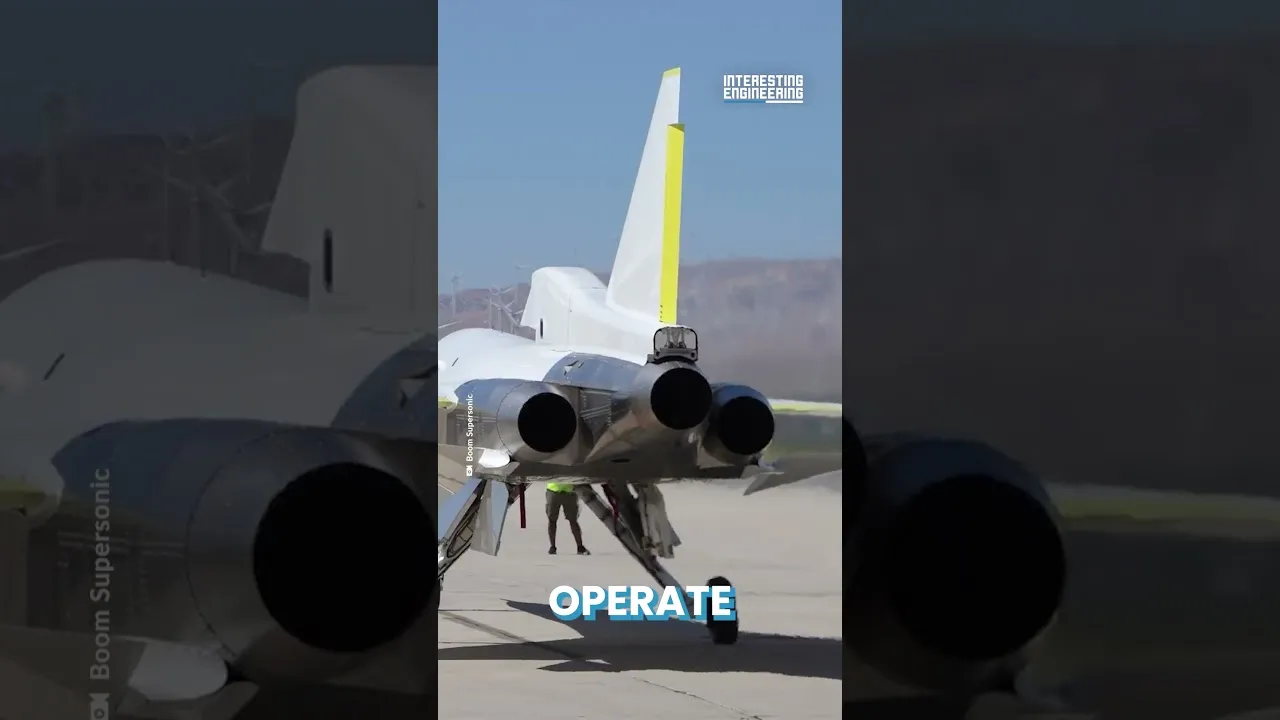
A team of Boston University (BU) researchers led by Associate Professor Sheryl Grace is studying how minuscule water droplets inflict catastrophic damage on high-speed spacecraft and supersonic vehicles.
Spacecraft built by companies like SpaceX and NASA are constructed from durable alloys. But atmospheric water droplets hitting at supersonic speeds can strike with bullet-like force and damage the metal.
The team notes that higher speeds increase this destructive potential. “It can go right through the vehicle,” Grace noted.
While engineers use computational models to estimate risks and certify vehicles, existing simulations overlook key physical mechanisms that govern how droplets break apart on impact.
To protect these costly vehicles and improve flight safety, Grace and her team are running supercomputer simulations to capture the exact mechanics of droplet breakup and refine current predictive models.
The hidden violence of cavitation
For a long time, computational models treated water droplets as simple, uniform spheres governed primarily by their outer surface tension. But Grace suspected the predictive software was missing something crucial happening inside the drop.
These models missed cavitation. It is a physical process where trapped gas bubbles inside a water droplet rapidly contract and expand under varying pressures.
Cavitation has been modeled for a long time, but scientists have never examined it as an internal driver of droplet breakup. Fully understanding how these fragmented droplets interact with airborne vehicles remains a unsolved piece of the puzzle.
Simulating this process is a computational nightmare. Standard modeling of droplet disintegration focused primarily on surface interactions between the liquid’s exterior and its surrounding environment.
Researchers examined internal droplet mechanics using high-performance computing clusters to run complex simulations. Supercomputers calculate multiple interacting fluids, scale from microscopic bubbles to larger drops, and process sudden pressure jumps all at once.
“While all computational fluids software aims to predict the same physical reality, different numerical approaches used by the developers can yield different results,” said Grace. “To develop a computational method that’s going to capture all of the physics and run on a supercomputer in our lifetime, it’s a hard thing.”
Several aerospace and materials applications
To crack the code, Grace’s lab uses the massive processing power of the BU Shared Computing Cluster in Holyoke, Mass.
Inside the lab, doctoral student Rebecca Shannon (ENG’27) and undergraduate researcher Reka Sundem (ENG’27) run competing, highly complex numerical models side by side. By pitting different mathematical approaches against each other, the team can determine whether their simulations reveal genuine fluid physics or merely phantom software glitches.
The purpose of this computational heavy lifting could be huge.
A new commercial space race is flooding low-Earth orbit with satellites and reusable rockets, while commercial aviation companies actively pursue the return of supersonic passenger travel.
These insights enable the development of advanced vehicle skins and protective coatings designed to absorb or disperse high-speed fluid impacts efficiently. Flight controllers can establish precise safety thresholds to reduce unnecessary launch cancellations in cloudy or light-rain conditions, minimizing costly operational delays. Plus, these models help ensure that returning spacecraft endure the dense, moisture-rich lower atmosphere without incurring extreme repair expenses.
Refining these predictive models will also improve safety for reentry vehicles and high-speed aircraft, ultimately minimizing or eliminating catastrophic water damage.
Related articles

Quantum battery: Scientists use charging to balance power, stable energy delivery
A collaboration of researchers from various parts of the world has identified the fundamental limits...

US scientists find solid battery material moves lithium ions rapidly above 260°F
A promising solid battery material lets lithium ions move rapidly when heated above 260°F (400...

Argonne scientists evaluate gravity-driven safety systems for advanced nuclear reactors
Even when a nuclear reactor goes dark, it is not truly asleep. The chain reaction...
Ranked: The Top Research Hospitals by Reputation in 2026
Charité leads the top research hospitals by reputation in 2026, as eight countries place institutions in the global top 10.
100x-brighter fourth-gen X-rays: China fires first 2.2-GeV electron beam at HALF
China has achieved a landmark milestone in the construction of its most advanced scientific instrument...

3-foot claws, tons of teeth: ‘Anatomically bizarre’ giant dinosaur found by scientists
Paleontologists in China have described a newly identified dinosaur so unusual that researchers called it...