
NASA prepares humanoid robots to take on dangerous jobs on the moon and Mars
When humans finally set up camp on the moon, they will not be alone. But...
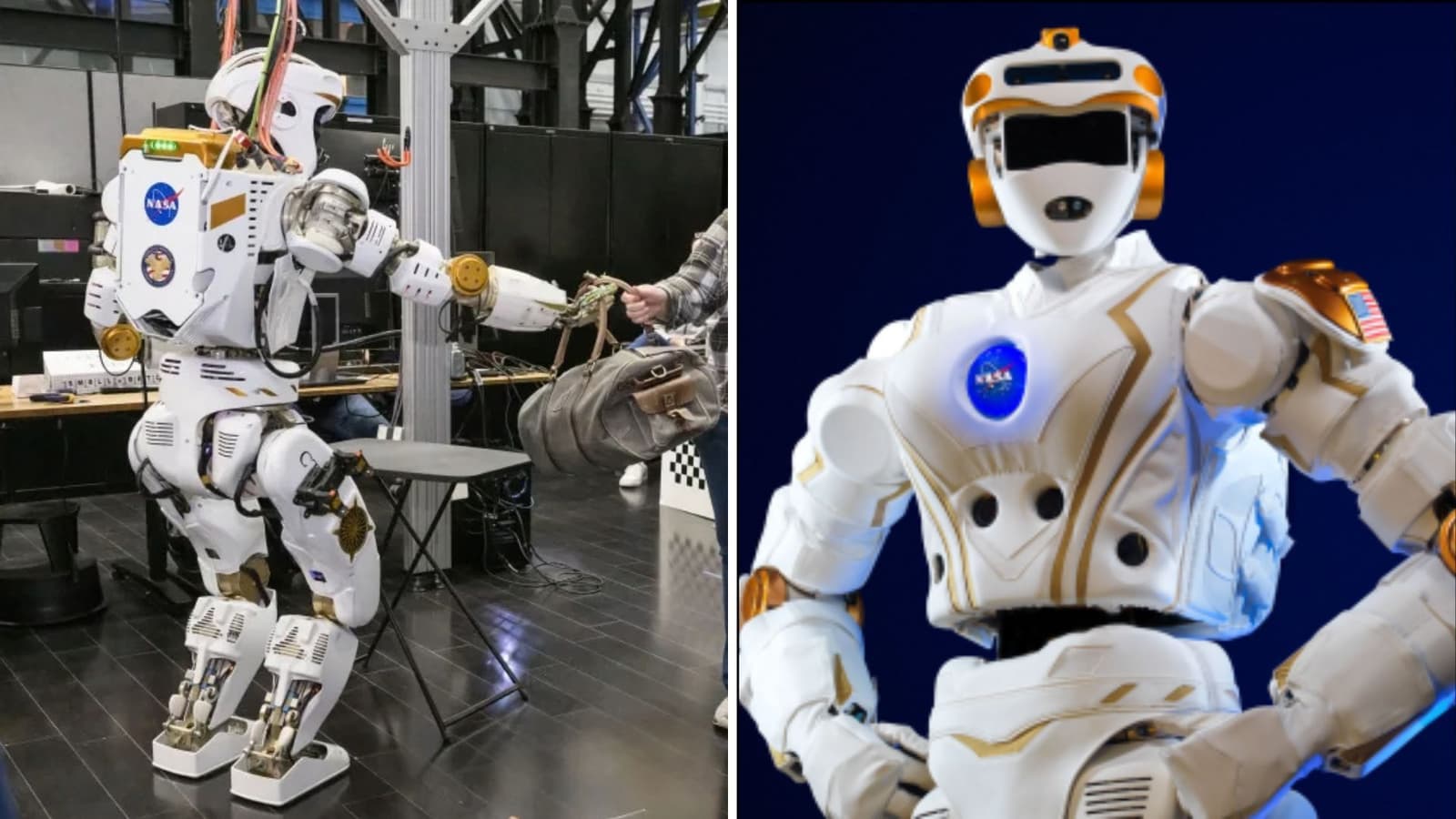
When humans finally set up camp on the moon, they will not be alone. But will share the dusty extraterrestrial home with metallic coworkers who do not need oxygen, sleep, or coffee breaks.
At NASA’s Johnson Space Center, the 16-member Dexterous Robotics Team is laying the groundwork for a future where humans and advanced robots work side by side in deep space.
Science fiction has mostly imagined metallic overlords replacing human explorers. But NASA has a vastly different objective. The strategy is simple: let machines take the hits so humans can do what they do best.
Robots can endure conditions that are fatal to humans, operate for long durations without life support, and reduce the massive costs and risks associated with crewed missions.
“Our team is not trying to replace human explorers with robots but instead make human exploration safer and more sustainable by developing highly capable, reliable, and trustworthy robots to work in extreme environments,” said Shaun Azimi, Dexterous Robotics Team lead. “If we can send more capable robots, we can reduce the risk and make people more effective in doing the things that people do best.”
NASA’s steel astronauts
Space features severe hazards like intense radiation, extreme temperatures, vacuum conditions, and destructive dust that jeopardize human survival. Robots operate without oxygen, water, food, or bulky suits, functioning reliably in these harsh environments. Therefore, assigning automated systems to high-risk tasks such as repairing station exteriors, inspecting damaged hardware, and scouting uncharted surfaces would keep human crews out of harm’s way.
The team’s expertise was forged through iconic space platforms like Robonaut 2, which spent seven years aboard the International Space Station, and Valkyrie, NASA’s first bipedal humanoid.
Today, those years of field experience are driving brand-new initiatives.
At the center of this push is iMETRO — the Integrated Mobile Evaluation Testbed for Robotics Operations — a facility designed to bridge the gap between concept and reality. Equipped with space habitat mockups, simulation tools, and a rugged outdoor rock yard, iMETRO gives engineers and private partners a practical space to test robotic hardware and software.
A major engineering hurdle for lunar and Mars missions is radio delay (ranging from a few seconds for the Moon to over 20 minutes for Mars). The software tested at iMETRO enables semi-autonomous execution, where astronauts or ground control give high-level commands, and the robot handles the granular hand-eye coordination independently.
For the moon and Mars
The facility takes away the guessing game. In one test, software developed by PickNik Inc. let a robotic arm locate a spacecraft hatch, turn the latch, pull open the heavy door, and transfer cargo inside. In another project, a NASA intern built code enabling a commercial arm to inspect and maintain a station-style cold stowage freezer routinely.
These trials do more than improve software. They reshape design thinking. Habitat designers are learning that small adjustments, such as adding larger handles or installing brighter lights, can benefit robotic workers just as much as human astronauts.
The immediate target is humanity’s first lunar outpost, the Moon Base. But the vision stretches further out into the solar system. The team is already mapping out applications for future human missions to Mars. It will ensure that wherever people go next, their automated partners will be right beside them to share the heavy load.
Source: https://interestingengineering.com/ai-robotics/nasa-prepares-humanoid-robots-for-space
Related articles

Samsung raised prices on the Galaxy S26 by $100
The base Galaxy S26 with 256GB of storage costs nearly $1,000 after Samsung raised prices in the US by $100 or more, Phone Arena reports.
Megawatt-level nuclear battery chosen for second-ever reactor test at 100-foot-tall DOME
A Houston startup will test an experimental “nuclear battery” in the Idaho desert next year,...
Flourish 1: Wheeled semi-humanoid robot runs 12 hours and lifts up over three pounds
A San Francisco startup has emerged from stealth with a home robot that costs $3,555,...

HP’s answer to the MacBook Neo is thinner, lighter, and comes with OLED
HP is announcing a new laptop that's squarely aimed at Apple's MacBook Neo. The 2026 HP OmniBook 5 14 starts at $699.99 with an Intel Core 5 315 "Wildcat Lake" processor, 8GB of RAM, and a 256GB SSD.

Amazon is launching colorful new Kindles — and a case with physical page-turn buttons
Kindles don't usually change much with each new version, but Amazon is launching next-generation models today that look and feel a whole lot nicer.

Gears of War: E-Day is a great game launching at a terrible time
There are few blockbuster games that are as confident as Gears of War: E-Day.