New 3D-printed progressive lenses cut manufacturing energy by 90% and waste by 76%
IOT, which supplies technology to the ophthalmic lens industry, says it has developed a way...
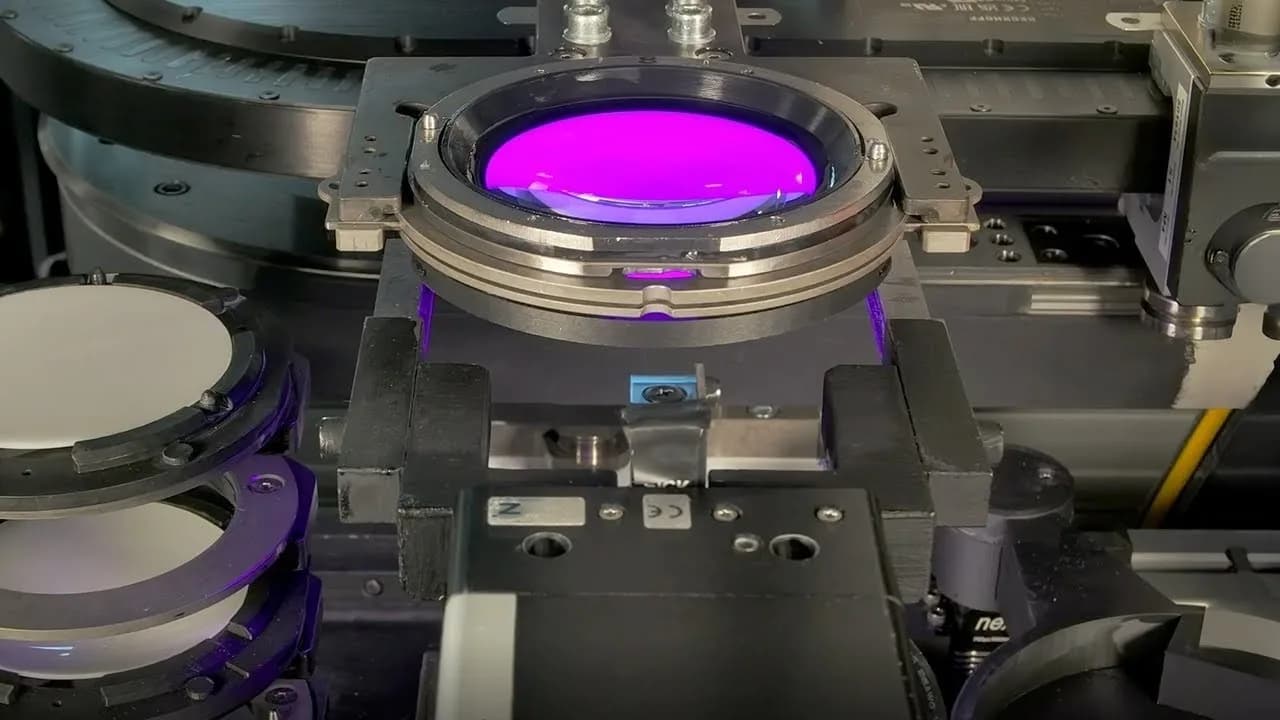
IOT, which supplies technology to the ophthalmic lens industry, says it has developed a way to 3D print personalized progressive lenses with a single flash of light. The company calls the process Light-Form Technology, describes it as a world first, and says its first commercial application is already reaching consumers. All figures here come from IOT’s announcement, which included no independent test data.
Single flash, finished shape
Light-Form is based on stabilized frontal photopolymerization, which uses light to form the entire lens volume in one step. Conventional surfacing involves generating and polishing, which this process does not require.
The workflow also includes resin recovery to reduce waste, followed by surface hardening and lens mapping. The lens formation step itself takes seconds, while the later processing steps complete production.
Progressive lenses blend multiple focusing powers into one lens so wearers can see clearly at different distances without a visible dividing line. Personalized designs tailor that power map to an individual wearer’s prescription and needs.
A new manufacturing method for progressive lenses must reproduce the intended optical design precisely, not just create a recognizable shape, IOT said. The company says Light-Form connects the freedom of digital manufacturing with those optical demands.
What savings are claimed
IOT says the process eliminates water use in manufacturing, cuts energy use by 90% and reduces waste by 76% compared with conventional methods. The company stresses that those figures refer to manufacturing only, and the announcement did not detail how they were measured.
COO Carolina Gago said “the value lies in rethinking the production workflow,” pointing to resin recovery and lower water and energy requirements.
Toward in-store production
IOT says production systems could use multiple printing heads to raise output within a compact footprint. It also envisions in-store manufacturing with compact equipment, which could bring customized lens production closer to the wearer and reduce inventory needs and operational complexity.
For laboratories, the company says, future installations could be configured around local demand instead of relying only on conventional surfacing infrastructure. Optical partners would keep a central role in delivering vision correction and personalized service, it added. For wearers, IOT sees a longer-term opportunity in access to personalized prescription lenses through a more responsive production model.
Smart glasses still ahead
Another development direction is printing prescription optics directly onto waveguides and flat substrates for smart glasses and augmented reality devices, potentially enabling thinner, lighter designs. Customized optical geometries could also support future virtual reality applications.
IOT stresses that these remain development directions, distinct from the progressive lenses already reaching consumers.
José Alonso, IOT’s co-founder and CINO, said Light-Form shows “how scientific research can change the way ophthalmic lenses are made.” Alonso said the new process helps optical partners develop personalized solutions, explore new lens architectures and manufacture with greater flexibility. The company says it has more than two decades of optical research, with its technologies incorporated into 35 million lenses annually across 70 countries.
Source: https://interestingengineering.com/science/light-form-3d-printed-progressive-lenses
Related articles