
New battery index pinpoints when sodium-ion cells can replace lithium-ion
Lithium-ion batteries are currently the backbone of modern energy storage that powers everything from your...
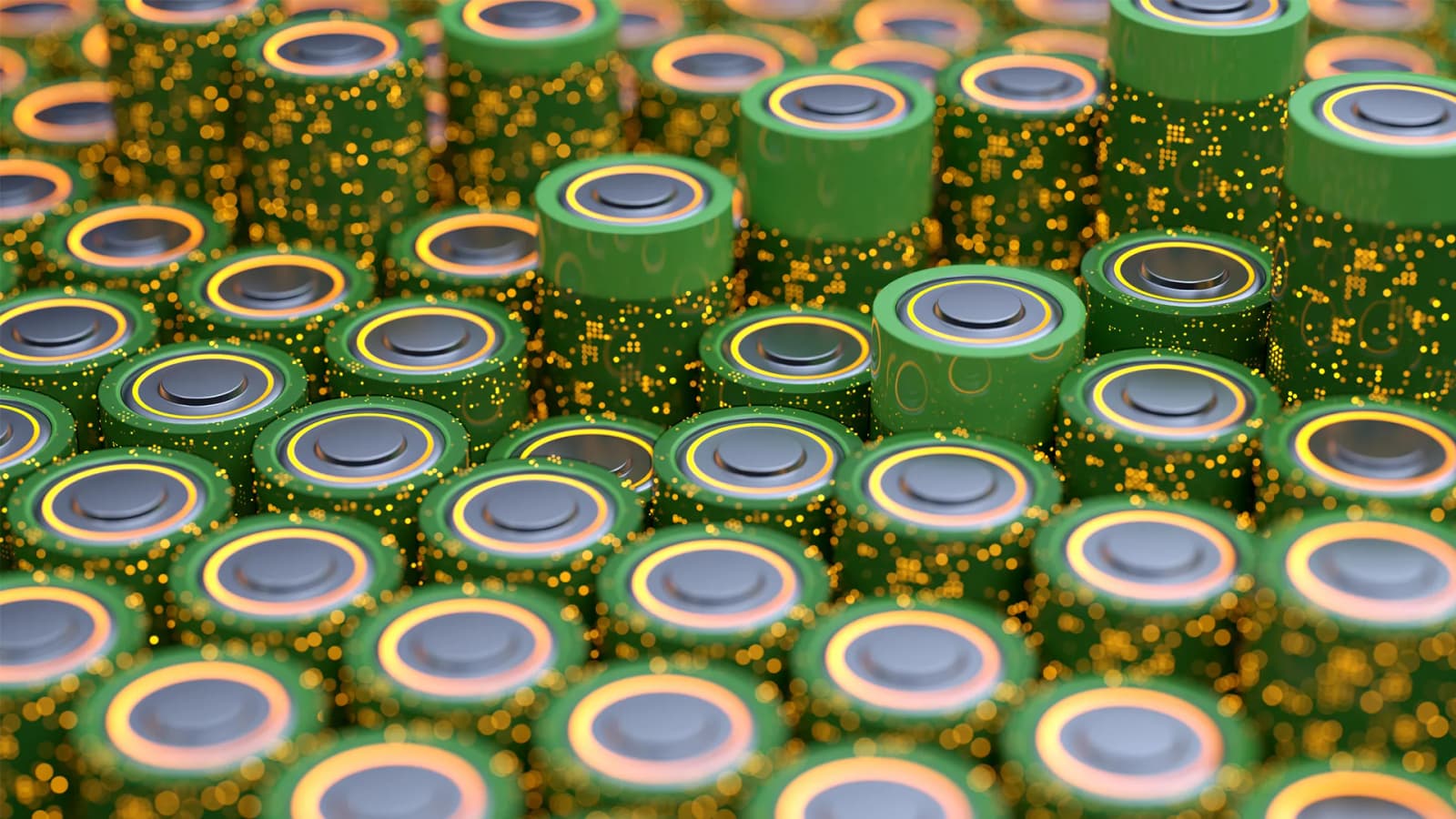
Lithium-ion batteries are currently the backbone of modern energy storage that powers everything from your smartphones to electric vehicles, but their high cost and growing demand are forcing scientists to explore cheaper alternatives.
Sodium-ion batteries offer one possible solution. However, their lower energy storage and greater weight make replacing lithium-ion cells far from straightforward.
Now, researchers at Southwest Research Institute (SwRI) have developed a new method to identify when sodium-ion batteries can meet the same electrical requirements as lithium-ion cells.
This development won’t facilitate complete replacement of li-ion batteries, but it could help manufacturers switch technologies without unnecessary redesigns.
Looking beyond battery specifications
Lithium-ion batteries remain widely used because they can store substantial amounts of energy without adding excessive weight. However, sodium-ion batteries rely on more abundant and generally cheaper materials, including sodium-based salts and lower-cost current collectors.
Their disadvantages include lower energy storage and the possibility of larger, heavier battery systems. The challenge is that a battery that performs well in one measurement may not necessarily work as a direct replacement in a real device.
Existing comparison methods typically examine capacity, voltage, impedance, efficiency or power capability separately. These measurements are useful, but they do not establish whether two different battery technologies can complete the same application-specific task under identical operating conditions.
SwRI researchers set out to address this gap by developing the Electrical Interchangeability Index (EII), a numerical framework designed to determine when different battery technologies can provide comparable electrical performance for the same application.
“Our application-aware Electrical Interchangeability Index (EII) provides equipment manufacturers and designers with a quantitative measure of whether two batteries can execute the same duty cycle or whether a substitution could compromise performance or require changes to the battery system,” Shuvodeep Bhattacharjya, one of the researchers and an engineer at SwRI, said.
Testing whether two battery technologies can do the same job
The team conducted an internally funded project to test whether sodium-ion cells could substitute for 18650-format lithium-ion batteries, which measure 18 millimeters in diameter and 65 millimeters long and are widely used in laptops, power tools and electric vehicles.
Instead of comparing individual specifications, researchers tested both cell types across a broad range of operating conditions, measuring how they handled application-specific demands such as delivering and absorbing power.
“We identified ‘high-EII’ operating regions, where the two cell types demonstrated strong functional equivalence with negligible differences in surface temperature rise, available capacity and power capability, and ‘low-EII’ regions, where substitution would be unacceptable,” Bhattacharjya said.
The researchers then also assessed charge and discharge rates, voltage limits, and power tracking.
Repeatable results in high-EII regions indicated that the two technologies could perform the same duties within their respective operating conditions.
A tool for future battery design
The EII could help manufacturers assess sodium-ion batteries as alternative or secondary sources for systems designed around lithium-ion technology, showing when substitution is possible and when redesign is needed. “
This initial work provides a structured, verifiable method to evaluate where new chemistries like sodium-ion can plug into existing designs and where redesign is recommended or even mandatory,” Scott Sjovall, manager of Battery System Research and Innovation Section at SwRI, said.
“From a business perspective, SwRI’s EII can support chemistry down-selection, second-source qualification and assessment of alternative or hybrid battery technologies while reducing unnecessary system redevelopment,” Sjovall added.
However, the initial framework does not establish that sodium-ion cells can replace lithium-ion batteries across every application or throughout their operating lifetimes.
SwRI plans to expand the EII to other battery chemistries, cell formats and application areas, while also examining how aging, degradation and thermal management affect interchangeability.
Related articles
World’s first zero-degradation elastocaloric cooling device maintains 1 million operational cycles
Researchers from the Hong Kong University of Science and Technology (HKUST) have unveiled the world’s...
Beijing to Shanghai in 30 minutes: China ready to test its Supersonic TMS-10 plane
China is moving its next-gen supersonic passenger aircraft research into a more demanding phase, with...

MARTAC expands US drone boat production with 100 more Devil Rays per year
MARTAC partners with SŌLACE Boats to increase production of its Devil Ray autonomous vessels by...
Why promising battery materials break down when researchers build real cells
A battery material can look impressive in a laboratory and still fail when turned into...

China showcases Type 99B tank in live-fire drills after 2025 parade debut
China has released footage of live-fire drills of its Type 99B main battle tank roughly...
Sentinel ICBM explained: Inside America’s next-generation nuclear missile
For more than five decades, the U.S. land-based nuclear deterrent has relied on the LGM-30...