New protein-based membranes aim to separate lithium from sodium for battery production
UK researchers are developing a new method to extract lithium for batteries using engineered proteins...
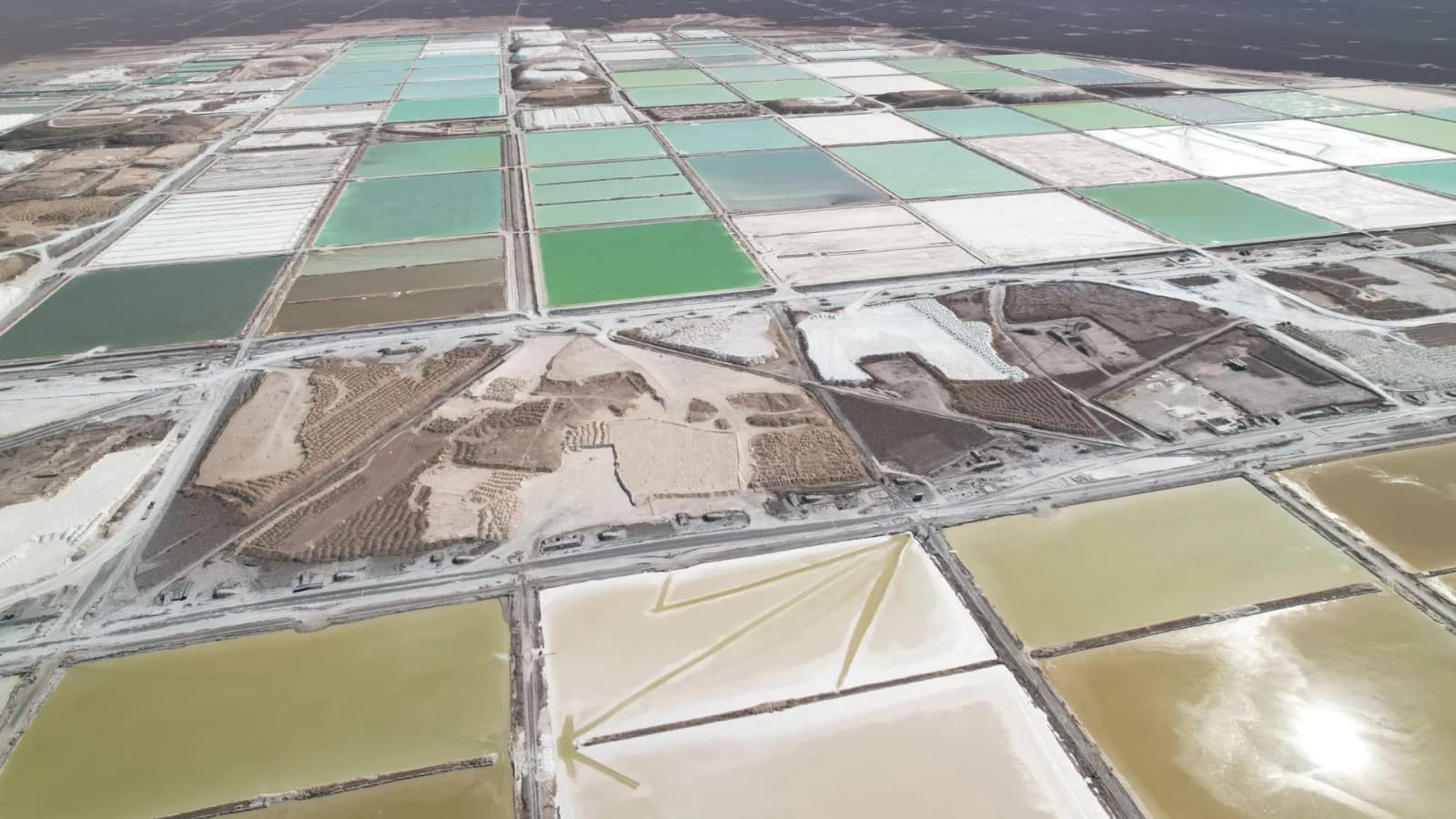
UK researchers are developing a new method to extract lithium for batteries using engineered proteins that assemble into membranes with pores as small as 1 ångström, potentially allowing lithium to be separated from chemically similar sodium.
The approach uses S-layer proteins, which naturally form highly ordered structures on the surfaces of microorganisms. Researchers aim to modify these proteins to create membranes with uniformly sized pores that can selectively separate lithium and sodium ions.
Scientists from the University of Birmingham and Aston University are targeting pore sizes ranging from 1 to 50 ångströms, with one ångström equal to one ten-billionth of a meter. The goal is to manufacture large-area membranes that can perform highly selective separations under practical operating conditions.
The three-year project has received £6.2 million from the UK’s Advanced Research and Invention Agency (ARIA). The researchers will design and screen thousands of protein variants before scaling up the most promising candidates for membrane manufacturing and testing.
Proteins form programmable pores
The proposed membranes will use S-layer proteins, which naturally form ordered, two-dimensional structures on the surfaces of many microorganisms.
These proteins can assemble into repeating patterns without requiring each component to be positioned individually. Researchers plan to modify their structures to create pores with controlled dimensions and chemical properties.
Thousands of protein variants will be designed and screened to identify candidates capable of separating lithium and sodium ions. The most promising versions will then be produced at larger scales and incorporated into membrane systems.
“Biology can construct ordered materials with precision that is extremely difficult to achieve using existing manufacturing methods. We aim to harness this to create membranes with uniform, programmable pores,” said project lead Dr. Dominik Kubicki of the University of Birmingham.
Fold9 will lead the computational design of the proteins, while Adaptyv Bio will provide high-throughput screening to test large numbers of variants. UK-based Evove will contribute membrane manufacturing, scale-up and testing expertise.
The researchers will also use cryogenic electron microscopy (cryo-EM) and neutron reflectometry to examine membrane structures at the nanoscale. These techniques will help determine how changes in pore geometry influence ion selectivity, stability, and transport.
Scaling membranes beyond laboratories
A central challenge will be turning precisely engineered protein structures into continuous membranes that can operate under practical industrial conditions.
The team plans to combine protein production, membrane fabrication and testing to assess whether the materials retain their selective properties when manufactured at larger scales.
“A key challenge will be translating molecular-level control into membranes that can be manufactured and operated at useful scales,” said Professor Owen Thomas of the University of Birmingham.
The project is part of ARIA’s Universal Fabricators program, which explores using engineered proteins as building blocks for manufacturing materials with controlled structures.
Although lithium extraction is the initial target, the researchers believe the approach could eventually support water treatment, critical-mineral recovery and chemical and pharmaceutical manufacturing.
The technology remains at the development stage. The team has not yet reported a working industrial-scale membrane, lithium recovery rates, or measured energy savings.
The three-year program will test whether engineered proteins can deliver the selectivity, durability, and scalability needed for practical separation systems.
Related articles

SpaceX announces plan to become a ‘major mobile carrier’
SpaceX has acquired a portfolio of low-band spectrum licenses - a move the company says "will pave the way" for its Starlink Mobile service to become a "major" US carrier.

Bamboo waste makes plastic 173% tougher, blocks unwanted signals in smartphones
Chinese researchers have recently come up with a new bamboo-reinforced plastic that is 81 percent...