
New RP1 humanoid for open-source robotics research unveiled by RoboParty
Chinese robotics firm RoboParty has unveiled RP1, a full-stack open-source humanoid robot designed for robotics...
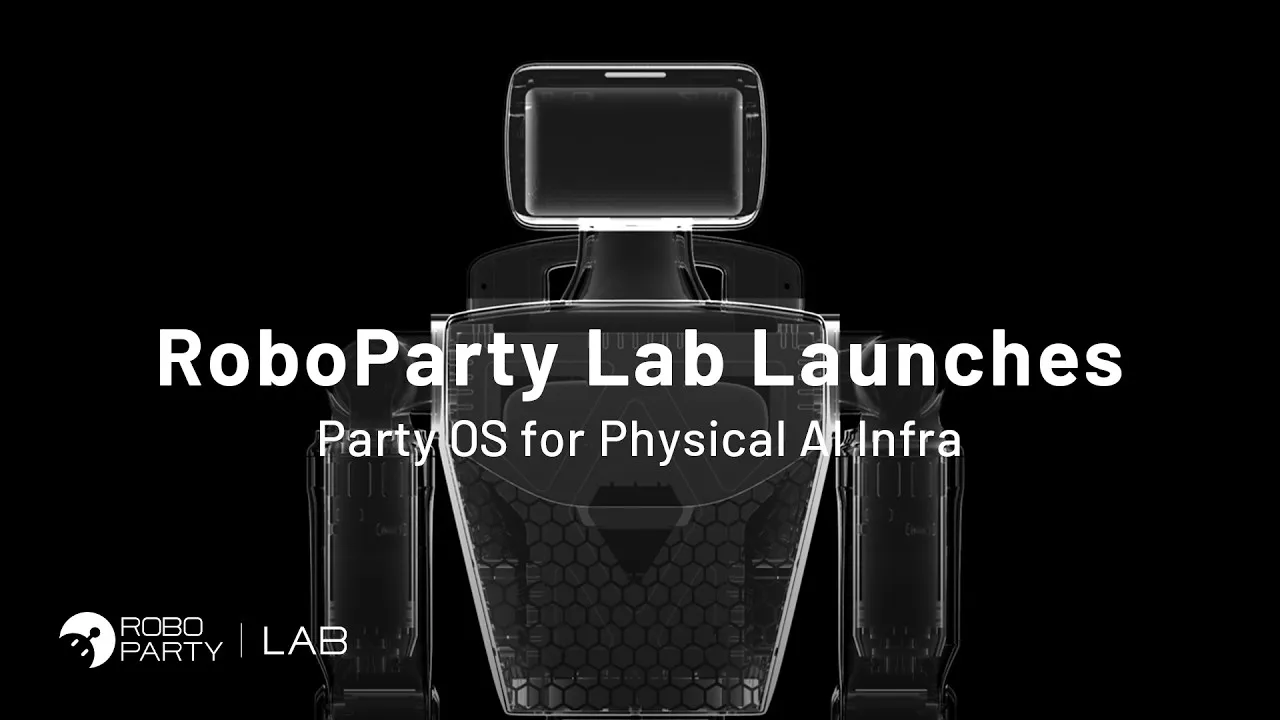
Chinese robotics firm RoboParty has unveiled RP1, a full-stack open-source humanoid robot designed for robotics research, education, and embodied AI development.
The company presented the bipedal robot publicly using an interactive “Kick Me” display on September 28 at the 2026 IEEE/RSJ International Conference on Intelligent Robots and Systems (IROS 2026), marking its global debut.
RP1 follows RoboParty’s RPO (ROBOTO ORIGIN) project, an open-source humanoid initiative launched in January 2026 that has attracted more than 2,500 stars on GitHub.
The company describes RP1 as a high-performance platform intended to give researchers and developers access to an open humanoid system.
Open humanoid platform
RoboParty demonstrated the dynamic stability of its RP1 humanoid robot at IROS 2026, using an interactive “Kick Me” display to test how the machine responds to external disturbances. Visitors could push or kick the robot, prompting RP1 to adjust its posture and recover its balance rather than simply performing predefined movements.
The demonstration was supported by PartyOS, RoboParty’s open research and development platform for humanoid robotics, which integrates the company’s UFO framework. UFO, or “A General Unsupervised Reinforcement Learning Framework for Humanoid Control,” uses unsupervised reinforcement learning to train low-level motion policies for dynamic behaviors. These include skill transitions, disturbance recovery, and fall recovery, allowing the robot to develop movement strategies beyond fixed motion trajectories.
RoboParty is integrating the RP1 robot body, actuator modules, low-level control, and embodied AI algorithms into a single development system. The approach is intended to allow hardware and software capabilities to be tested together rather than developed as separate components.
The company is also positioning RP1 as a full-stack open-source humanoid platform. Beyond mechanical designs and core actuator modules, RoboParty plans to progressively open its motion-control systems, simulation environments, software development kits and training tools.
The goal is to give researchers and developers greater control over the complete humanoid robotics stack, from hardware and low-level control to AI model training and deployment. The company says the platform is intended to support reproducible research, algorithm development and collaboration across humanoid robotics.
“We want RP1 to become an open foundation that developers can access, modify, train and continuously improve. Full-stack open source has been our technical direction since the RPO project,” said Yi Huang, founder of RoboParty, in a statement.
Advancing humanoids
RP1 is built around the hardware and software requirements of dynamic humanoid robotics, with a peak joint torque of up to 160 Nm. Its architecture combines RoboParty’s Romomo actuator modules, mechanical structure, and real-time motion-control system to support demanding movement, recovery, and long-duration development experiments.
The robot builds on technologies developed through RoboParty’s earlier projects. RPO established the company’s open-source bipedal robot platform, while Romomo introduced its own actuator modules and RP Hand extended the system into dexterous manipulation and human-robot interaction. These components now form part of RP1’s broader development architecture.
RoboParty is also expanding PartyOS to cover areas including humanoid locomotion, perception, whole-body manipulation and autonomous robot intelligence. The platform is intended to connect hardware-level systems with higher-level AI development, allowing researchers to work across different parts of the robotics stack.
The company says its global developer community has grown to more than 5,000 people across research, education and maker communities. Its team includes engineers and researchers with backgrounds at institutions including Tsinghua University, Peking University, Harbin Institute of Technology, Stanford University, Carnegie Mellon University and Zhejiang University.
RoboParty plans to provide more details about RP1’s open-source roadmap in October 2026. The company expects additional software and hardware releases, along with a mass-production program, later in the fourth quarter.
Related articles

Sen. Adam Schiff on AI regulation, free speech, and impeaching Trump one more time
Today, I’m talking with Senator Adam Schiff, a Democrat from California. Sen.

Northrop Grumman flies self-funded YFQ-48A Talon Blue autonomous fighter
Northrop Grumman has completed the first fully autonomous flight of its YFQ-48A Talon Blue aircraft,...

OpenAI is sticking more ads in ChatGPT
OpenAI's latest ad format will put images of sponsored products and services on your screen.

An open-source tool lets you delete 12GB of Apple Intelligence data on macOS
Getting some extra storage space on your Mac could be as easy as deleting Apple's AI features with a new open-source command line tool called RemoveMacAI.

Scientists pull hydrogen, fresh water and uranium from single 250kW seawater plant
Chinese scientists have developed a 250-kilowatt system that can produce hydrogen and fresh water from...

Rheinmetall launches first satellite for space-based air defense surveillance
Rheinmetall has launched its first jointly developed satellite with Italian space company Argotec, beginning an...