
New saltwater sensor mimics human touch, could help people with artificial limbs
Researchers at Aarhus University have developed a soft, saltwater-based sensor that converts touch into electrical...
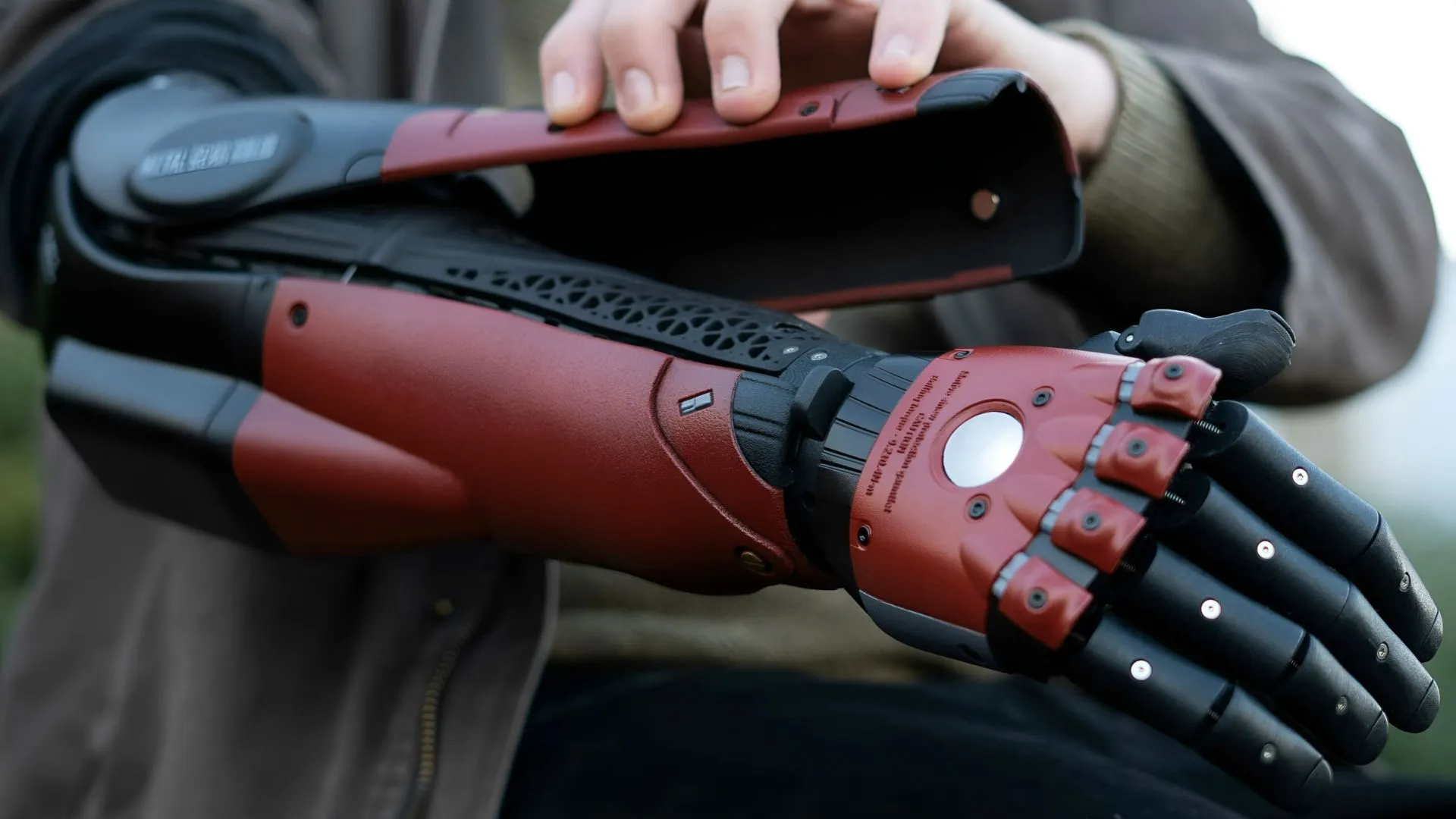
Researchers at Aarhus University have developed a soft, saltwater-based sensor that converts touch into electrical signals using a mechanism inspired by the body’s sensory cells, potentially paving the way for prosthetic limbs that can communicate directly with the nervous system.
The sensor, roughly the size of a small lentil, uses electrically charged particles moving through salt water to generate a signal when touched. The research, published in Advanced Functional Materials, aims to replicate how human skin converts mechanical pressure into electrical activity that the nervous system can interpret.
Led by Rassoul Tabassian, an assistant professor in Aarhus University’s Department of Mechanical and Production Engineering, the team hopes the technology could eventually allow people with prosthetic limbs to experience a sense of touch.
Saltwater sensor mimics sensory cells
Unlike conventional touch sensors, which detect pressure and produce electronic signals through different mechanisms, the new device attempts to replicate a fundamental process in biological sensory cells.
The researchers fabricated the sensor using microfabrication techniques in a university cleanroom. Made from a soft, silicone-like material, it contains tiny chambers connected by a microscopic channel filled with salt water.
When the sensor experiences mechanical pressure, the movement of the fluid and its electrically charged particles changes the electrical balance, generating a weak electrical potential.
This resembles the way sensory cells in human skin respond to pressure. In the body, mechanical forces open channels in sensory cell membranes, allowing charged ions to flow and triggering electrical signals that travel through the nervous system.
The researchers say the goal is not to reproduce a sensory cell in its entirety, but to recreate some of its fundamental operating principles. “What is groundbreaking about our sensor is not the generation of a sensing signal; it is how the signal is generated,” Tabassian said.
Prototype detects touch and a pulse
The team has attached the sensor to the fingertip of a soft prosthetic hand, where it can detect when someone touches the artificial finger. The current prototype can also detect a pulse from a blood vessel in the wrist. Its electrical output can be measured using laboratory equipment, demonstrating that the device responds to subtle mechanical stimuli.
However, producing a measurable signal is only an initial step toward restoring touch. Existing prosthetic sensors can detect contact and pressure, but users generally cannot feel that information directly through the nervous system.
For the new sensor to stimulate nerve cells directly, its output must exceed a threshold of approximately 20 millivolts, according to Tabassian. The researchers have not yet demonstrated direct nerve stimulation.
Prosthetic applications remain years away
The team hopes to strengthen the sensor’s electrical output enough to stimulate the nervous system directly, potentially allowing sensory information from a prosthetic limb to reach the brain.
Achieving that goal will require further laboratory development and experiments, first in animals and later in humans, Tabassian said. The researchers estimate that several more years of work will be necessary before the technology could become part of a prosthesis capable of sensing and responding naturally to its surroundings.
The device remains an early-stage prototype. Its ability to detect touch and generate biologically inspired electrical signals represents a step toward artificial sensory systems that could eventually help prosthetic limbs feel more like part of the human body.
Source: https://interestingengineering.com/innovation/saltwater-sensor-artificial-touch-prosthetic-limbs
Related articles

Protesters gather at OpenAI’s DevDay
On Tuesday, OpenAI's annual DevDay event began with protests, flyers, and chants.

OpenAI launches Dots, its Muse competitor
OpenAI is responding to Meta's buzzy Muse AI with agentic helpers of its own: Dots.

Razer’s low-latency wireless gaming keyboard is almost half off
Woot has the Razer DeathStalker V2 Pro TKL on sale for $130, a significant discount from its usual $219.99 price point. This keyboard is built for competitive gaming, with a low latency 2.

AI researchers put out videos saying superintelligence is ‘exactly as dangerous as it sounds’
"The chance of human extinction is about a coin flip, in my view," Geoffrey Irving, a former OpenAI and Google DeepMind employee, said in a new interview.

This might be our first look at Google’s Pixel 11A
Google isn't making any significant design changes to its upcoming midrange Pixel update, judging by the leaks shared by Android Headlines.

OpenAI DevDay 2026: The biggest news and announcements
It’s OpenAI’s turn in the fall tech events calendar. The company is hosting its annual DevDay on September 29th in San Francisco, starting with a live keynote featuring CEO Sam Altman.