
New US Navy 9,700-ton destroyer USS Ted Stevens arrives in Alaska for commissioning
The U.S. Navy’s newest guided-missile destroyer arrived in Alaska on September 27, setting the stage...
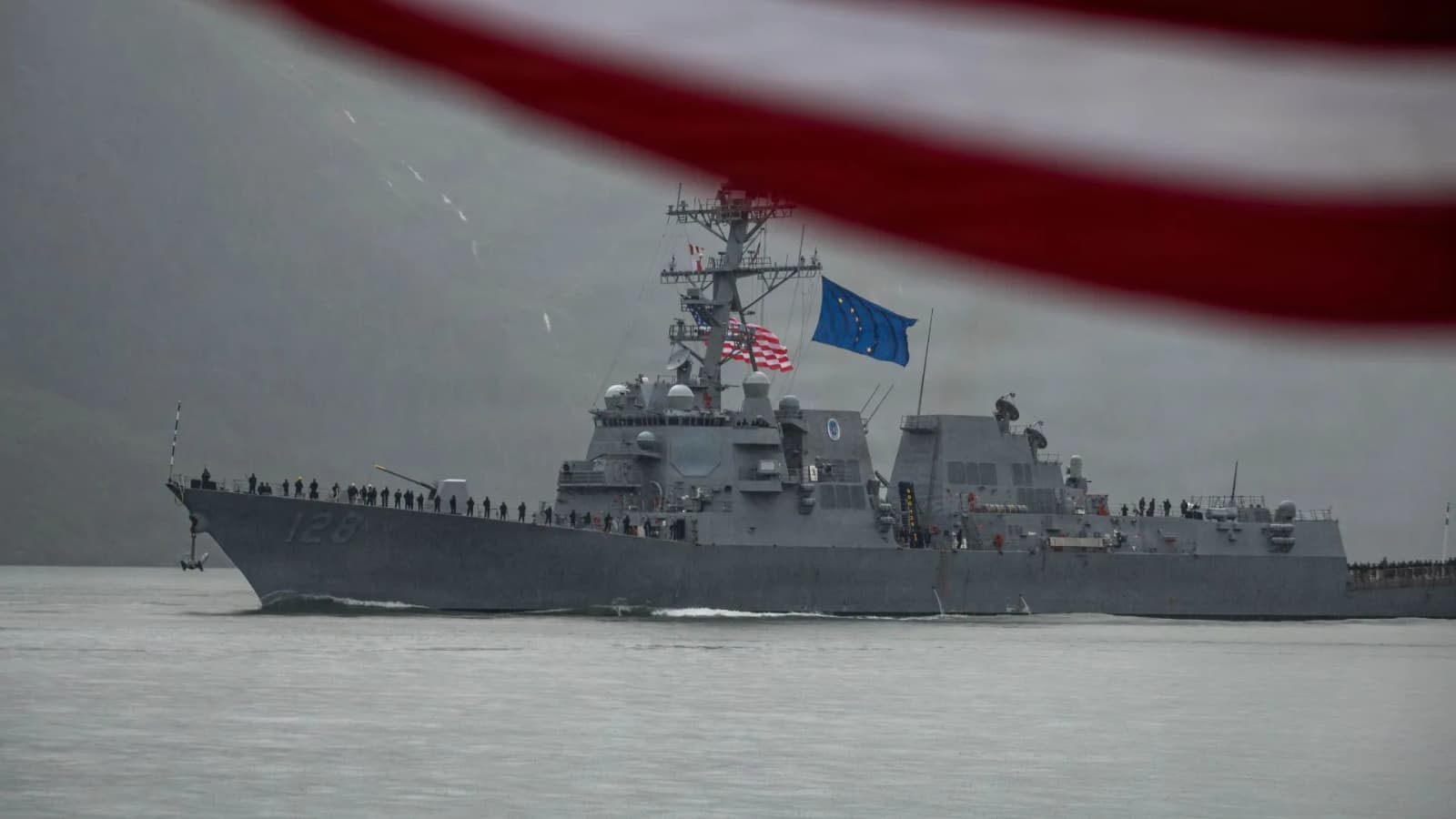
The U.S. Navy’s newest guided-missile destroyer arrived in Alaska on September 27, setting the stage for a commissioning ceremony that will return the service’s ship commissioning tradition to the state after more than 13 years.
The future USS Ted Stevens (DDG 128) reached Whittier, Alaska, less than a week before it is scheduled to join the fleet officially. The Flight III Arleigh Burke-class destroyer will be commissioned on October 3 in the small port town on Prince William Sound.
The event will mark the first Navy ship commissioning held in Alaska since the amphibious transport dock USS Anchorage (LPD 23) was commissioned in Anchorage on May 4, 2013.
A ship named for an Alaska senator
The destroyer honors Ted Stevens, a decorated World War II Army Air Corps pilot who later represented Alaska in the U.S. Senate for four decades. He became a prominent advocate for defense spending during his long political career.
Ted Stevens is the first U.S. Navy warship to bear his name. Alaska’s congressional delegation and state officials supported bringing the ceremony to the state, while then-Secretary of the Navy John Phelan approved Whittier as the location in March.
The ceremony will take place in the same state Stevens represented for much of his career.
Flight III brings upgraded defenses
Ted Stevens was constructed by Huntington Ingalls Industries’ Ingalls Shipbuilding division in Pascagoula, Mississippi. The Navy received the destroyer in December 2025, and it arrived at Naval Station Norfolk, Virginia, in May after completing delivery trials.
The destroyer belongs to the Flight III version of the Arleigh Burke-class, a design built since the 1980s and a major part of the Navy’s surface fleet.
A major Flight III upgrade is the AN/SPY-6(V)1 air and missile defense radar. It is designed to detect and track aircraft, cruise missiles, and ballistic missiles at longer ranges than the SPY-1 radar used on earlier Arleigh Burke-class ships.
Ted Stevens also carries the Aegis Baseline 10 combat system. Additional electrical power and cooling capacity support its newer sensors and weapons.
Built for multiple combat missions
The approximately 9,700-ton destroyer is designed to support air defense, ballistic missile defense, anti-submarine warfare, and surface warfare missions.
Ted Stevens is part of a growing group of Flight III destroyers entering Navy service. New ships of the configuration are being produced by Ingalls Shipbuilding and General Dynamics’ Bath Iron Works in Maine.
The Navy has not announced the ship’s first deployment or whether it will operate with a carrier strike group.
Alaska ceremony marks return
The Navy maintains an operational presence in Alaska, including high-latitude maritime security operations. The state also sits along northern Pacific and Arctic sea lanes connecting North America and Asia.
The October 3 ceremony in Whittier will formally place Ted Stevens in Navy service. Afterward, the destroyer will be based at Naval Station Norfolk, Virginia.
Related articles