Scientists transform steel dust and seashells into solar-powered nanomaterial
Steel sludge and fishery industry by-product shells are being transformed into a solar-powered material by...
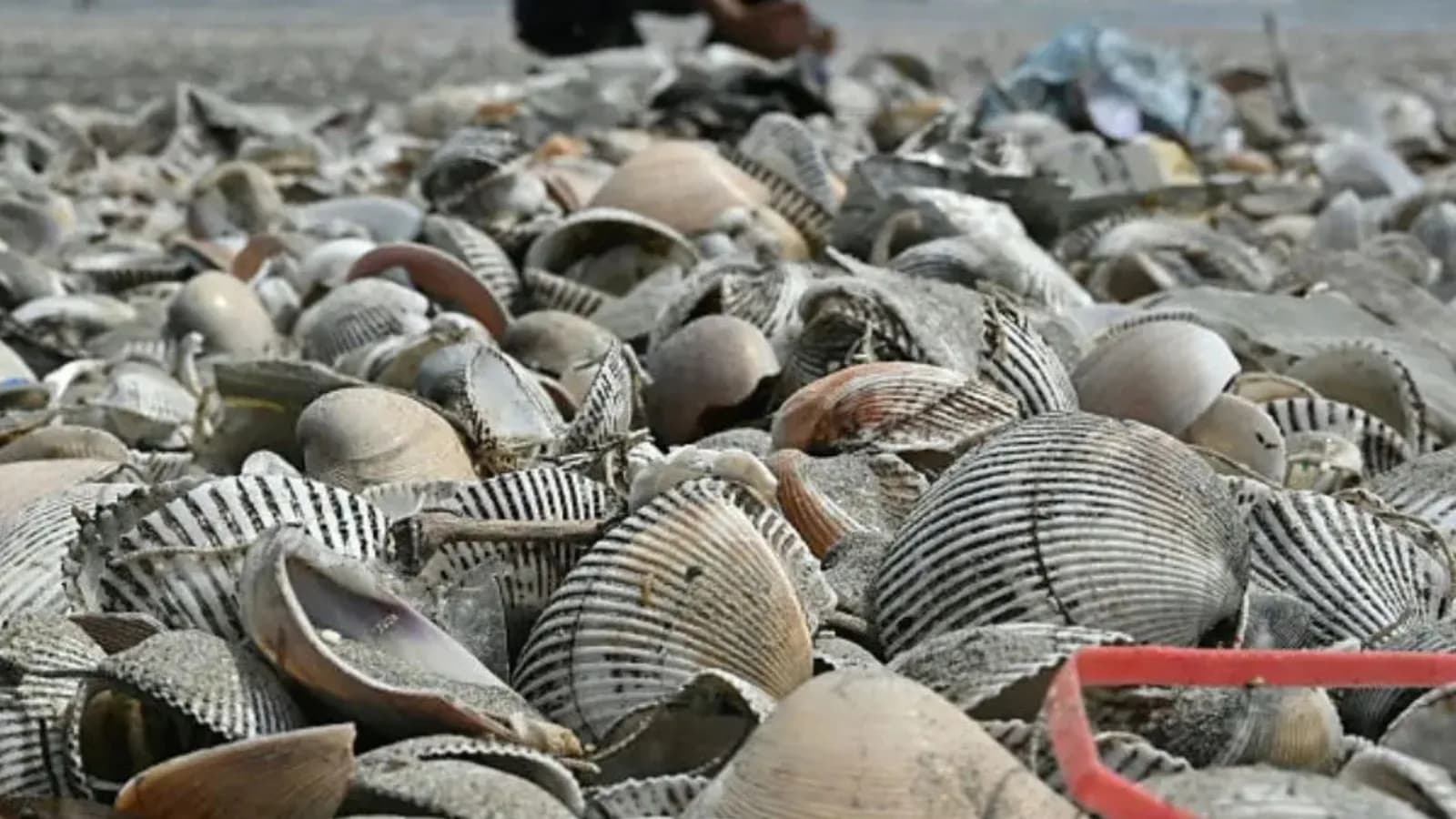
Steel sludge and fishery industry by-product shells are being transformed into a solar-powered material by Brazilian scientists. Scientists at the Federal University of São Carlos (UFSCar) and Federal University of Rio Grande do Norte (UFRN) have created a nanostructured material which degrades methylene blue (MB) and can make hydrogen.
This new material is a heterojunction, and is made from hydroxyapatite (HAp) derived from sea-shells and iron oxide (Fe₂O₃) which has been extracted from the dust from a blast furnace. This by-product is produced in the steel industry and is generally regarded as industry waste. A heterojunction is where there is a boundary between materials which have different electrical properties and this affects how they react to light.
Three samples were produced with differing levels of iron oxide, 20%, 40% and 60% creating HFe20, HFe40 and HFe60. Analysis was undertaken of these samples and they were then analyzed for their behavior when subjected to solar power. The most successful sample was HFe40.
Methylene blue is commonly used in the textile industry. If water containing this dye is discharged into rivers and lakes, it can restrict light transmission and affect the photosynthetic processes of living organisms within the water. Following two and a half hours of solar irradiation, HFe40 was able to degrade around 75% of methylene blue in solution.
Potential for water purification and hydrogen production
Scientists also analyzed how well the material could produce hydrogen. 20 milligrams of HFe40 was introduced into 20ml of 10% lactic acid and then irradiated with sunlight for four hours. Throughout this process a gas sensor recorded any hydrogen generated.
Over 25 micromoles of hydrogen was produced per gram of HFe40, equating to around 0.05 milligrams. Investigations were then carried out to analyze the material’s electrochemical properties.
It was discovered that the band structure of both HAp and Fe₂O₃ impacted on hydrogen generation. Furthermore, the concentration of charge carriers and the band gap energy both affected the methylene blue degradation process.
Finally, scientists analyzed if HFe40 could be recycled. Following five runs of methylene blue degradation, there was just a 6% loss in photocatalytic ability. The material was also analyzed for effectiveness in rain, lake and tap water. Again, only slight variations were found in its behavior in each of these types of water.
Further studies to improve material performance
These results show that industrial and biological by-products can serve as resources for both water purification and solar fuel generation. However, further research is still required before the material can be applied more widely.
This will involve optimizing hydrogen generation, refining methods for quantifying the gas and analyzing the material’s long-term stability. Such studies will allow better understanding of the material’s behavior in situations beyond those analyzed here.
The research was conducted by Mário Andrean Macedo Castro, Lucas Oliveira do Rosário, Lívia Dantas Ventura, Marcio Daldin Teodoro, Ricardo Luis Tranquilin, Elson Longo, Fabiana Villela da Motta and Mauricio Bomio.
Funding was provided by CAPES, CNPq and UFRN’s Graduate Program in Materials Science and Engineering. The Brazilian Nanotechnology Laboratory (LNNano), which is part of the Brazilian Center for Research in Energy and Materials (CNPEM), also worked in partnership on this research.
The findings were published in the International Journal of Hydrogen Energy under the title “Solar-driven photocatalytic degradation of methylene blue and hydrogen production using an eco-friendly HAp/Fe₂O₃ heterojunction.”
Source: https://interestingengineering.com/energy/steel-waste-seashells-solar-material
Get the latest news delivered to your inbox.
Related articles