The “mirror-image” gene: Scientists explain why snail shells coil left or right
A small genetic difference can turn a snail into the mirror image of another. Now,...
This story was prepared automatically by software.
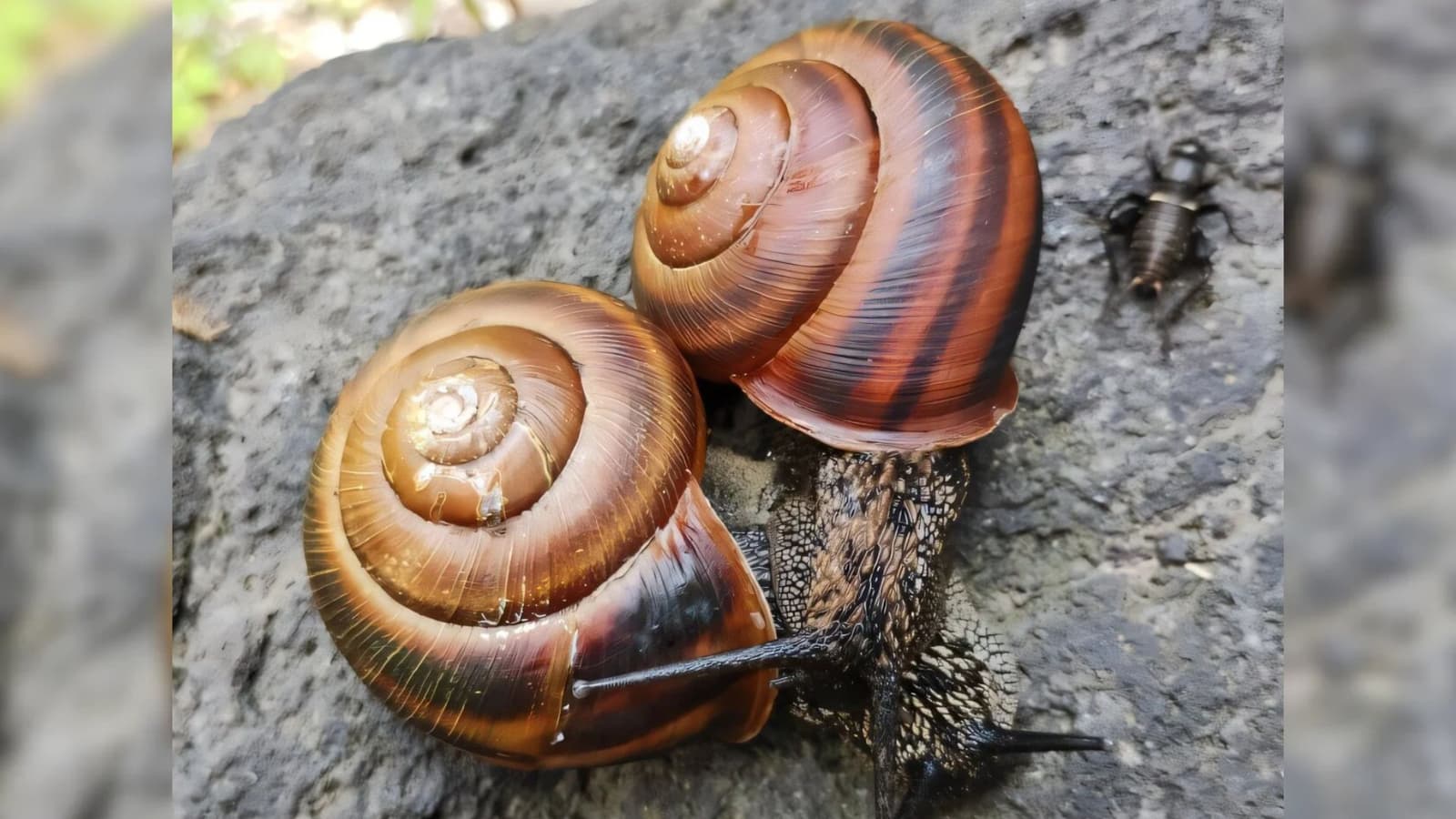
A small genetic difference can turn a snail into the mirror image of another. Now, researchers studying Japanese land snails have identified a gene that helps determine whether their shells coil clockwise or counterclockwise, offering new clues into how animals develop their left and right sides.
The study, led by researchers at the University of Nottingham and Tohoku University in Japan, examined wild Euhadra snails to understand the biological mechanisms behind this phenomenon, known as chirality. Their findings suggest that subtle variations in a gene responsible for producing a protein called myosin can result in healthy snails with opposite body plans.
The discovery could also help scientists investigate a broader biological puzzle: how the same basic cellular machinery produces consistent left-right asymmetry in most animals, while allowing some species to develop as mirror images of one another.
How a gene determines a snail’s handedness
The research, published in Current Biology under the title “An ancient polymorphism in myosin I a/b determines chiral variation in Japanese Euhadra snails,” identifies naturally occurring variants of a myosin gene as the basis for the difference.
Myosin proteins help cells move, change shape, and interact with the internal structures that support them. The researchers believe that small changes in the protein influence how cells twist during the earliest stages of embryonic development. That initial movement sets the direction of the snail’s shell coiling and the development of its internal anatomy.
Most snails coil their shells to the right, a condition known as dextral coiling. Left-coiling snails are described as sinistral. Although these forms look like mirror images, the difference is not simply cosmetic: their internal organs and reproductive anatomy can also be arranged on opposite sides.
The team found that both forms of Japanese Euhadra snails develop normally, without the abnormalities associated with in other species of reversed body asymmetry. The two genetic variants are also ancient, suggesting that the difference has persisted over evolutionary timescales. The researchers found evidence that natural selection has acted on the left-coiling form.
Why finding both types in one valley mattered
One challenge in studying mirror-image snails is that they may struggle to reproduce with one another. Their reproductive organs can sit on opposite sides, making mating difficult.
The researchers found a population deep in a Japanese mountain valley where left- and right-coiling snails can mate and exchange genes. This gave the team an opportunity to investigate how the two forms persist within the same population, rather than studying them as isolated groups.
The findings also differ from what researchers have observed in pond snails. In those animals, a mutation in another gene can produce left-coiling individuals, but it is also associated with abnormal development. In Japanese Euhadra, the myosin variants produce opposite forms without the same apparent developmental problems.
What this could tell us about human development
The research offers a useful way to investigate a longstanding question in biology: how organisms establish a consistent left-right body arrangement.
Humans, for example, typically have their hearts on the left, while other internal organs occupy characteristic positions. Reversals can occur, but they are far less common than the natural variation seen in these snails, and some cases are associated with developmental complications.
Understanding how myosin variants produce healthy mirror-image snails could help scientists identify the cellular processes that establish body asymmetry across different animals. However, the discovery does not mean the same genetic variation determines organ placement in humans.
The researchers say an important question remains. How do cells with the same underlying molecular handedness produce bodies that can develop in opposite directions? Japanese Euhadra snails offer a rare opportunity to investigate that puzzle.
Related articles