This Chinese warship could operate without a crew, launch missile salvos
China is testing a warship that could hide its hull underwater before surfacing to raise...
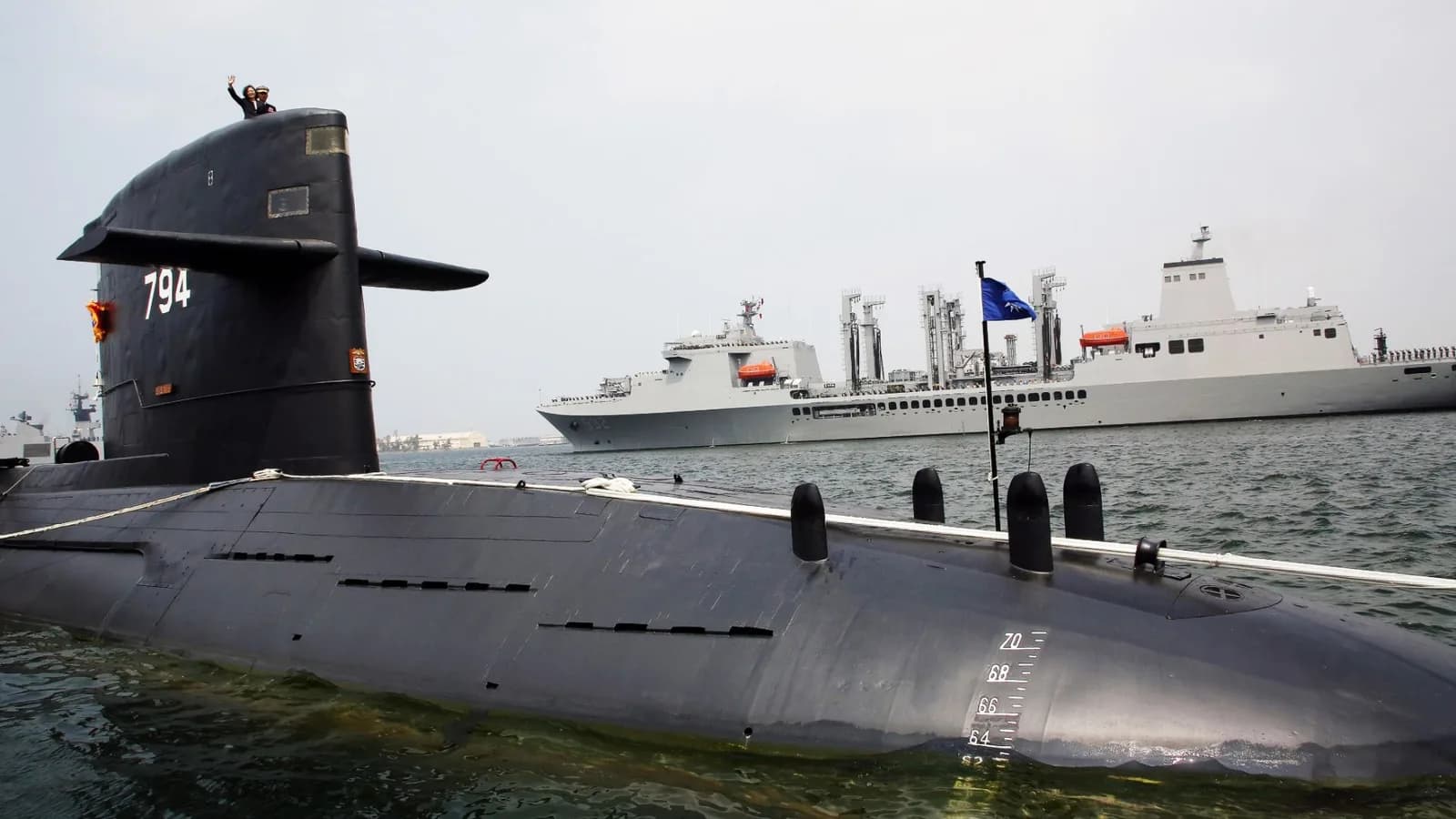
China is testing a warship that could hide its hull underwater before surfacing to raise concealed missile launchers. Its unusual three-hull design could help keep the vessel stable as the launch tubes rise into firing position.
Built in Guangzhou and now undergoing trials at Huludao on the Bohai Sea, the vessel may carry 16–18 missiles and operate without a permanent crew, according to imagery-based analysis.
China has not disclosed its specifications, but the emerging picture suggests a missile carrier that combines submerged transit with surface-launched firepower.
Why does it have three hulls?
A trimaran consists of a central hull flanked by two smaller hulls. On this vessel, the side hulls, also called outriggers, sit toward the stern rather than extending along most of its length.
The arrangement could help stabilize the vessel when its suspected missile launchers are raised. Elevating heavy launch tubes would shift weight upward, making stability an important consideration during firing.
Early satellite analysis estimated its length at approximately 65 meters. Much of the vessel was then hidden beneath tarpaulins at the Huangpu shipyard, leaving its forward compartments difficult to examine.
Later photographs revealed depth markings on the bow and sail, supporting assessments that the craft could operate fully or almost fully submerged. Those markings, however, do not establish how deep it can dive.
A prominent snorkel provides another clue. Diesel engines need atmospheric air, and a snorkel allows them to operate while the hull remains underwater. The mast must still reach above the surface, limiting how deeply the vessel could travel while running those engines.
How would its missiles launch?
The central hull contains two large compartments believed to house missile tubes. Unlike fixed vertical launch cells on conventional warships, these tubes appear to be stored horizontally and raised before firing.
In his latest assessment, naval analyst H. I. Sutton identifies at least eight apparent tubes. A total of 16–18 is considered more likely if both compartments contain matching arrangements.
The proposed firing sequence would require the vessel to surface, open the compartment doors, and elevate its launchers. That interpretation comes from imagery analysis; the reporting does not establish a demonstrated missile launch.
The weapons themselves remain unidentified. Sutton suggests anti-ship or land-attack missiles, with the YJ-20 among the possible candidates. There is no public confirmation that this particular missile has been integrated.
The operating concept has a Cold War precedent. Soviet Juliett-class diesel-electric submarines carried four cruise missiles and had to surface to launch them. China’s vessel could apply a similar approach with a larger weapons load.
Why might it operate without a crew?
Ship-design specialist Rachel Pawling estimates that the vessel would displace approximately 900 tonnes when fully submerged. Her assessment suggests the weapons compartments occupy so much space that little remains for crew accommodation.
That supports the possibility of uncrewed operation, although it does not confirm it. An open bridge on top of the sail could accommodate a pilot during harbor movements.
Its potential role also helps explain the design. An arsenal ship primarily carries weapons, while other platforms can supply information needed to locate and engage targets. The Chinese vessel could therefore function as a missile carrier within a wider network.
Such an arrangement would make targeting data and communications important dependencies. Submerging could offer concealment, but surfacing to prepare and launch missiles would create a period of greater exposure.
For now, its speed, endurance, diving depth, control arrangements, and operational status remain undisclosed. Available evidence points to an unusual experimental missile platform, but its eventual capabilities remain unresolved.
Source: https://interestingengineering.com/military/chinese-warship-could-operate-without-crew
Get the latest news delivered to your inbox.
Related articles