
Two humanoid robots team up to play table tennis doubles, rally for over 10 shots
Researchers have developed PingpongDuo, a robotic framework that enables humanoid robots to play table tennis...
Researchers have developed PingpongDuo, a robotic framework that enables humanoid robots to play table tennis doubles through coordinated movements and alternating strikes. The system addresses the challenges of sharing limited space, repositioning quickly, maintaining striking accuracy, and avoiding collisions between teammates.
It combines coordinated positioning with learned movement and racket-control skills to help robots respond to changing ball trajectories while working together.
In experiments, the framework improved ball-return performance in simulation. It demonstrated that two humanoid robots could sustain consecutive rallies while following the strict alternating-strike rule required in doubles play.
Humanoid robots rally
Researchers from the University of Hong Kong, Shanghai Innovation Institute, Archon Robotics, and NVIDIA have developed PingpongDuo, a control framework that enables two humanoid robots to play table tennis doubles while coordinating their movements and alternating shots.
The system combines AI, motion learning, and risk estimation to help robots strike the ball, clear space for teammates, and reposition for subsequent returns without colliding.
Unlike conventional humanoid table tennis systems designed for individual play, PingpongDuo coordinates two robots operating in the confined space on one side of the table. Each robot must strike in strict alternation, moving away from the central hitting area after its shot while its teammate prepares to return the next ball.
The framework uses a hierarchical control system that combines team-level positioning with individual movement and striking skills. At the team level, a planner selects positioning targets for both robots. A learned risk estimator evaluates potential movements for collision risks involving their hands, feet, and bodies. A safety filter adjusts risky positioning plans while prioritizing the robot preparing to strike, helping preserve its ability to return the ball.
At the individual level, the system uses separate artificial intelligence policies for footwork and racket control. Researchers trained the movement policy using human table tennis doubles footage, creating a library of approximately 200 footwork sequences covering different movement distances.
The robots learn to transition between striking, clearing space, recovering, and waiting. Training each skill using the body positions and movements produced by the other helps the robots respond to new shots without first returning to a standard posture.
Humanoids sharpen strikes
The researchers also developed a racket-arm refinement policy to improve ball returns after rapid movements. The policy adjusts seven arm joints based on the robot’s current state and the estimated position and velocity of the ball.
To train this component, the team calibrated a physics simulator using real measurements of ball flight, table bounces, and racket contact. The resulting model allows the system to learn how changes in racket movement affect whether a ball clears the net and lands on the opponent’s side.
In simulation, PingpongDuo improved ball-return success by 13.2 percent over the state-of-the-art baseline. The researchers also reported a positioning error of approximately 2 centimeters during clearance.
In real-world experiments, two Unitree G1 humanoid robots sustained more than 10 consecutive alternating strikes. A robot also completed a 2.15-meter clearance-and-recovery movement cycle in 2.4 seconds, reaching a peak speed of 2.23 meters per second.
The researchers noted that the current system relies on external motion-capture equipment and does not account for ball spin. Future work will investigate onboard perception, spin estimation, and autonomous attacking and defensive strategies.
Source: https://interestingengineering.com/ai-robotics/humanoid-robots-play-table-tennis-doubles
Related articles

iPhone Duo orders are already delayed into 2027
Delivery estimates for the iPhone Duo slipped into next year in less than an hour after Apple opened preorders for it at 8AM ET on Friday.

This stretchy MagSafe storage pouch gives your phone a sizable trunk
There's a new storage upgrade option for smartphones compatible with wireless chargers and other magnetic accessories, but it won't help if you've run out of room for apps, pics, and videos.
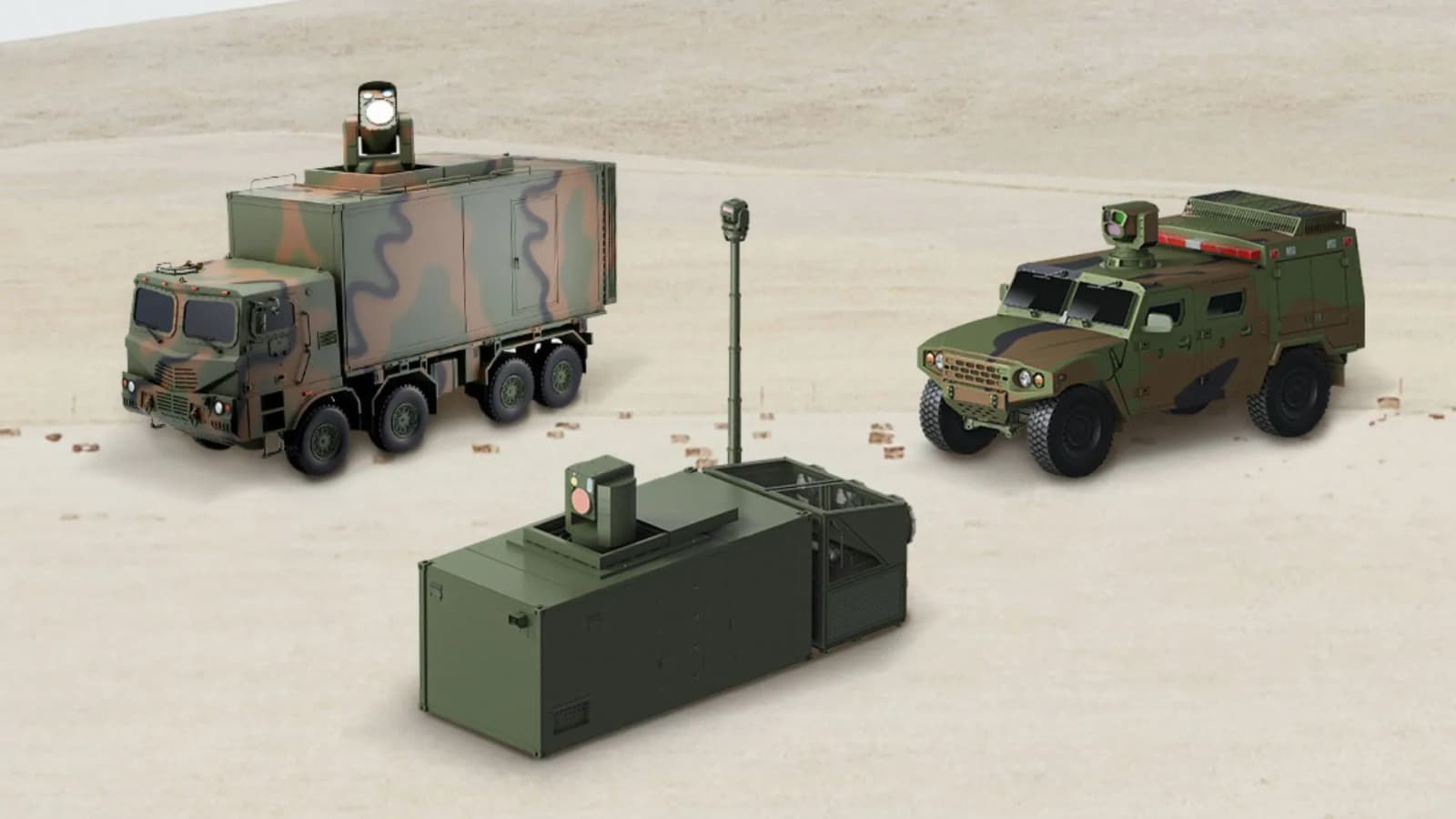
30 kW laser air defense system destroys three target drones in latest military test
South Korea’s Hanwha Systems has demonstrated its laser air defense weapons intercepting drones during a...

Surface Laptop Ultra review: a different kind of MacBook Pro
After setting up Microsoft's Surface Laptop Ultra, I spent five minutes just staring at it. I wasn't surprised by its MacBook Pro-like design or blown away by its bright display.

The iPhone Duo is now available to preorder at $1,999
Few phones have been more anticipated than a foldable iPhone, but it's finally here.

The first vibe-coded gun is here
Since gun-rights activist and alt-right-friendly agitator Cody Wilson made the first 3D-printed firearm 13 years ago, he's helped usher in a chaotic era of untraceable ghost guns.