Brain organoids ‘read’ Braille with 83% accuracy in biohybrid computing breakthrough
Lab-grown models of the human brain have received touch-sensor signals for Braille letters and responded...
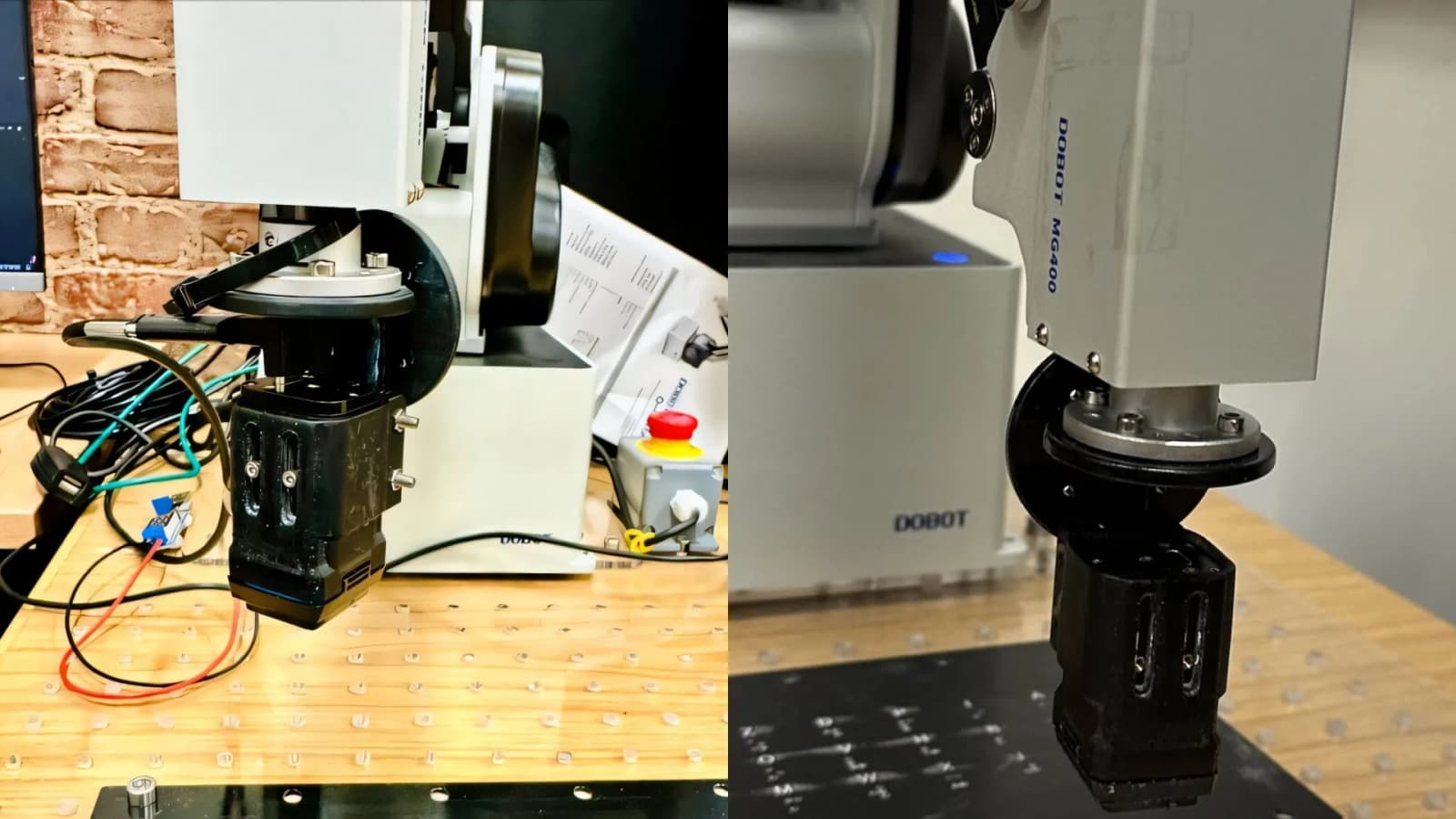
Lab-grown models of the human brain have received touch-sensor signals for Braille letters and responded with patterns a computer could decode, an early step toward energy-efficient biohybrid computers, University of Bristol researchers report.
The study found that each Braille letter produced a distinct pattern of activity in the organoids. A computer decoder identified individual letters from a single organoid about 61% of the time. Using three organoids together lifted accuracy to 83%.
From sensor to neurons
The systems consist of brain organoids placed on multielectrode arrays inside equipment that keeps them alive and records their responses. Each organoid is under a millimeter (about 0.04 inch) across and lacks several structures of a real brain, but it contains roughly 10,000 neurons plus supporting cells. The arrays let it receive electrical signals.
The team first ran a tactile sensor over the 26 letters of the Braille alphabet. They converted the readings into electrical stimulation patterns and delivered them to the organoids, then checked whether the resulting neural activity revealed which letter had been sent. A support vector machine, a simple machine learning algorithm, sorted the activity patterns by letter.
Three organoids beat one
The researchers do not know why the trio outperformed a single organoid. One possibility is that natural differences among organoids, such as network connections, developmental state and ongoing activity, make them complement each other. First author Tianyi Liu said combining responses could provide information a single organoid cannot, but that the variation also makes a predictable, standardized system harder to build.
Senior author Benjamin Ward-Cherrier said that after processing by the organoids, the tactile data still holds enough information to classify Braille letters with good accuracy, and that combining several organoids improved performance.
To test robustness, the team applied different noise filters to the Braille signals. It then compared two approaches using the same support vector machine: decoding from organoid responses and decoding directly from the deliberately obscured signals. The team of three was better at picking out letters amid artificial noise, while direct decoding was easier to fool.
What it does not show
The researchers stress that the experiments do not show whether organoids can learn over time. They show only that organoids received and responded to the Braille signals. Liu said the work also used a single tactile task, a fixed encoding scheme and a relatively simple measure of neural activity, and that it did not demonstrate learning or long-term changes.
Next, Liu said, the team wants to move beyond Braille to textures, edges and other kinds of touch, and eventually to closed-loop tasks in which organoids get feedback about their own actions. That would let researchers ask whether an organoid can adapt through experience.
The study was published Oct. 16 in Frontiers in Artificial Intelligence.
Source: https://interestingengineering.com/science/brain-organoids-braille-biohybrid-computing-bristol
Related articles
US researchers create on-demand microbubble chip with drug delivery potential
Researchers at Cornell University have developed a chip-based system that creates and controls hydrogen microbubbles...
Google’s quantum chip cuts magic-state errors 40-fold, reaches 99.99% fidelity
In a breakthrough that could help address a major bottleneck in practical quantum computing, Google...

Thwaites Glacier’s projected sea level impact doubles as warm water melts ice below
Researchers have raised a fresh alarm on Antarctica’s Thwaites Glacier, warning that it is melting...