US researchers create on-demand microbubble chip with drug delivery potential
Researchers at Cornell University have developed a chip-based system that creates and controls hydrogen microbubbles...
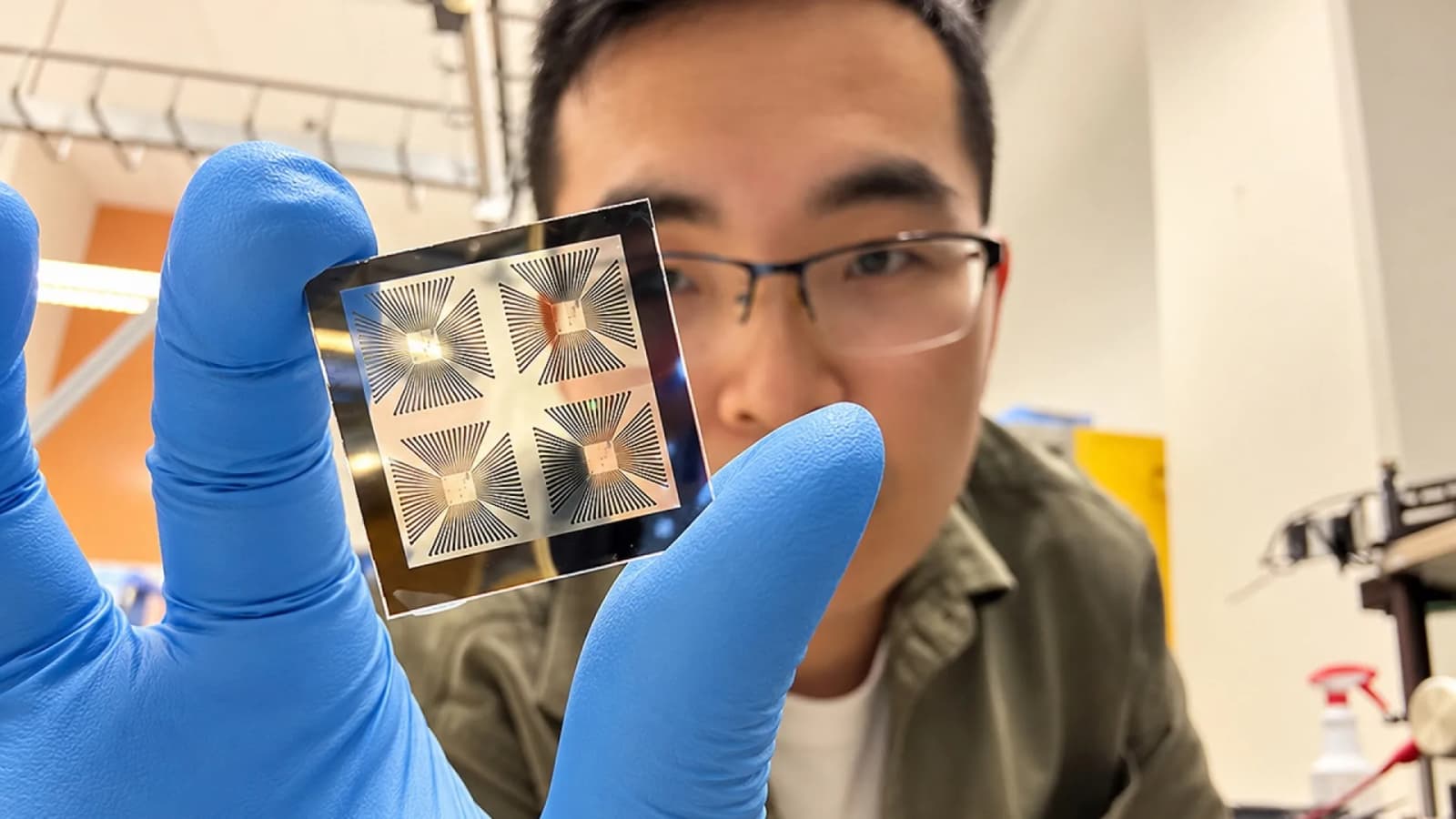
Researchers at Cornell University have developed a chip-based system that creates and controls hydrogen microbubbles on demand. By directing the bubbles to manipulate fluid flow, the technology could pave the way for applications such as targeted drug delivery.
In the experiments, they tapped the power of ultrasound, sound waves, to energize the bubbles set within a 3-millimeter area on a chip for manipulating the flow of liquids. The device produced these bubbles on a grid of electrodes that makes the electrical control possible.
Real-time microbubble control
The newly built system can be programmed in real time, and researchers are now able to produce individual bubbles exactly when and where they want, control their size and number, and steer them electronically. They exert control over the bubblemovements, individually as well as in larger groups. This allows them to direct the flow of liquid as desired.
According to the researchers, the technology could have medical applications, as it opens the door to creating reconfigurable microfluidic devices that may enable precise drug delivery.
”With this bubble array, we can control the bubble size, numbers and position in real time, so we can program the flow direction,” said Zhiyuan Zhang, author of the new study published in Science Advances.
Size determines fluid flow
Zhang used a chip fabricated at the Cornell NanoScale Science and Technology Facility, consisting of nine tiny electrodes arranged in a square that generate bubbles between 10 and 100 micrometers.
To create a single hydrogen bubble, he split the water molecule by using electricity. The bubble grew larger if the voltage was applied for a longer duration. After producing the bubble, the researcher exposes the system to sound energy. These ultrasonic waves make the bubbles resonate, producing vibrations that move the surrounding fluid.
Researchers noted that, when controlling the fluid flow, the size of the bubble is critical. Bubble size determines the ultrasound frequency needed for resonance. Properly matched frequencies create strong fluid flow, they added.
”The size of the bubble determines the resonant frequency of the bubble,” said Itai Cohen, professor in the Department of Physics at Cornell University. “If you’re applying ultrasound at 40 kilohertz and the bubble is too small or too big, then it’s not going to oscillate significantly. But if it’s just the right size to resonate at 40 kilohertz, you get a lot of flow,” he added in a statement.
The study demonstrated that flow can be generated using a single or multiple bubbles. Single bubbles, when tuned to resonate, create fluid flow by transferring energy to neighboring fluid. Multiple bubbles can either work together, creating symmetrical flows if they all have the same size. With different-sized bubbles, the experiment showed that the size of the largest bubble governs the flow direction.
Programmable movements can also be attained by altering the placements of bubbles, shifting the flow from left to right or directing the movement in a curve by arranging five bubbles in an L-shape, the researchers said. Similarly, they could modify the flow by varying the voltage. They discovered that higher voltage produces a cloud of bubbles in a rapid flow. Hence, they can shoot the bubbles in a specific direction by simply turning on the ultrasound.
Related articles
Google’s quantum chip cuts magic-state errors 40-fold, reaches 99.99% fidelity
In a breakthrough that could help address a major bottleneck in practical quantum computing, Google...

Thwaites Glacier’s projected sea level impact doubles as warm water melts ice below
Researchers have raised a fresh alarm on Antarctica’s Thwaites Glacier, warning that it is melting...