US Army carries out 18-drone swarm attack from robot vehicle in live-fire demonstration
The United States Army recently launched an 18-drone swarm from an unmanned ground vehicle that...
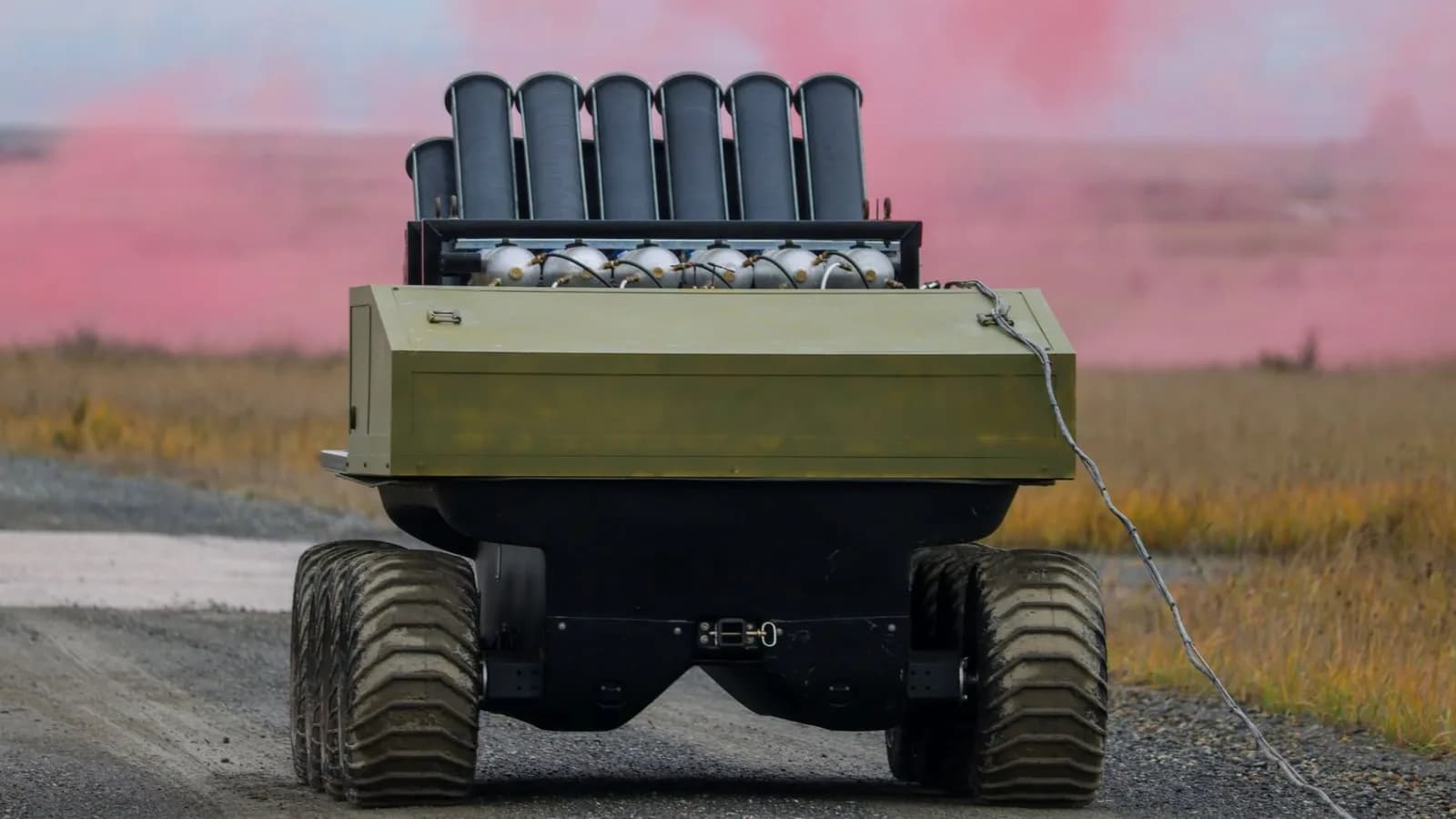
The United States Army recently launched an 18-drone swarm from an unmanned ground vehicle that can be carried in a shipping container. The demonstration aimed at exploring the ways in which drones and unmanned ground vehicles (UGVs) could be utilized by soldiers.
The combination of drones with UGVs would reduce the soldiers’ exposure to danger, increase the strike range for the forces, and also give the commanders more options to carry out operations in dangerous environments.
It took place during a live-fire technology demonstration at Grafenwoehr Training Area in Germany. The demonstration was attended by the US Army Combat Capabilities Development Command (DEVCOM) Armaments Center, in partnership with US Army Europe and Africa and 7th Army Training Command. The demonstration was done under the Remote Rapid Response Autonomous Contingency Team (R3ACT) effort.
Drone swarm, other UGV demonstrations, and more
During the demonstration, a R3NEGADE UGV came out from a standard 20-foot shipping container and launched an 18-drone swarm. The drone swarm then went ahead to conduct a coordinated strike autonomously against the target.
The R3NEGADE UGV was able to launch the drones through an HIV3 swarm launcher.
There were several other demonstrations at the event, which involved the R3NEGADE UGV. In another event, a different R3NEGADE UGV came out loaded with a remotely operated weapon system with a Javelin missile.
The different configurations aimed to showcase the possibilities associated with ground drones. It explored the different weapons and equipment that could be handled by the UGV to support and carry out different missions.
The live-fire demonstration began with a TRV-150 drone dropping smoke on a target, which was followed by the autonomous strike drones carrying out the strike after being launched from the UGV.
Other highlights and aim of the event
The event in Germany brought together engineers, Army leaders and soldiers to test how emerging technology could work alongside existing Army weapons.
The soldiers also carried out an operation using a first-person-view drone during the event. A static display of a TRV-400 aircraft with the developmental FIR3FLY anti-armor capability also took place.
One of the key takeaways from the event was that the existing army weapons and technology can be integrated with the upcoming technologies. This integration could not only increase the lethality of the armed forces but also help in cutting costs. It could give an option to the forces rather than relying solely on expensive, specialized platforms.
The demonstration in Germany also connected the technology to the needs of Army forces in Europe, where US soldiers regularly train alongside NATO allies and partners.
Alex Tomosieski, program manager for the Remote Rapid Response Autonomous Contingency Team, or R3ACT, explained how containerized systems could provide commanders with additional options.
“This is the art of the possible,” said Troy Brannon, a strategic adviser for the Expanded Maneuver-Air portfolio at DEVCOM Armaments Center, who led the demonstration. “It’s all about scalability, lethality; reach and autonomy to enable strike for our ground maneuver commanders.”
Get the latest news delivered to your inbox.
Related articles