US Army plans 20 mobile launchers to counter cruise missiles and drones on Guam
The U.S. Army plans to have 20 Indirect Fire Protection Capability (IFPC) launchers on Guam...
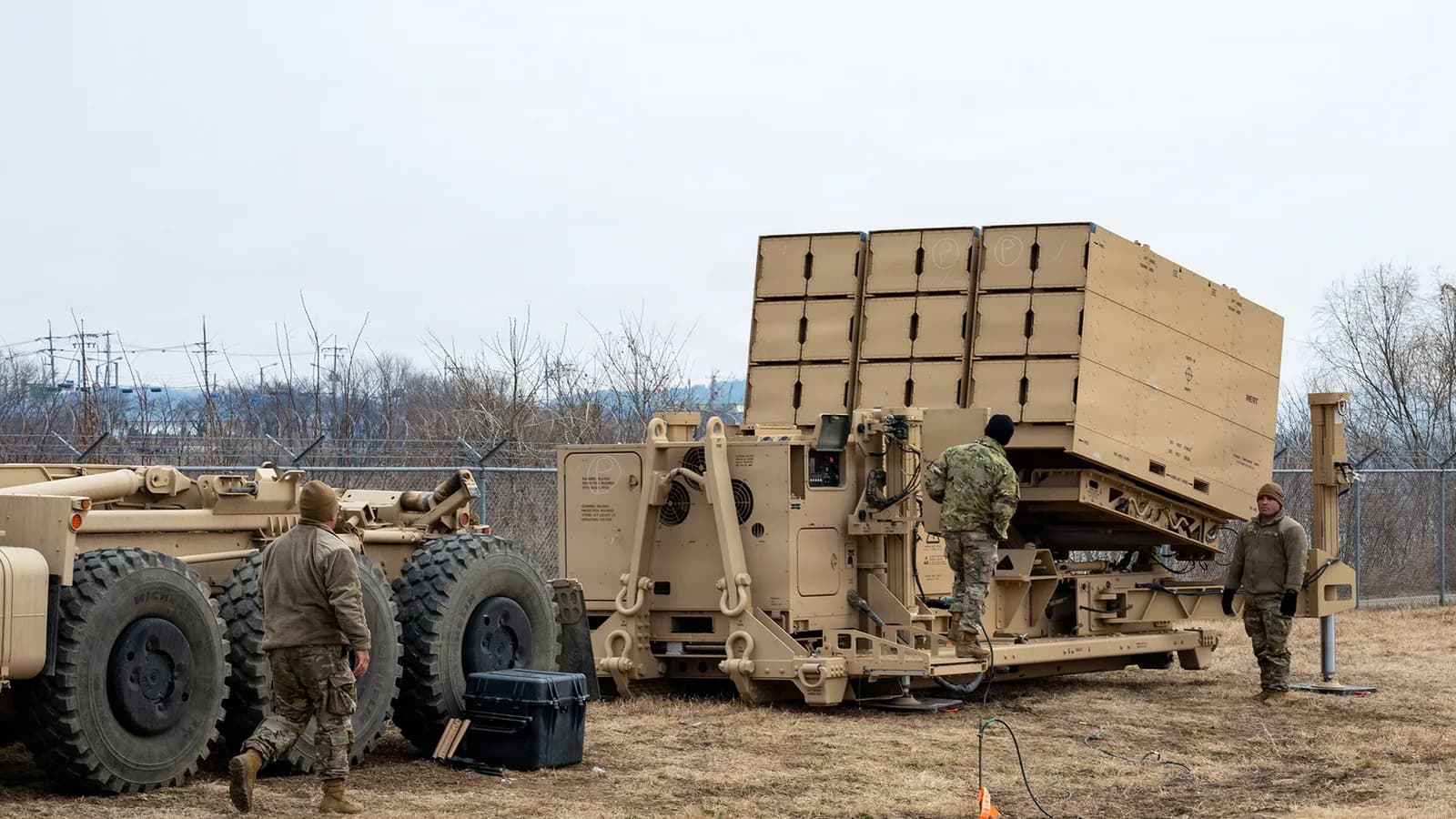
The U.S. Army plans to have 20 Indirect Fire Protection Capability (IFPC) launchers on Guam by the third quarter of fiscal 2027, which ends in June 2027, to defend its sites against cruise missiles and drones. The plan appears in an update from the Congressional Research Service (CRS), the nonpartisan research arm of Congress.
CRS describes IFPC as a mobile, ground-based system meant to bridge the gap between short-range air defenses and the Patriot and Terminal High Altitude Area Defense (THAAD) missile systems. THAAD intercepts ballistic missiles at high altitude, Stars and Stripes reported in August, while IFPC is intended for lower-altitude threats such as drones and cruise missiles.
The Army says the Guam units are meant strictly for Army facilities, according to CRS. Guam also hosts Andersen Air Force Base, Marine Corps Camp Blaz and Naval Base Guam, Stars and Stripes reported. CRS asks whether the other services are building similar defenses.
What the Army is buying and testing
First shipments were planned for the first quarter of fiscal 2027, which began Oct. 1, the CRS update said. Fiscal years run Oct. 1 to Sept. 30. The Pentagon awarded Dynetics, a Leidos subsidiary, a $617 million contract for the fiscal 2026 production buy, with work due by Nov. 30, 2029.
The Army requested $1.6 billion for IFPC Increment 2, the missile version, in fiscal 2027. That is about double its $831 million fiscal 2026 request, which covered 62 launchers, 148 AIM-9X missiles and 24 magazines. The launcher can fire the AIM-9X Sidewinder, an air-to-air missile, and the Army is also testing the Tamir missile used by Israel’s Iron Dome system, the report said. Nine battalions have been or will be fielded through fiscal 2033.
In September, Boeing and Anduril advanced in the Army’s competition for a second interceptor aimed at cruise missiles and drones. In October, the Army reportedly reopened that competition to eliminated firms, CRS said, citing Inside Defense.
Gaps and open questions
The update repeats a schedule from February 2026 talks between CRS and the Army and does not say whether first shipments have arrived. It also gives no interceptor count for Guam and no estimate of how much of the island 20 launchers could cover.
The Army-only scope leaves open how Air Force, Navy and Marine Corps sites would be defended. CRS poses that as a question for Congress.
The Army has also dropped plans to field the IFPC laser. It reportedly divested that variant in September to draw on Navy-led work on larger lasers. No more high-power microwave purchases are planned after two additional prototypes. CRS asks for the Army’s rationale and whether it might revisit both.
IFPC launchers have been part of Army plans for Guam’s missile defenses since at least 2023. The Army’s 3rd Battalion, 43rd Air Defense Artillery Regiment will operate IFPC, Patriot and THAAD there, but the Army declined to share delivery schedules, Stars and Stripes reported. The CRS update is dated Nov. 18.
Source: https://interestingengineering.com/military/us-army-guam-ifpc-launchers
Get the latest news delivered to your inbox.
Related articles