Scientists’ new 3D printing breakthrough could transform titanium alloy design
Researchers at The Hong Kong University of Science and Technology (HKUST) have developed an innovative...
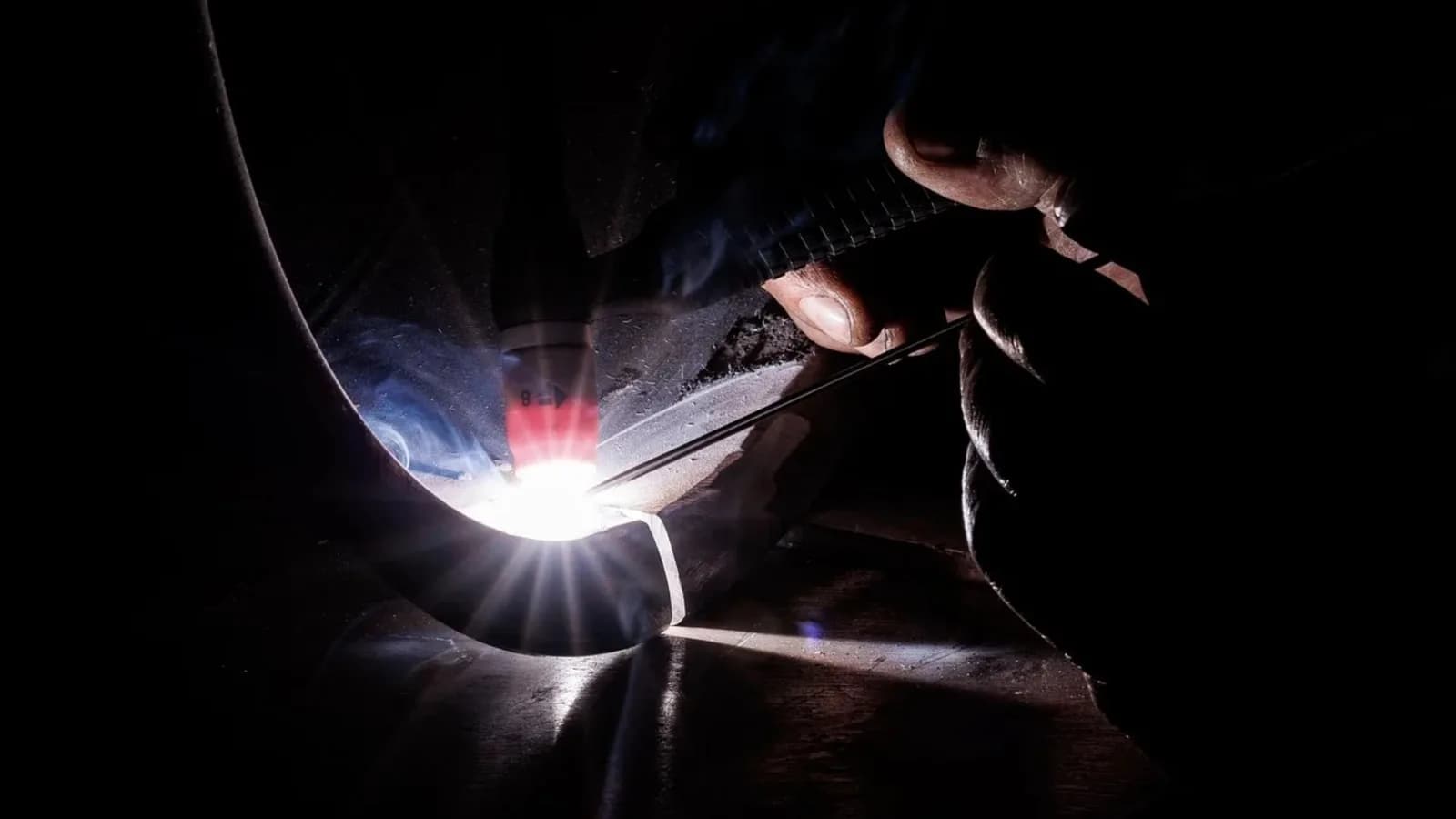
Researchers at The Hong Kong University of Science and Technology (HKUST) have developed an innovative titanium alloy design strategy that could pave the way for stronger, more durable materials for aerospace, automotive, biomedical and other advanced engineering applications.
Led by Prof. ZHANG Tianlong, Assistant Professor in HKUST’s Department of Mechanical and Aerospace Engineering, the research team has introduced a novel approach based on three-dimensional (3D) compositional waves enabled by additive manufacturing. The technique uses in-situ alloying during laser powder bed fusion, a metal 3D-printing process, to create interconnected, microscale variations in molybdenum (Mo) concentration within the widely used Ti-6Al-4V titanium alloy.
Titanium alloys are used for their high strength-to-weight ratio
The research, titled “Compositional architecting by additive manufacturing enables hardenable titanium alloys,” was recently published in the prestigious journal Nature Communications.
Titanium alloys are valued across several industries for their high strength-to-weight ratio, excellent corrosion resistance and, in biomedical applications, strong biocompatibility. Despite these advantages, conventional titanium alloys generally have limited strain-hardening capabilities.
Strain hardening allows a material to become stronger as it undergoes plastic deformation. When this capability is insufficient, deformation tends to concentrate in specific regions, a phenomenon known as strain localization. This can compromise a material’s ability to withstand further loading and limit its reliability in safety-critical applications.
HKUST team explored a fundamentally different approach to alloy design
To address this challenge, the HKUST team explored a fundamentally different approach to alloy design. Instead of pursuing a chemically uniform composition, they deliberately introduced spatial variations in alloying elements to control how different parts of the material respond to mechanical stress.
Using additive manufacturing, the researchers created interconnected 3D compositional waves of molybdenum within the Ti-6Al-4V alloy, producing three distinct regions with different phase stabilities and deformation characteristics.
Each region contributes a different deformation mechanism when the material is subjected to mechanical loading.
Low-molybdenum regions contain cooling-induced α’ martensite and deform through detwinning and retwinning. Medium-molybdenum regions contain a metastable β phase, which progressively transforms into martensite under applied stress. Meanwhile, high-molybdenum regions feature a stable β phase and primarily deform through dislocation slip.
Mechanisms work together
Crucially, these mechanisms work together rather than independently. Their interactions generate heterogeneous-deformation-induced (HDI) stresses, allowing different deformation mechanisms to become active progressively as the applied stress increases.
This sequential and cooperative response helps maintain strain hardening over a wider range of deformation, delaying strain localization and improving the alloy’s ability to withstand mechanical loading.
The resulting Ti64-6Mo alloy demonstrated impressive mechanical properties, highlighting the potential of this new design strategy.
The material achieved a strain-hardening increment of approximately 557 MPa, more than twice the typical upper limit reported for conventional titanium alloys. It also recorded a tensile strength of 1,236 MPa and a uniform elongation of 11.5%.
These results demonstrate that carefully engineered compositional variations can improve the combination of strength and deformation resistance, offering a promising route towards titanium alloys with enhanced mechanical performance.
Challenging the traditional approach
The study challenges the traditional approach to alloy development, which has largely emphasized achieving homogeneous chemical compositions throughout a material.
Instead, the HKUST research demonstrates that chemical heterogeneity can be a valuable design feature. By controlling the spatial distribution of alloying elements, researchers can tailor phase stability and coordinate multiple deformation mechanisms within a single material.
Commenting on the significance of the findings, Prof. Zhang said, “This study shows that alloy design does not have to focus solely on the overall uniform chemical composition. By controlling how alloying elements are distributed in three-dimensional space, we can coordinate multiple deformation mechanisms within a single material. Compositional architecting opens up an extra degree of freedom for designing the next generation of high-performance structural alloys.”
The concept of compositional architecting could have implications beyond titanium alloys. Its potential extension to other advanced structural materials may open new opportunities for developing materials with tailored mechanical properties for demanding engineering applications.
By combining additive manufacturing with three-dimensional compositional control, the HKUST team has demonstrated a new direction in materials engineering—one in which the strategic arrangement of chemical elements becomes as important as the overall composition in determining material performance.
Source: https://interestingengineering.com/science/scientists-3d-printing-breakthrough-titanium
Get the latest news delivered to your inbox.
Related articles