Four-layer paper circuit boards offer a new route to more recyclable e-waste
As more devices reach the end of their lifespan, researchers within the CircEl-Paper project have...
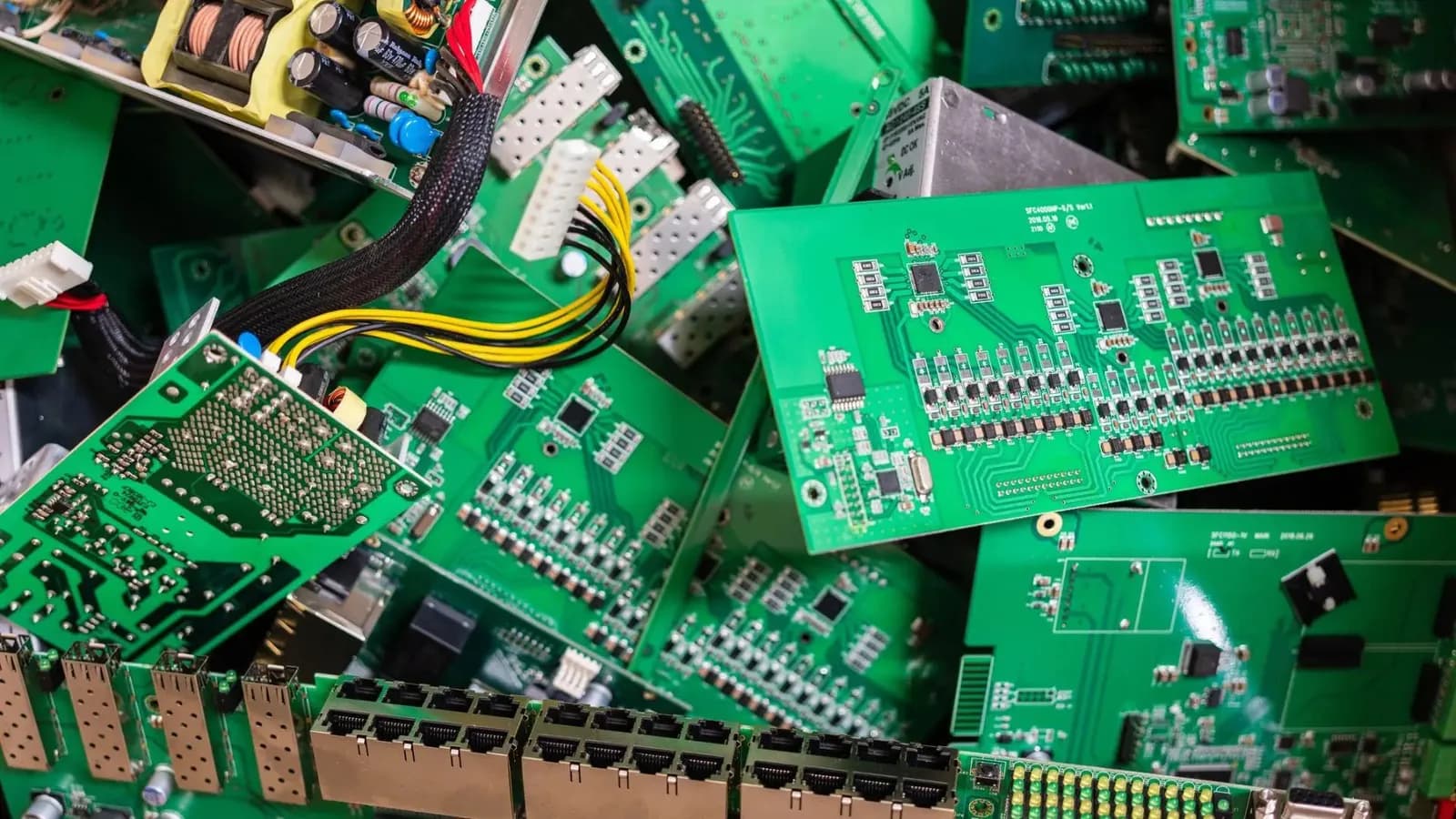
As more devices reach the end of their lifespan, researchers within the CircEl-Paper project have created multi-layered circuit boards from paper composites. This investigates the potential for producing and recycling alternative electronic devices.
Within the EU, people produce approximately 26 lbs (12kg) of e-waste per person every year. In 2024, 5.5 million metric tons of e-waste were collected. However, since 2015, the number of electronic devices put on the market across the EU has increased by 82% (over 14 million metric tons). Collection and recycling of e-waste has only increased by 72%.
Conventional PCBs often use FR4 composite materials. These are valuable in PCBs due to being very fire-resistant, having a high dielectric strength, and good thermal stability. Due to this complex composite structure, separation of materials for recycling is difficult. In CircEl-Paper, paper alternatives, sustainable conducting lines, environmental impacts and ecotoxicity were investigated.
“In CircEl-Paper, we successfully brought together two approaches. The first was to evaluate paper composites as substrates and their behavior in near-conventional PCB manufacturing. Since paper is in itself also suitable for high-throughput technologies, our second approach was to apply concepts from printed electronics to roll-to-roll processes on paper.
“Both approaches can be combined. This enabled us to produce multilayer paper PCBs with double-sided or even four-layer circuitry, plated-through VIAs, lamination, and hybrid integration of electronic components,” said project coordinator Gerhard Domann from the Fraunhofer Institute for Silicate Research.
Multilayer paper electronics demonstrate practical applications
Roll-to-roll glucose sensors, four-layer time-temperature sensors for monitoring sensitive items in transport/storage, and flexible audio cards able to play/record music or speech in greeting cards were developed. It was shown that these can be recycled.
However, issues with moisture absorption, roughness, and fire resistance had to be overcome. As Domann explained, “This journey had some bumps in the road!” Improving the technical performance of the paper composites also meant that traditional paper recycling became more complicated.
Fire retardants were added to the paper. Life cycle analysis and toxicology studies were carried out by QSAR Lab and Joanneum Research. Optimal roll-to-roll processing procedures with virgin/recycled fibers were developed by Fedrigoni, RISE and Joanneum Research.
Recycled silver inks and testing pave the way for sustainable PCBs
The conductive inks used within the project use recycled silver. Recycled silver was combined with natural binders to create SECTR (Silver Electron Chemically and Thermally Resistant) inks by VFP Ink Technologies. The inks are suitable for industrial screen printing and have good electrical, chemical, and thermal performance. The ink can be processed at temperatures from 122°F (50°C).
Silver was recovered from the paper by Grenoble INP-UGA. Untreated paper contained up to 83% recovered silver, and impregnated paper contained up to 89%. This silver was used to make a new ink.
Further investigations are required to see if fibers with residual impregnation agents can be used in new devices. Most components are relatively safe, although care must be taken in choosing materials, according to QSAR Lab. Fraunhofer ISC created an open LCA database containing over 150 materials connected by over 50 processes.
As conventional chemicals may degrade the paper composites, electroplating and etching were demonstrated using modified, gentler conditions. ICAPE-MMAB tested the composites under conditions close to conventional processing. The trials show the potential of using multi-layered paper PCBs, but also highlight the processing challenges.
Source: https://interestingengineering.com/science/paper-circuit-boards-e-waste
Get the latest news delivered to your inbox.
Related articles