Potatoes could grow in simulated moon soil with 30 percent compost, US study suggests
Oregon State University researchers have grown potatoes through a full life cycle in simulated lunar...
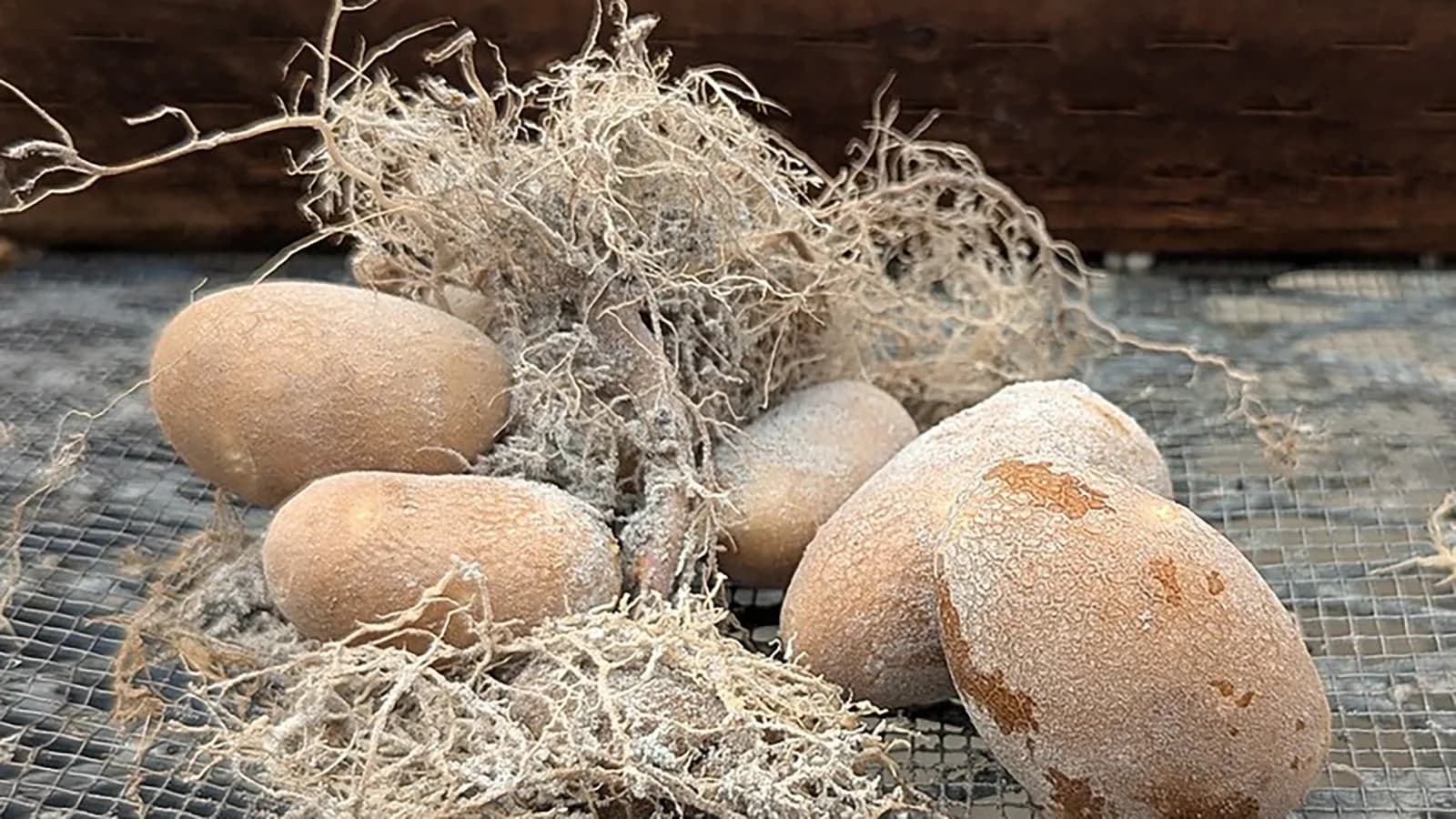
Oregon State University researchers have grown potatoes through a full life cycle in simulated lunar soil mixed with earthworm compost, according to a university release and a paper in npj Microgravity. In one mare simulant, a mix with 30 percent compost produced plants comparable to those in Earth soil in most traits, according to the paper.
The findings support NASA’s Artemis program, which aims to establish a sustained human presence on the Moon. That will require producing food on the Moon rather than relying on costly resupply from Earth, the release said. Lunar regolith, the loose rock and dust covering most of the Moon’s surface, contains very little organic matter.
Real regolith is not available for large plant studies, the earlier preprint said, so the team tested five simulants, Earth-made materials that mimic it. They represent both mare, the dark basalt plains, and highlands, the older, lighter terrain. The researchers mixed each with vermicompost, a nutrient-rich material made when earthworms break down organic waste.
How compost changed the results
Oregon State plant biologist Aymeric Goyer led the study. Plants grown without compost were stunted with underdeveloped roots, while plants given 5 percent to 15 percent compost recovered only partly, according to the university release.
Reuters reported that pure simulant produced almost no roots or tubers, and that mixtures with as little as 5 percent compost yielded some. The Earth comparison used soil from Hermiston, Oregon, a region known for high potato yields. At 30 percent compost, tuber mass matched or exceeded the Earth-soil control in some replicates, the paper said.
Heavy metals such as copper are a second hazard in regolith. “Without organic matter, potatoes take up too much heavy metals,” Goyer told Reuters. The researchers believe compost binds the metals and shields roots, the release said. The mechanism is their working explanation.
Goyer said a second study with larger pots produced store-size potatoes. Other teams have tested phosphorus-freeing microbes and hydroponics on simulant, and a March study grew chickpeas in simulant with vermicompost.
Limits and next steps
The release calls the potatoes safe to eat, but the paper says only that tubers were nutritionally comparable and that this needs verifying in future experiments. Glycoalkaloids, natural potato toxins often tied to green skin, showed no statistically significant rise. Goyer said the team has not tasted the potatoes. They grew in small pots in a greenhouse, and tubers generally weighed about a third of an ounce (under 10 grams), even in Earth soil, according to the wire report.
The paper reports modestly higher copper, zinc or aluminum in tubers from certain simulants and says this warrants monitoring. All five simulants cut tuber yield at 5 percent compost. The paper tested the 30 percent mix only on the mare simulant LMS-1E, so the result may not hold for every regolith type. All plants also received slow-release fertilizer, and the paper cautions that simulants differ from genuine regolith.
A second paper will report on 10 potato varieties grown in simulants, the university said. NASA funded the work, which appeared Nov. 19 in npj Microgravity.
Source: https://interestingengineering.com/science/us-potatoes-moon-soil-with-30-percent-compost
Get the latest news delivered to your inbox.
Related articles