Shadows fool AI cameras, but new imaging technology could help them see clearly
Shadows can make objects appear very different when in reality they are the same. Whilst...
Shadows can make objects appear very different when in reality they are the same. Whilst humans can often recognize when an object is in shadow, artificial intelligence systems find it harder to do so.
Researchers at Northeastern University are working on a new imaging technique that will improve the way computers understand the scene. This research, led by Bruce Maxwell, director of computing programs at Northeastern University’s Khoury College of Computer Sciences, aims to eliminate shadows in images whilst preserving the natural colors and textures of objects. This means that shaded areas will be brighter without appearing artificial.
Maxwell and his students took around 25,000 images using smartphones and cameras over the course of 4 years. Over 100 students studying computer vision took photos of everyday scenes such as streets, pets, gardens and signs. The images were taken from across the campuses of Northeastern University in Boston, Seattle, Vancouver, Silicon Valley, Miami, Arlington and Portland.
This problem is common in computer vision. Lighting can cause issues for the machine to recognize objects. For example, if there is a shadow on the road, the machine may not recognize it as something it is familiar with.
New technology could improve self driving cars and 3D modeling
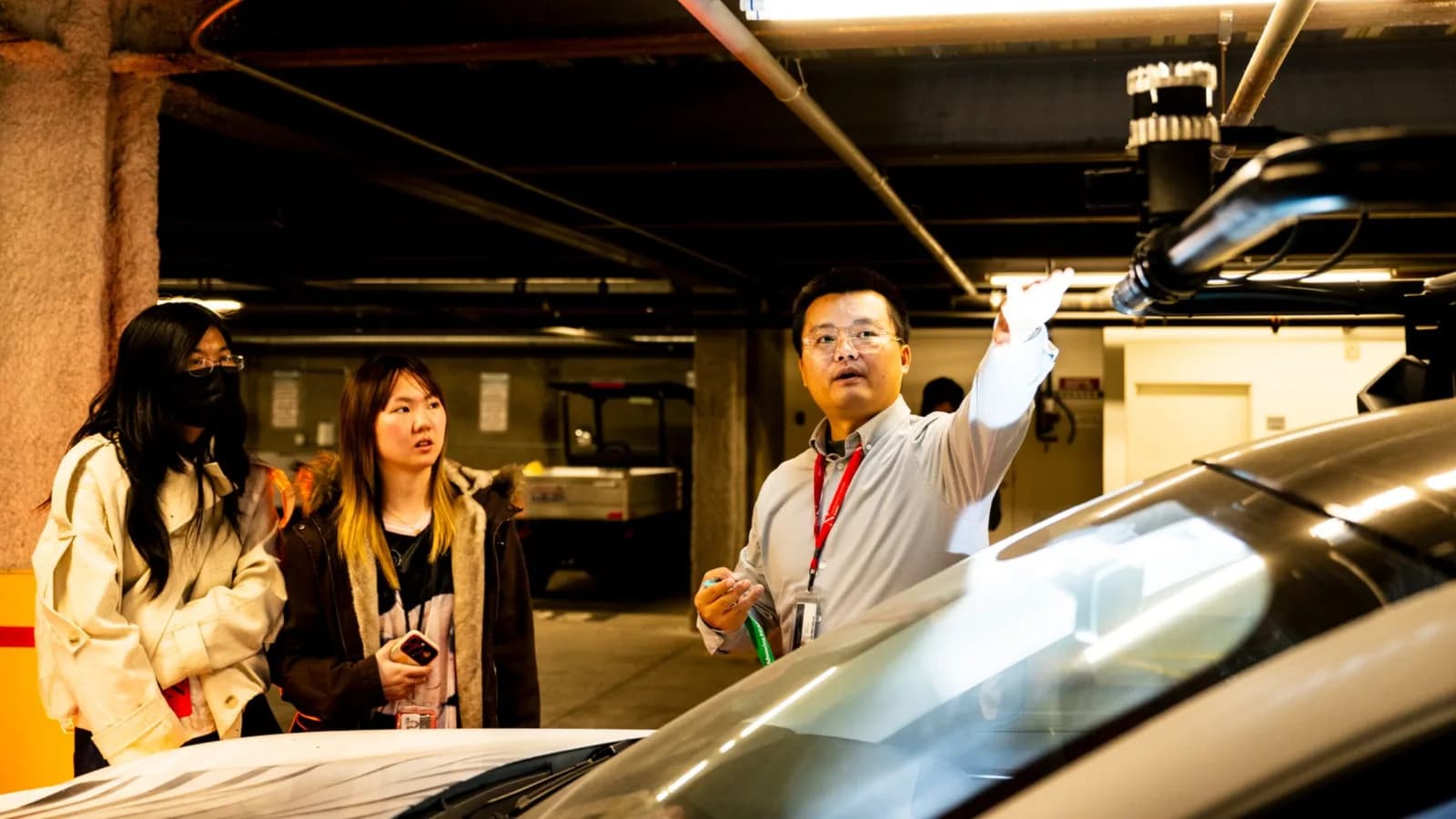
This could have real world applications. As Xian Li, professor of electrical and computer engineering at Northeastern’s Seattle campus has pointed out, shadows from trees and buildings can cause issues for the cameras on autonomous vehicles like those from Tesla. If there is a dark area on a bright road the camera could mistake it for an obstruction and cause the vehicle to stop.
“People don’t have this problem. We know a shady patch of road is still the same road,” said Li, who conducts his own image and sensor data research from behind the wheel of Northeastern Seattle’s electric Ford Mustang. This technology could help photographers fix shadows without affecting the true colors of their objects. It could also be used to create 3D models. Creating realistic digital objects can require designers to take hundreds of photos from different angles with controlled lighting.
This new method could cut down on some of this. Rather than taking multiple photos of an object, a designer could film a quick video of an everyday object such as a coffee cup whilst rotating it in their hand. The AI model would then fix the shadows to help create a more accurate digital object.
Maxwell hopes that this system can be used in autonomous vehicles in the future. This would help them recognize objects and pedestrians nearby in changing lighting conditions. Li is also interested in using this technology on street footage taken from Northeastern’s research vehicle in Seattle.
The science behind AI’s ability to recognize objects
An important part of this research is the way cameras pick up light. Humans naturally process light on a logarithmic scale which helps us recognize objects in different lighting. Traditional cameras often process information in a linear fashion which can cause loss of detail in very bright or dark areas. Maxwell found that the model worked better with color when the images used to train it had RGB (red, green and blue) values on a logarithmic scale.
This gives the AI a new way to process light. More development and testing would be required before this could be used in real life situations but this research provides a solution to one of the issues that makes it hard for computers to understand everyday scenes. It can differentiate between the true appearance of an object and the shadows.
Source: https://interestingengineering.com/science/ai-computers-objects-light-shadow
Get the latest news delivered to your inbox.
Related articles