China team uncovers brain’s ‘3D GPS’ that could guide next-gen brain-computer interfaces
Scientists in China have found a “3D GPS” in the motor cortex of macaques that...
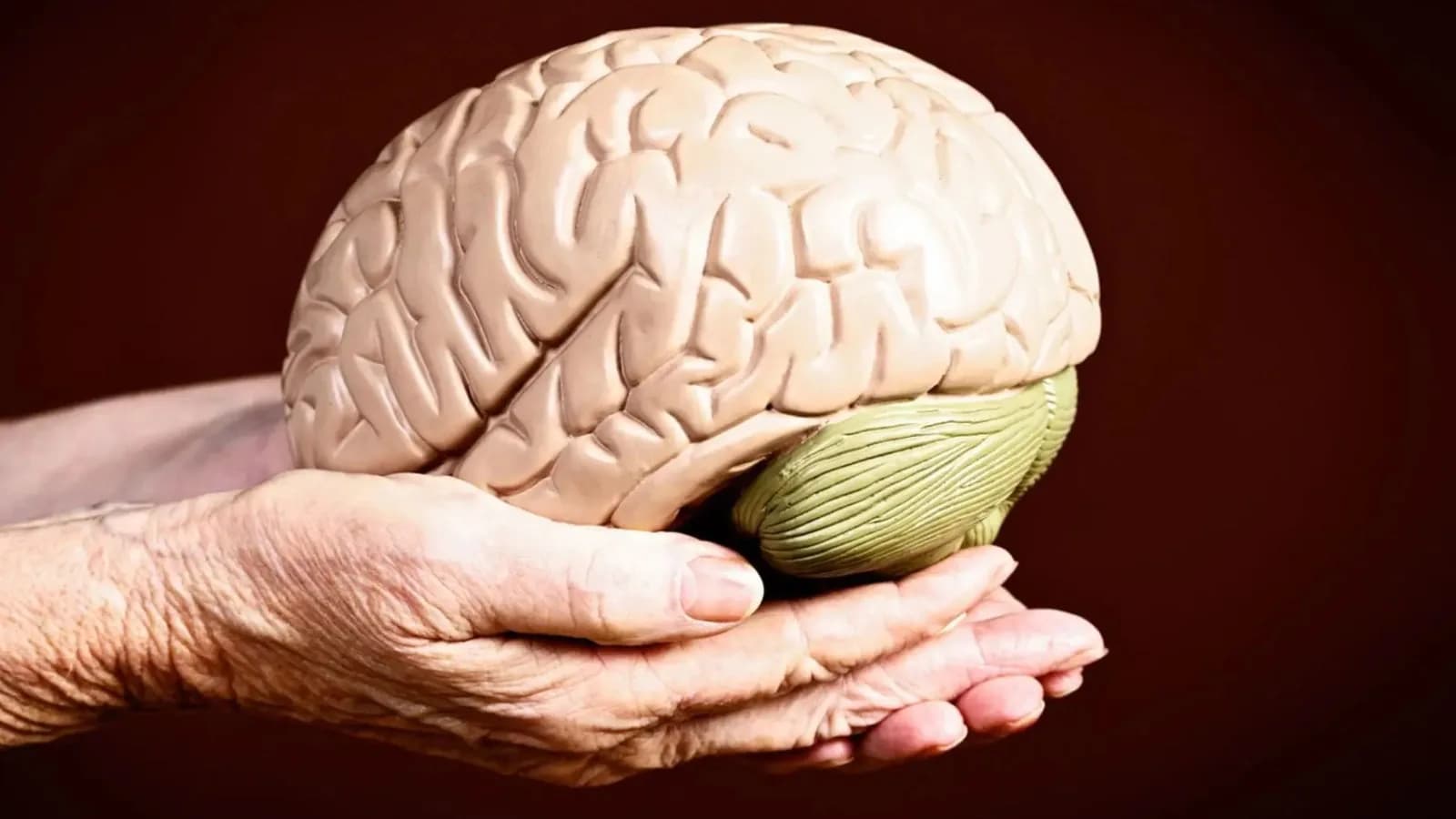
Scientists in China have found a “3D GPS” in the motor cortex of macaques that tracks where the hand is as it moves. The researchers detected the signal by recording brain activity while the animals reached for objects, then used it to reconstruct the paths their hands took.
The study was led by Yu Shan at the Chinese Academy of Sciences’ Institute of Automation.
The team also found signals linked to where the macaques intended to grasp, a finding that could give brain-computer interfaces (BCIs) a more direct way to interpret reaching movements.
How neurons map hand
The researchers let the macaques choose when and where to reach. They recorded individual neurons with microelectrode arrays implanted in two areas on the left side of the brain.
One, the primary motor cortex, helps execute movements. The other, the dorsal premotor cortex, helps plan them.
About 36.2 percent of recorded neurons in the primary motor cortex responded to the hand’s position at any given moment. The figure was 21.3% in the dorsal premotor cortex.
“These neurons do not simply increase or decrease their firing rates linearly with distance. Instead, they behave like localized ‘hotspots,’ becoming significantly more active when the hand enters a particular region of space,” the study’s first author Cao Shenghao said.
Fewer neurons for mapping
When the researchers reconstructed hand paths, position-sensitive cells making up just 17.7 percent of the recorded neurons in the dorsal premotor cortex achieved 94.1 percent of the decoding performance of the full group.
In the primary motor cortex, a subset comprising 32.8 percent of recorded neurons reached 92.9 percent of full-group performance.
A further analysis estimated that 2.8 position-sensitive neurons in the dorsal premotor cortex and 16.4 in the primary motor cortex were sufficient, on average, to reach 90 percent of full-group performance.
Those figures describe statistical averages from the experiment. An implant would still have to record enough usable signals to identify the relevant neurons.
From macaque brains to human implants
Some motor BCIs estimate speed and direction before piecing together the path of a movement. Reading position signals directly could let a decoder skip some of those calculations.
If the approach works in humans, a device could choose how to move a robotic limb once the interface identifies where the user wants it to go.
Cao said the approach could eventually help people who have lost arm movement after strokes. Researchers still need human recordings to establish whether the same kinds of neurons represent hand position and grasp targets.
They would also have to keep those signals usable over years of implantation. Signal quality can deteriorate, and the neural activity a decoder relies on can change over time.
Cao said fine hand movements and reliable operation without recalibration remain beyond what the research demonstrates.
The next question is whether the same signals can give a person with impaired movement reliable control of an external device in daily life, where reaching is often only the first step toward picking up and using an object.
The study was recently published in the Journal of Neuroscience.
Get the latest news delivered to your inbox.
Related articles