Physics-based research reveals how super-shoe foam shapes runner stability and speed
Engineers at Stanford University tested the two foams inside Asics Metaspeed racing shoes and found...
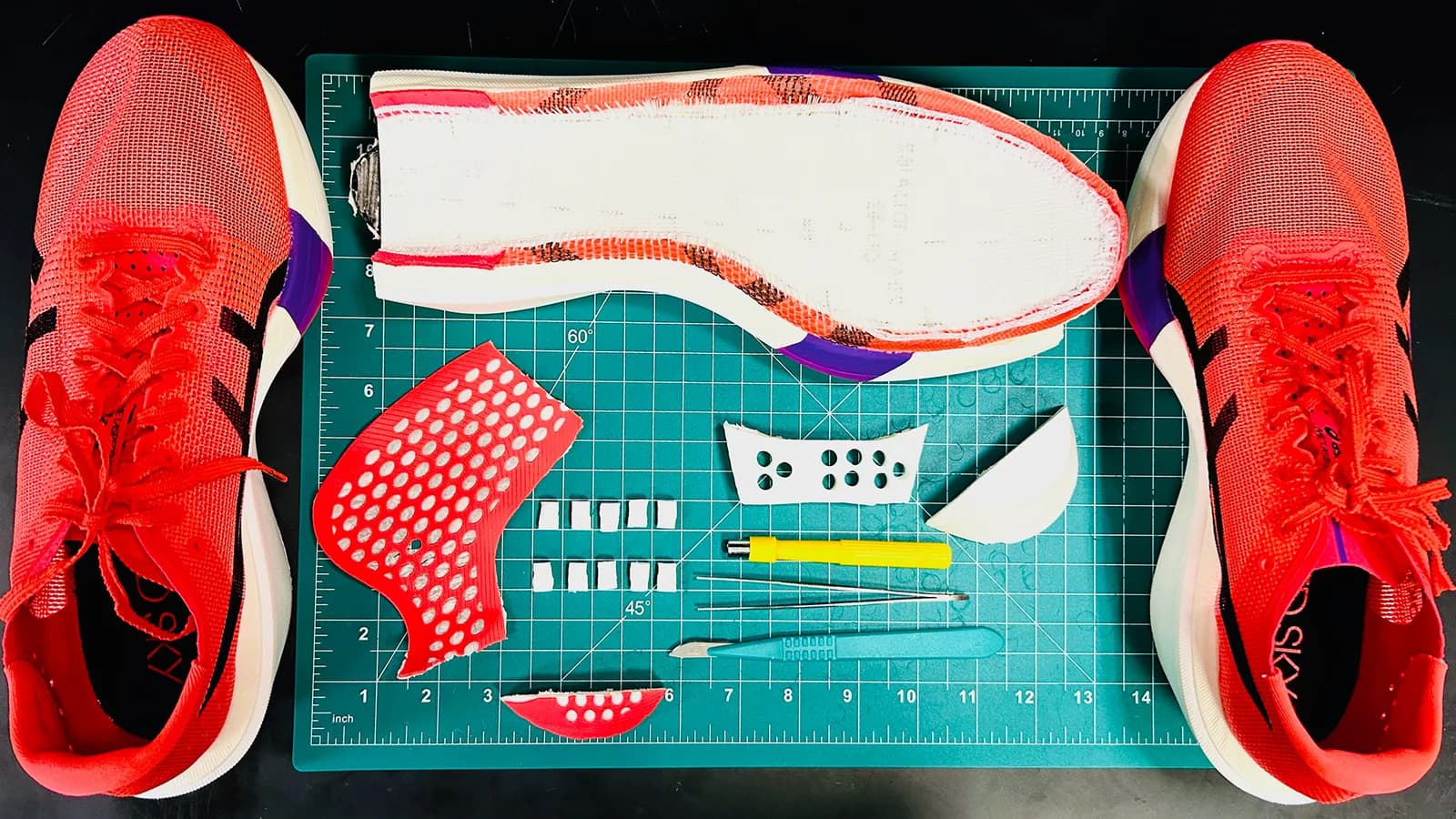
Engineers at Stanford University tested the two foams inside Asics Metaspeed racing shoes and found the foams differ most in how they resist twisting. Jeremy McCulloch, a mechanical engineering graduate student, is lead author, with Ellen Kuhl and Scott Delp.
Runners call them super shoes: light shoes built around a stiff carbon-fiber plate and a springy foam. Since their debut, runners have set world records at nearly every road distance, and studies have found the shoes cut the energy cost of running by up to 4 percent, Stanford said. Makers closely guard how the shoes are built, the release said.
McCulloch’s team tested foam samples three ways: stretching (tension), squashing (compression) and twisting (shear). The team then trained a neural network, a machine learning model, with the laws of thermodynamics and known material symmetries built in. McCulloch said the tests produced limited data. The resulting equations matched the measurements almost perfectly, the university said.
How the two foams compare
The team removed the rubber soles from Asics Metaspeed Sky and Edge shoes, sliced the foam off the carbon plate with a hot wire and punched out samples, according to the Engineering with Computers paper. The two shoes use the same two foams, FF LEAP and FF TURBO PLUS, in opposite positions around the plate.
In the paper, both foams were stiffest in tension, less stiff in compression and least stiff in shear. Compressive stiffness was similar between the foams, but FF TURBO PLUS was about 42 percent stiffer in tension and nearly twice as stiff in shear. The paper reports energy return, the share of energy a foam gives back after being deformed, between about 85 percent and 94 percent in tension and compression.
The university said swapping which foam sits where changes how stable the shoe feels, and the shear result matched what McCulloch felt on the road. He said that on a corner, the shoe “doesn’t feel particularly stable.” Elite athletes wear super shoes in races, including a sub-two-hour marathon.
How long the foam lasts, and the limits
A follow-up arXiv preprint, a paper shared before peer review, tested FF LEAP foam from a new shoe and one worn for 300 miles (480 kilometers). Stored energy at maximum deformation showed no significant change, and energy return differed significantly in one of nine comparisons, in the toe under tension. The preprint found the foam stiffer at the heel than the toe.
The durability result compares one new shoe with one shoe worn by a single runner, so it may not hold across runners or shoes. The team tested foam samples, five per foam in the first paper, not whole shoes. The first paper’s models cannot predict how much enegry the foam dissipates under repeated loading. The paper infers stability from shear stiffness, and no runners were tested.
The team plans to model the whole shoe and pair it with a model of a person running. A separate MIT model links shoe stiffness and midsole springiness to a runner’s gait.
The study is published in Engineering with Computers.
Get the latest news delivered to your inbox.
Related articles