US deploys F-15EX Eagle II fighters to Japan with 50% more missile capacity
The first permanently assigned U.S. Air Force F-15EX Eagle II fighters have arrived in Japan,...
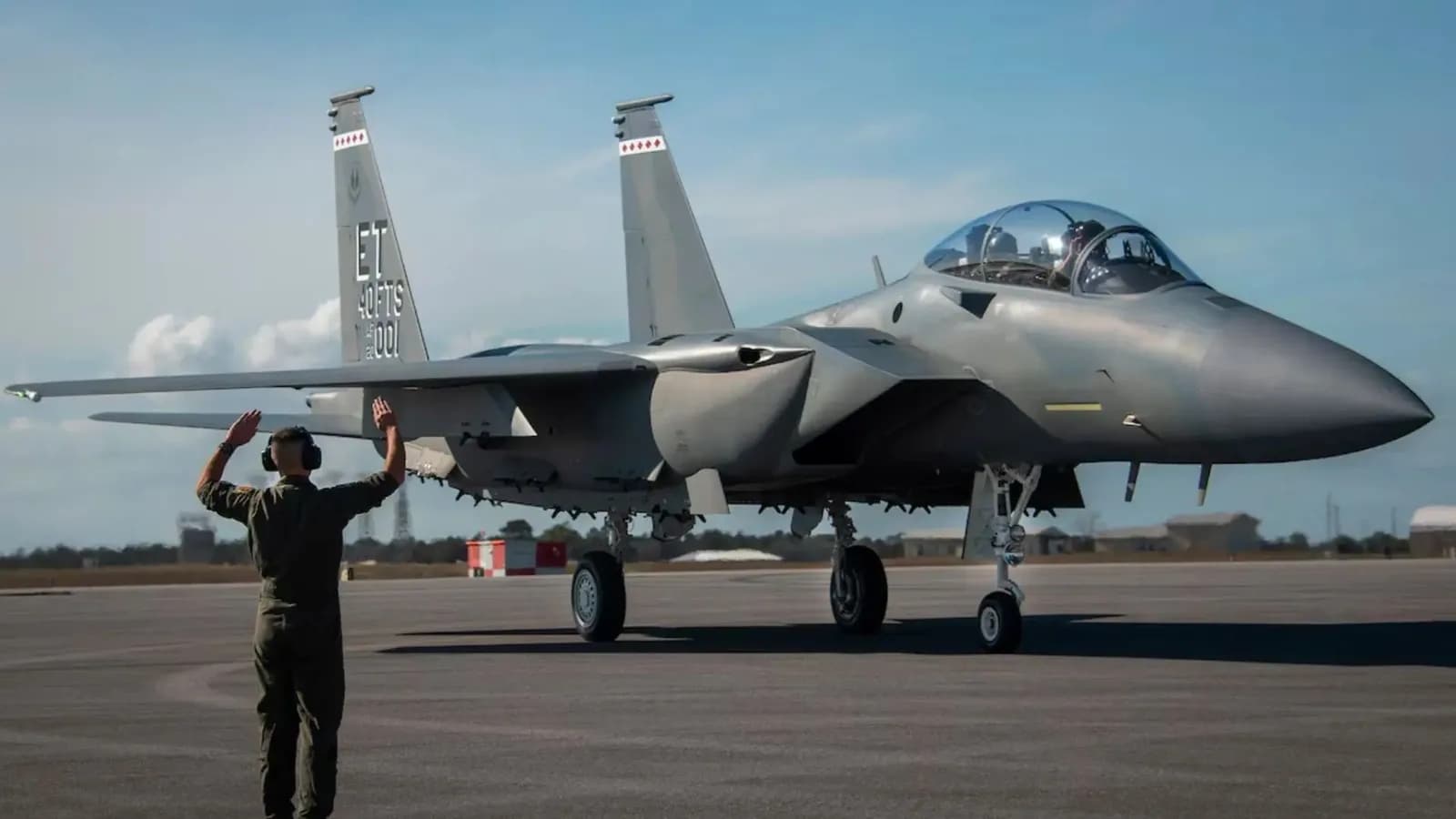
The first permanently assigned U.S. Air Force F-15EX Eagle II fighters have arrived in Japan, adding missile capacity and electronic protection to American air operations in the western Pacific. Two aircraft reached Kadena Air Base in Okinawa on November 15, 2026.
Japan is a major hub for U.S. air and maritime forces. The 18th Wing cites its weapons capacity, electronic warfare improvements and ability to work with fifth-generation aircraft. Unlike the F-22 and F-35, which rely on stealth and advanced sensing capabilities, the Eagle II can carry a larger missile load.
The F-15EX can carry up to 12 air-to-air missiles, compared with eight on the older F-15C, a 50 percent increase in maximum capacity. U.S. Air Force testing has demonstrated launches of AIM-120 radar-guided and AIM-9X infrared-guided missiles from additional outboard stations. The extra weapons give pilots more opportunities to engage targets during a sortie before returning to rearm. Actual engagements depend on detection, identification, firing conditions and enemy countermeasures.
F-15EX brings more missiles
The F-15EX will operate alongside aircraft with different strengths. The F-22 carries six AIM-120 missiles and two AIM-9 missiles internally. The F-35A uses stealth and advanced sensors to collect and share information with other aircraft.
The Eagle II adds a larger potential missile load to these combined operations. Its equipment includes the AN/APG-82 active electronically scanned array (AESA) radar and the Eagle Passive Active Warning Survivability System (EPAWSS). These systems help detect, identify and locate hostile radar signals. The aircraft can respond with electronic jamming and expendable countermeasures. The upgrades help it operate amid radar and electronic warfare threats, but do not give it a stealth fighter’s reduced radar signature. Survivability will depend on the threat and available mission support.
The U.S. plan calls for 36 F-15EX aircraft at Kadena, replacing 48 F-15C and F-15D fighters. At Misawa Air Base, 48 F-35As are planned to replace 36 F-16s. These figures are planned force changes.
China’s growing air power shapes the U.S. deployment
China’s expanding air force is a major factor behind the deployment. Japan’s 2026 defense white paper describes developments in China’s J-20 stealth fighter program and growth in its H-6 bomber force. Some H-6 variants can carry long-range land-attack cruise missiles, putting distant targets within reach. Chinese and Russian aircraft operating around Japan frequently prompt the country’s Air Self-Defense Force to scramble fighters.
The F-15EX is expected to support air dominance, cruise-missile defense and escort missions. Its larger missile load could help when several aerial threats are present. Intercepting bombers or missile-carrying aircraft before they release their weapons requires early detection, accurate tracking and coordination with ground-based defense systems.
U.S. forces in Japan include the Air Force, Navy, Marine Corps, Army and Space Force. Carrier-based aircraft, Marine-operated F-35B fighters, airborne command-and-control platforms, ground-based air defenses and logistics support all contribute to regional operations. Japan’s self-defense forces also monitor its airspace and respond to threats. The first two aircraft begin a modernization effort. Their effectiveness will depend on further deliveries, training, weapons and maintenance support.
The Eagle II adds greater missile capacity to the U.S.-Japan alliance. Its contribution will depend on how well it works with U.S. and Japanese forces as regional air activity grows during future joint air defense operations.
Source: https://interestingengineering.com/military/us-air-force-japan-eagle-fighters
Get the latest news delivered to your inbox.
Related articles