
US, Google, Meta join forces to build ‘virtual cells’ for digital biology experiments
The U.S. government, Meta, Google DeepMind, and other partners are combining nearly $1.8 billion in...
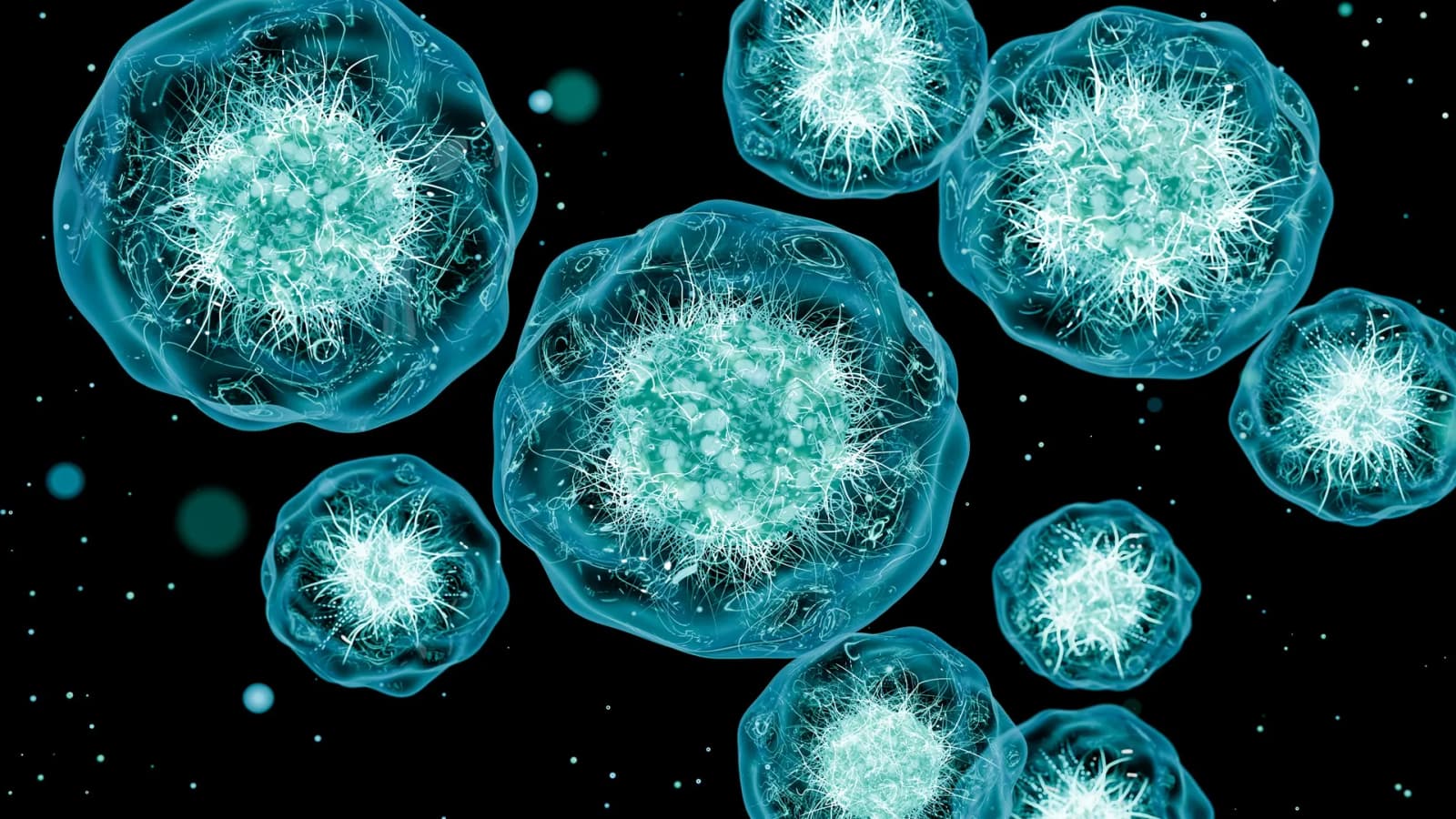
The U.S. government, Meta, Google DeepMind, and other partners are combining nearly $1.8 billion in funding and existing resources to build open biological datasets for models designed to predict how living cells behave.
The effort expands Biohub’s Virtual Biology Initiative, which aims to develop “virtual cells” that researchers could eventually use to predict cellular responses and conduct some biological experiments digitally. Biohub is a nonprofit research organization focused on combining computational tools with biology.
Google DeepMind, drug-discovery company Isomorphic Labs and Meta are collectively investing $300 million in the initiative. The U.S. Department of Energy will contribute more than $500 million over five years for biological measurements, modeling and computing.
The National Institutes of Health will coordinate datasets, repositories and other resources developed through more than $500 million in previous federal investment. Biohub will work with NIH to standardize the information so it can be used to train predictive models.
Building biology’s training data
The project addresses a major obstacle to applying advanced computational models to biology: researchers need large amounts of standardized experimental data showing how cells behave and respond when conditions change.
Biohub says the resulting datasets will be openly available to researchers. Rather than simply cataloging cells, the goal is to provide enough measurements for models to predict how a cell will respond to an intervention, potentially helping researchers investigate diseases and treatments before moving to laboratory experiments.
“An accurate predictive model of biology could dramatically accelerate scientific discovery by enabling scientists to perform experiments digitally,” said Biohub Head of Science Alex Rives. “The insights that come from this could unlock a far greater understanding of disease and open up completely new paths for cures.”
Biohub had already committed $500 million when it launched the Virtual Biology Initiative in April. Of that amount, $400 million is going toward measurement technologies, including cryo-electron tomography, which can reveal near-atomic structures inside cells, and microscopy systems intended to image millions to billions of cells in living tissue.
Another $100 million will support research outside Biohub. The expanded initiative brings that work together with federal laboratory infrastructure and additional private investment.
Supercomputers meet living cells
The DOE contribution will draw on U.S. national laboratory capabilities including exascale supercomputers, X-ray and neutron scattering, cryo-electron microscopy and tomography, and autonomous laboratories.
NIH, meanwhile, will contribute existing biomedical resources through its Bio Genesis Mission. These include national repositories and programs developing biological atlases, common data standards and datasets suitable for computational modeling.
Other organizations participating in the broader effort include the Allen Institute, Broad Institute, Gladstone Institutes, Human Cell Atlas, Human Protein Atlas and Wellcome Sanger Institute. NVIDIA will provide accelerated computing infrastructure, specialized software and technical expertise.
Biohub plans to create common identifiers, shared standards and a single access point so datasets generated by different institutions can work together. That standardization will be important because biological data can come from different instruments, experiments, cell types and measurement methods.
The ultimate goal remains prospective rather than demonstrated. The initiative has not yet produced a universal virtual cell capable of accurately predicting arbitrary biological responses. Instead, the nearly $1.8 billion commitment is intended to build the experimental data, measurement technologies, and computing infrastructure needed to develop and test such models.
Source: https://interestingengineering.com/ai-robotics/virtual-cells-biology-dataset-google-meta
Related articles

Everything announced at Microsoft’s Surface Laptop Ultra event
Microsoft just wrapped up a big Windows and Surface-focused keynote in San Francisco.

It appears .agent and .agi are about to be the hot new domains
For the first time in years, the Internet Corporation for Assigned Names and Numbers - better known as ICANN - is accepting applications for new top-level domains.

Nvidia’s powerful RTX Spark laptops can cost up to $7,000
The first array of laptops powered by Nvidia's new RTX Spark chip are designed to compete with high-end MacBook Pros - and they've got some high-end prices to match.


Microsoft’s Surface Laptop Ultra has built-in magnetic USB-C charging
Microsoft has created a magnetic charging solution for its Surface Laptop Ultra that uses USB-C.

Surface RTX Spark Dev Box is available for preorder for $5,999
Microsoft's Nvidia-powered Surface RTX Spark Dev Box is available for preorder now directly, and slated to ship in November for just about $6,000.