
US team to shield advanced nuclear reactors from damage with $1 million push
Advanced nuclear power holds a clear promise: round-the-clock, low-carbon electricity with far better fuel efficiency...
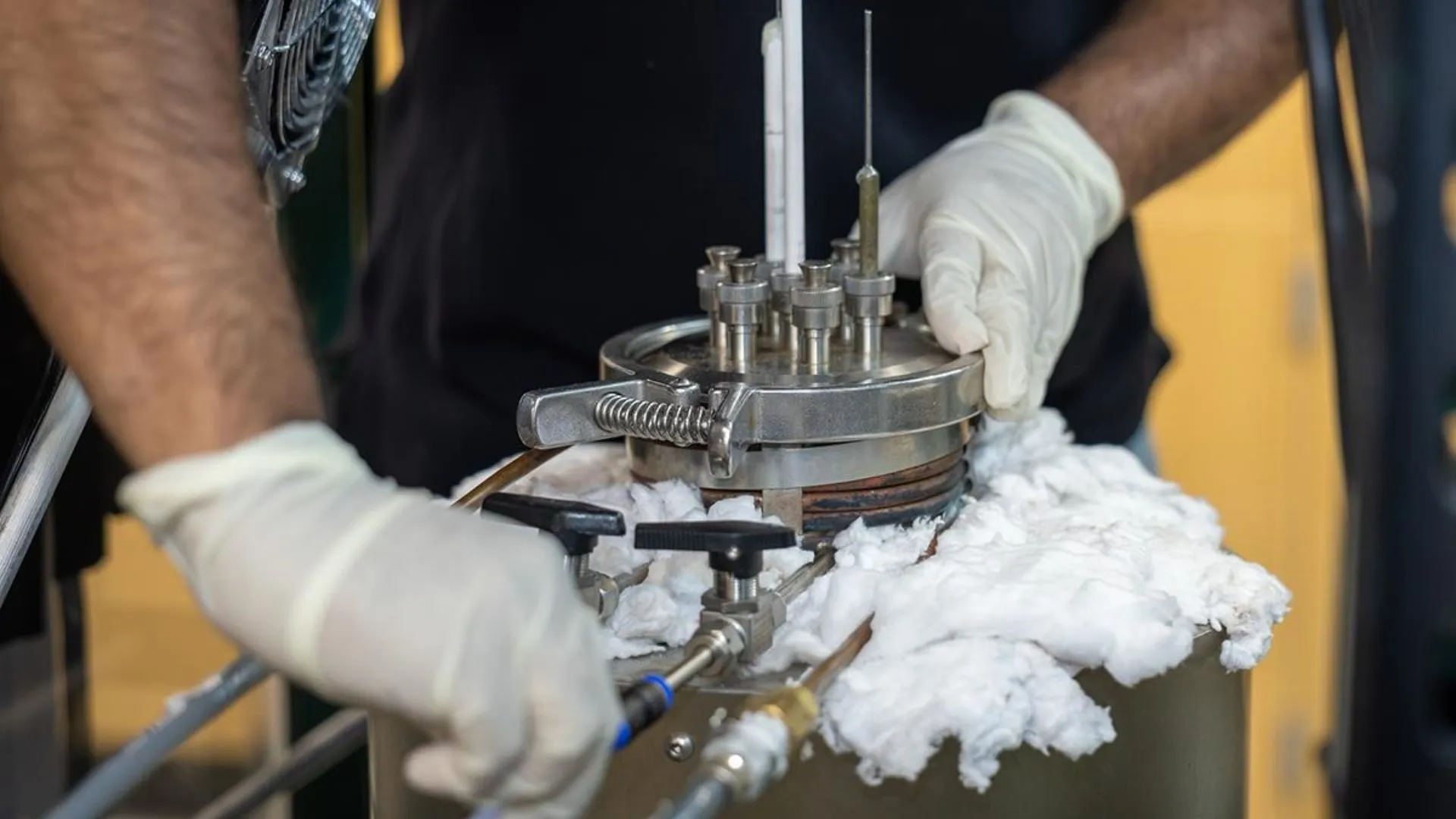
Advanced nuclear power holds a clear promise: round-the-clock, low-carbon electricity with far better fuel efficiency than conventional plants. Yet the next generation of reactors faces an atomic-scale obstacle. When uranium atoms split to generate energy, they leave behind troublesome chemical byproducts that degrade equipment and frustrate recycling efforts.
A research team led by Pennsylvania State University has received $1 million from the US Department of Energy to tackle this precise problem. Their goal is to track and control three stubborn fission products—samarium, europium, and tellurium—in molten salt reactors and advanced recycling systems.
Standard commercial reactors are cooled by pressurized water. But molten salt systems use liquid salts. These reactors can squeeze more energy out of nuclear fuel and allow used materials to be recycled. However, the chemical soup inside them is notoriously harsh.
Each of the three targeted elements presents its own challenge. Samarium and europium are unwanted in recycled fuel because they can interfere with reactor performance and fuel recycling processes, noted researchers.
“Tellurium, on the other hand, can react with metals used in molten salt reactors and fuel-recycling systems, contributing to corrosion and materials degradation,” added the researchers.
Understanding the fundamentals
To solve this, researchers need to understand how these elements behave at a fundamental level.
“We will study the oxidation states of these elements, which describe how many electrons an atom has gained or lost and strongly influence how they behave chemically,” said lead investigator Hojong Kim, professor of materials science and engineering at Penn State.
The team will examine how these byproducts interact with reactor materials during pyroprocessing, a high-temperature recycling method based on molten salts. Working alongside specialists from the University of Nevada, Reno, and Idaho National Laboratory, researchers will combine computer modeling with direct laboratory experiments.
In the lab, doctoral researcher Alok Pandey will dissolve the three elements in molten salt solvents and run electrical currents through the mixture. By varying the applied potential, he can observe how the elements shift oxidation states.
“This will allow us to understand the elements’ electrochemical properties,” concluded Pandey. “It could help improve strategies for their recovery and management during nuclear fuel recycling.”
Solving the recycling puzzle
The project also revives an earlier, unresolved puzzle. Kim previously attempted to analyze samarium under a 2018 federal grant. That effort stalled because the element existed in tiny concentrations and behaved unpredictably compared to related rare-earth metals. Armed with newer diagnostic methods, the team believes it can now crack the problem.
Their solution relies on an unexpected ally: liquid bismuth. Kim’s laboratory previously discovered that molten bismuth can act like a chemical sponge, cleanly capturing rare-earth elements out of liquid salts.
If the current trials succeed, the technique could unlock more sustainable fuel cycles. By removing corrosive and performance-choking byproducts, engineers can keep advanced reactors running longer, extract more energy from every grain of uranium, and significantly reduce long-lived nuclear waste.
Source: https://interestingengineering.com/energy/rogue-elements-damage-advanced-nuclear-reactors
Related articles

Japan’s 4,800-ton hydrogen tanker: How its engine, batteries and motors work
Japan has demonstrated a coastal tanker using a hydrogen-fired, four-stroke, high-speed engine in what the...

The iPad Mini is slightly cheaper again during Prime Day
Apple bumped up prices on several of its devices in June, and we haven’t seen a good discount on the iPad Mini since.

The MacBook Air M5 is $200 off for the first time in months
Amazon’s October Prime Day has effectively chopped off Apple’s June price increases. Usually $1,299, the 13-inch MacBook Air with the M5 chip and 512GB of storage is on sale for $1,099 at Amazon.

The AirPods Pro 3 are a fantastic deal at $179
It’s been a while since we’ve seen a good discount on the Apple AirPods Pro 3, but like the latest iPad Mini and the M5 MacBook Airs, a great one is happening now for October Prime Day.

Amazon’s colorful and sturdy new Kindles
Hi, friends! Welcome to Installer No. 146, your guide to the best and Verge-iest stuff in the world. (If you're new here, welcome, it's October already?

The rise, fall, and rise of portable MP3 players
This is The Stepback, a weekly newsletter breaking down one essential story from the tech world. For more on the collapse and the resurgence of the portable media player, follow Terrence O'Brien.